Yichun Museum
⭐ 3.60
Hutian Town, Yuanzhou District, Yichun City, Jiangxi Province, China
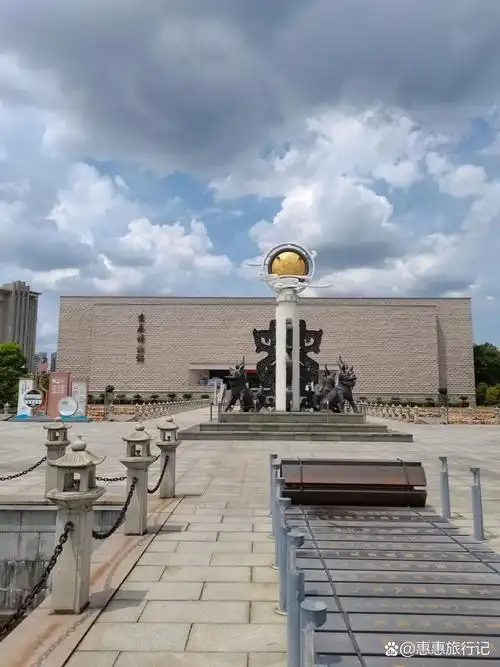 Yichun Museum was established in 1979 and has grown into one of Jiangxi Province's most respected regional museums, designated a national second-tier institution and a provincial patriotic education base. The collections span from the pre-Qin era to the modern period, chronicling several thousand years of civilization in the western Jiangxi region. For visitors familiar with the great provincial museums of Europe, this is a comparable institution—smaller in scale than, say, the British Museum or Berlin's Museum für Asiatische Kunst, but offering an intimate, deeply regional perspective. The Shang and Zhou dynasty bronze ritual vessels here share artistic kinship with European Bronze Age metalwork from roughly the same era, while the Song and Yuan ceramics parallel the refinement of contemporary European medieval pottery traditions.
Housed within the modern "Cultural Window" architectural complex at 536 Luzhou North Road in Yuanzhou District, the museum occupies 11,400 square meters of bright, climate-controlled exhibition space. The clean, well-lit galleries offer a quiet retreat, particularly welcome during Jiangxi's humid summers. Unlike the often overwhelming scale of China's blockbuster museums in Beijing or Shanghai, Yichun's intimate setting allows visitors to absorb each exhibit without fatigue—more akin to a regional European museum like Strasbourg's Musée Archéologique in feel and approachability.
The museum's cultural heart lies in its Chan Buddhism collections, which position Yichun as "China's Zen Capital." Chan—better known in the West as Zen after its transmission to Japan—flourished here at ancestral temples such as Baofeng Temple and Baizhang Temple, both founded during the Tang dynasty when this region served as a spiritual epicenter rivaling Kyoto's later monastic culture. A dedicated hall traces this lineage through statues, scriptures, and ceremonial objects, including seals once belonging to Bada Shanren, the celebrated Ming-Qing painter and Buddhist monk. Visitors interested in comparative religious history will find striking parallels with the Benedictine monastery museums of Europe.
Five permanent galleries cover historical civilization, modern revolutionary history, Chan Buddhist culture, folk traditions, and natural ecology. Treasures to seek out include a Western Zhou bronze yongzhong bell with cloud-and-thunder motifs, a Southern Song bronze mirror excavated from the Yuanzhou Yang family tomb, and a Jizhou kiln black-glaze梅花 (plum-blossom) censer—the Jizhou kilns being famed for their bold painted and incised decoration, much admired by Japanese tea masters and analogous to Europe's tin-glazed maiolica wares of the same period.
Admission is free, but visitors must reserve a slot one day in advance through the museum's official WeChat account using a passport or ID number. Opening hours run Tuesday through Sunday, 9:00 a.m. to 5:00 p.m., with last entry at 4:30 p.m.; the museum closes on Mondays, though summer hours may extend. Bring your original identification document—passports are accepted for foreign visitors. Photography and flash are prohibited, voices should be kept low, and touching any artifact is strictly forbidden. Audio guides are available by scanning QR codes, and human-guided tours can sometimes be arranged upon request.
For a satisfying half-day cultural itinerary, pair your museum visit with the nearby Yuanzhou Drum Tower, a Ming-dynasty municipal heritage structure, and the adjoining Yichun Public Library. Begin in the morning, follow the suggested route through the historical, modern, Chan, folk, and ecological galleries in sequence, and linger longest in the Chan Buddhism hall—the soul of the museum and the most distinctive cultural experience the city offers.
Yichun Museum was established in 1979 and has grown into one of Jiangxi Province's most respected regional museums, designated a national second-tier institution and a provincial patriotic education base. The collections span from the pre-Qin era to the modern period, chronicling several thousand years of civilization in the western Jiangxi region. For visitors familiar with the great provincial museums of Europe, this is a comparable institution—smaller in scale than, say, the British Museum or Berlin's Museum für Asiatische Kunst, but offering an intimate, deeply regional perspective. The Shang and Zhou dynasty bronze ritual vessels here share artistic kinship with European Bronze Age metalwork from roughly the same era, while the Song and Yuan ceramics parallel the refinement of contemporary European medieval pottery traditions.
Housed within the modern "Cultural Window" architectural complex at 536 Luzhou North Road in Yuanzhou District, the museum occupies 11,400 square meters of bright, climate-controlled exhibition space. The clean, well-lit galleries offer a quiet retreat, particularly welcome during Jiangxi's humid summers. Unlike the often overwhelming scale of China's blockbuster museums in Beijing or Shanghai, Yichun's intimate setting allows visitors to absorb each exhibit without fatigue—more akin to a regional European museum like Strasbourg's Musée Archéologique in feel and approachability.
The museum's cultural heart lies in its Chan Buddhism collections, which position Yichun as "China's Zen Capital." Chan—better known in the West as Zen after its transmission to Japan—flourished here at ancestral temples such as Baofeng Temple and Baizhang Temple, both founded during the Tang dynasty when this region served as a spiritual epicenter rivaling Kyoto's later monastic culture. A dedicated hall traces this lineage through statues, scriptures, and ceremonial objects, including seals once belonging to Bada Shanren, the celebrated Ming-Qing painter and Buddhist monk. Visitors interested in comparative religious history will find striking parallels with the Benedictine monastery museums of Europe.
Five permanent galleries cover historical civilization, modern revolutionary history, Chan Buddhist culture, folk traditions, and natural ecology. Treasures to seek out include a Western Zhou bronze yongzhong bell with cloud-and-thunder motifs, a Southern Song bronze mirror excavated from the Yuanzhou Yang family tomb, and a Jizhou kiln black-glaze梅花 (plum-blossom) censer—the Jizhou kilns being famed for their bold painted and incised decoration, much admired by Japanese tea masters and analogous to Europe's tin-glazed maiolica wares of the same period.
Admission is free, but visitors must reserve a slot one day in advance through the museum's official WeChat account using a passport or ID number. Opening hours run Tuesday through Sunday, 9:00 a.m. to 5:00 p.m., with last entry at 4:30 p.m.; the museum closes on Mondays, though summer hours may extend. Bring your original identification document—passports are accepted for foreign visitors. Photography and flash are prohibited, voices should be kept low, and touching any artifact is strictly forbidden. Audio guides are available by scanning QR codes, and human-guided tours can sometimes be arranged upon request.
For a satisfying half-day cultural itinerary, pair your museum visit with the nearby Yuanzhou Drum Tower, a Ming-dynasty municipal heritage structure, and the adjoining Yichun Public Library. Begin in the morning, follow the suggested route through the historical, modern, Chan, folk, and ecological galleries in sequence, and linger longest in the Chan Buddhism hall—the soul of the museum and the most distinctive cultural experience the city offers.