Xiaoyong Village, Wuyuan
⭐ 3.80
Xiaoyong Village, Wuyuan County, Shangrao City, Jiangxi Province, China
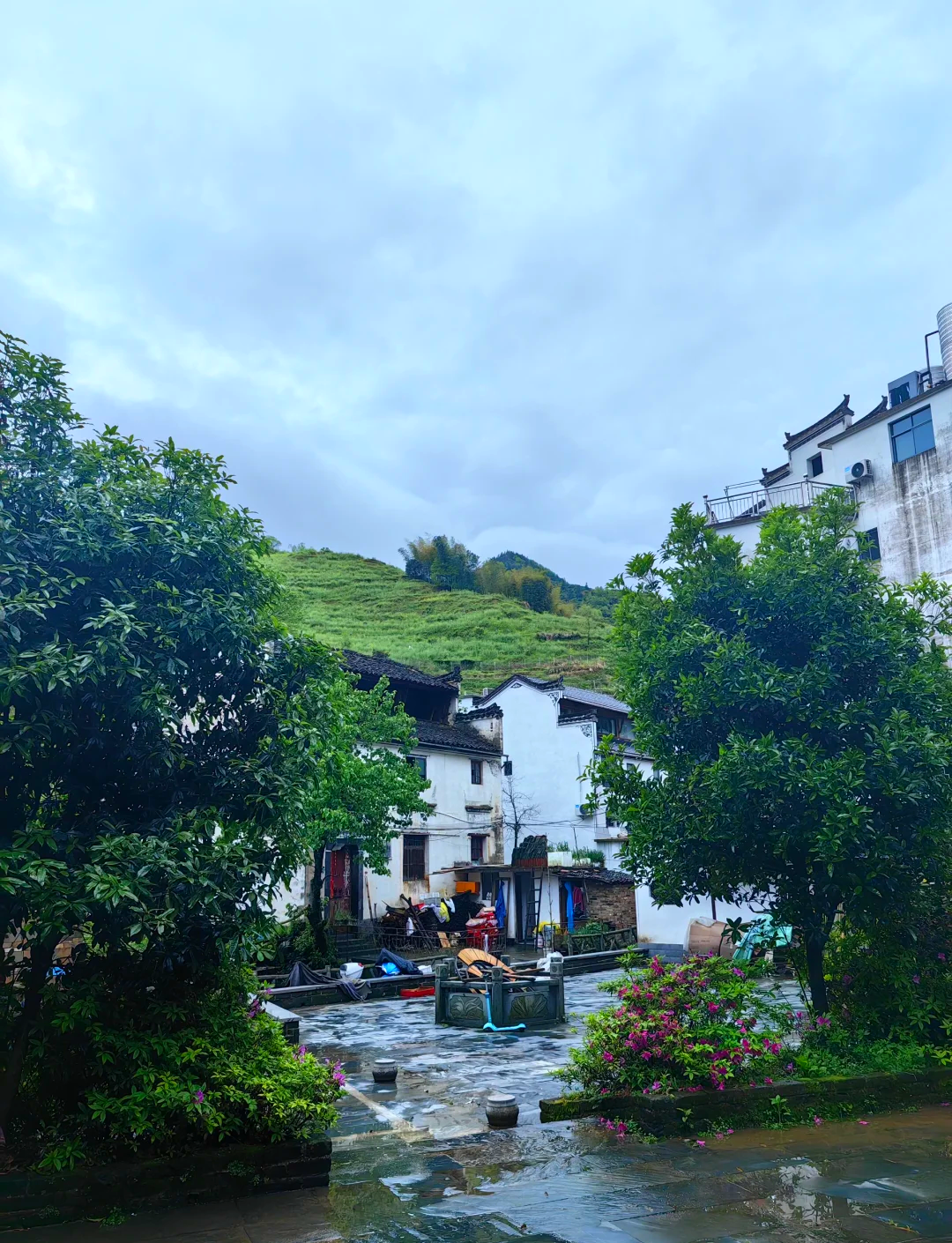 Xiaoyong was founded in the closing decades of the Tang dynasty, around the same period that the great cathedrals of Europe were rising from Romanesque foundations. The Cao family, migrants from the north, settled this narrow valley on the northern slopes of Shier Mountain and have farmed and worshipped here ever since. For more than a millennium, descendants have occupied the same courtyard homes, creating one of the most continuous clan settlements in the Wuyuan region. Walking the village lanes feels like stepping into a continuous medieval household, where a thousand years of lineage still define daily life.
The architecture is textbook Huizhou, a regional style that emerged in the same era as the great merchant houses of Renaissance Florence and is instantly recognizable to visitors who have toured the Anhui countryside. Whitewashed walls, blue-gray roof tiles, and distinctive horse-head gables rise from the hillside in carefully staggered rows, while interior courtyards draw sunlight into wood-beamed family halls. A stream threads through the village's center, giving Xiaoyong its characteristic boat-shaped silhouette, and stone bridges and stepped lanes connect the clustered homesteads in a layout that has remained practically unaltered for centuries.
What distinguishes Xiaoyong from Wuyuan's more polished heritage villages, such as Likeng or Huangling's restored core, is that it remains a working community rather than a museum. Villagers still wash clothes in the stream, smoke hams in their courtyards, and in autumn lay out chili peppers and chrysanthemums to dry on rooftop racks, a colorful custom known as "shai qiu." The mist that gathers at dawn and dusk softens the gray rooflines into something painterly, and the slow rhythm of farm life provides a rare window into the agricultural traditions that shaped classical Jiangnan culture.
Practicalities are deliberately minimal. There is no entrance fee, no ticket booth, and no public bus service; reaching the village requires a car and a transfer arranged by your guesthouse, typically by motorized three-wheeler from the mountain road below. The village has no shops, no restaurants open to non-guests, and no public toilets, so visitors must rely entirely on the family-run homestay where they sleep. Booking a well-reviewed inn that includes pickup, dinner, and breakfast is essentially the only sensible way to visit, and a one-night stay allows time to explore the lanes at dawn and dusk when the light is best.
The smartest itinerary is to combine Xiaoyong with neighboring Huangling, which can be reached by a forty-minute uphill hike through terraced fields rather than the cable car most tourists use. Early risers can leave before the Huangling crowds arrive and enjoy the cloud seas and rapeseed terraces almost alone, then return to Xiaoyong for a quiet afternoon. Spring (late March to mid-April) brings yellow canola blossoms, while October and November offer the famous harvest displays and atmospheric fog. The village is best avoided during the National Day holiday and is not suitable for visitors dependent on public transport, very young children, or those with limited mobility, as the lanes are narrow, steep, and frequently slick with mountain moisture.
Xiaoyong was founded in the closing decades of the Tang dynasty, around the same period that the great cathedrals of Europe were rising from Romanesque foundations. The Cao family, migrants from the north, settled this narrow valley on the northern slopes of Shier Mountain and have farmed and worshipped here ever since. For more than a millennium, descendants have occupied the same courtyard homes, creating one of the most continuous clan settlements in the Wuyuan region. Walking the village lanes feels like stepping into a continuous medieval household, where a thousand years of lineage still define daily life.
The architecture is textbook Huizhou, a regional style that emerged in the same era as the great merchant houses of Renaissance Florence and is instantly recognizable to visitors who have toured the Anhui countryside. Whitewashed walls, blue-gray roof tiles, and distinctive horse-head gables rise from the hillside in carefully staggered rows, while interior courtyards draw sunlight into wood-beamed family halls. A stream threads through the village's center, giving Xiaoyong its characteristic boat-shaped silhouette, and stone bridges and stepped lanes connect the clustered homesteads in a layout that has remained practically unaltered for centuries.
What distinguishes Xiaoyong from Wuyuan's more polished heritage villages, such as Likeng or Huangling's restored core, is that it remains a working community rather than a museum. Villagers still wash clothes in the stream, smoke hams in their courtyards, and in autumn lay out chili peppers and chrysanthemums to dry on rooftop racks, a colorful custom known as "shai qiu." The mist that gathers at dawn and dusk softens the gray rooflines into something painterly, and the slow rhythm of farm life provides a rare window into the agricultural traditions that shaped classical Jiangnan culture.
Practicalities are deliberately minimal. There is no entrance fee, no ticket booth, and no public bus service; reaching the village requires a car and a transfer arranged by your guesthouse, typically by motorized three-wheeler from the mountain road below. The village has no shops, no restaurants open to non-guests, and no public toilets, so visitors must rely entirely on the family-run homestay where they sleep. Booking a well-reviewed inn that includes pickup, dinner, and breakfast is essentially the only sensible way to visit, and a one-night stay allows time to explore the lanes at dawn and dusk when the light is best.
The smartest itinerary is to combine Xiaoyong with neighboring Huangling, which can be reached by a forty-minute uphill hike through terraced fields rather than the cable car most tourists use. Early risers can leave before the Huangling crowds arrive and enjoy the cloud seas and rapeseed terraces almost alone, then return to Xiaoyong for a quiet afternoon. Spring (late March to mid-April) brings yellow canola blossoms, while October and November offer the famous harvest displays and atmospheric fog. The village is best avoided during the National Day holiday and is not suitable for visitors dependent on public transport, very young children, or those with limited mobility, as the lanes are narrow, steep, and frequently slick with mountain moisture.