Bian Que Temple
⭐ 3.20
Bian Que Temple, Anyang City, Henan Province, China
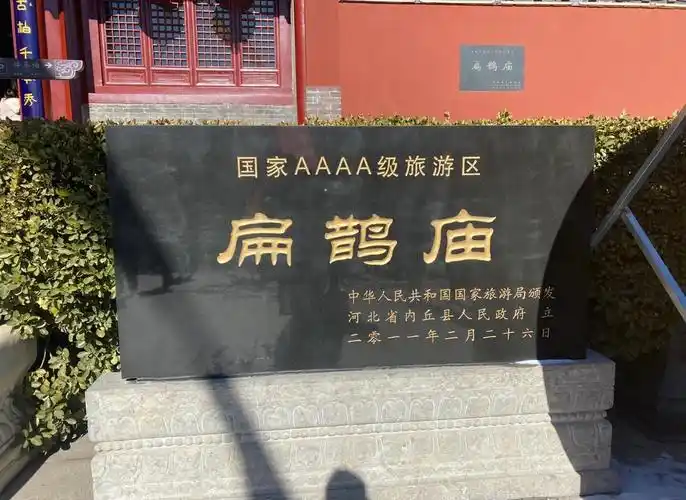 Bian Que (Qin Yueren) lived during the Warring States period (circa 5th century BCE), roughly contemporary with Hippocrates in ancient Greece. Both are revered as founders of systematic clinical medicine, and Bian Que’s “four examinations”—inspection, auscultation, inquiry, and pulse taking—remain the cornerstone of traditional Chinese diagnostics today. The temple, originally erected in his honor and serving as his burial site, is one of the few places where a medical pioneer’s tomb and shrine coexist, echoing the combined mausoleum‑temple complexes of ancient Mediterranean healers such as the Asclepion at Epidaurus.
The temple follows a north‑south axis typical of Chinese religious architecture, reminiscent of the processional path of a modest European cathedral. Visitors first pass through the gate, then cross a yin‑yang pool spanned by a symbolic bridge, a design that visually represents the balance of opposing forces central to Chinese medical philosophy. Beyond a second gate stands a suspended‑mountain style main hall dating to the Yuan dynasty, flanked by side halls that house statues of ten historic physicians. The layout culminates in the grave mound of Bian Que, while Ming and Qing repairs preserve the site’s early character.
Inside the main hall, a seated statue of Bian Que is surrounded by eleven vivid murals that recount his legendary feats, most famously the revival of the Prince of Guo, an episode often compared to the miracle stories of European saints. The side halls display statues of ten other celebrated physicians, creating a visual lineage that links ancient practice to modern Chinese medicine. Among the temple’s revered “three treasures” are a 20‑meter‑deep ancient well reputed for its healing water, nine‑headed mugwort harvested for the Dragon Boat Festival, and unnamed mineral stones believed to possess therapeutic properties. Folk legends about these items continue to enrich local rituals.
Located roughly 6–8 km southeast of Tangyin county in Anyang, the site covers about 16,000–20,000 m² and welcomes visitors daily from 08:00 to 18:00. Admission is usually free or a nominal fee, with complimentary entry during the lively fair held on the 15th day of the third lunar month. Plan 1.5–2 hours to walk the central axis, focusing on the murals, the yin‑yang bridge, and the grave mound. English signage, multilingual guides, and wheelchair access are limited, so carry a translation app, passport, water, and light snacks. Public transport is sparse; driving or a taxi from Anyang East Railway Station (about 30–40 minutes) is the most convenient option.
For travelers fascinated by the roots of holistic medicine, Bian Que Temple offers a rare glimpse into the birthplace of pulse diagnosis, a technique that predates the European stethoscope by more than two millennia. Its tranquil courtyards, set amid farmland, provide a peaceful contrast to China’s bustling tourist hubs. Walking the same path where the legendary healer was both honored and interred, visitors gain insight into how ancient Chinese medical philosophy continues to shape contemporary wellness practices, making the site a compelling stop for anyone interested in the history of medicine.
Bian Que (Qin Yueren) lived during the Warring States period (circa 5th century BCE), roughly contemporary with Hippocrates in ancient Greece. Both are revered as founders of systematic clinical medicine, and Bian Que’s “four examinations”—inspection, auscultation, inquiry, and pulse taking—remain the cornerstone of traditional Chinese diagnostics today. The temple, originally erected in his honor and serving as his burial site, is one of the few places where a medical pioneer’s tomb and shrine coexist, echoing the combined mausoleum‑temple complexes of ancient Mediterranean healers such as the Asclepion at Epidaurus.
The temple follows a north‑south axis typical of Chinese religious architecture, reminiscent of the processional path of a modest European cathedral. Visitors first pass through the gate, then cross a yin‑yang pool spanned by a symbolic bridge, a design that visually represents the balance of opposing forces central to Chinese medical philosophy. Beyond a second gate stands a suspended‑mountain style main hall dating to the Yuan dynasty, flanked by side halls that house statues of ten historic physicians. The layout culminates in the grave mound of Bian Que, while Ming and Qing repairs preserve the site’s early character.
Inside the main hall, a seated statue of Bian Que is surrounded by eleven vivid murals that recount his legendary feats, most famously the revival of the Prince of Guo, an episode often compared to the miracle stories of European saints. The side halls display statues of ten other celebrated physicians, creating a visual lineage that links ancient practice to modern Chinese medicine. Among the temple’s revered “three treasures” are a 20‑meter‑deep ancient well reputed for its healing water, nine‑headed mugwort harvested for the Dragon Boat Festival, and unnamed mineral stones believed to possess therapeutic properties. Folk legends about these items continue to enrich local rituals.
Located roughly 6–8 km southeast of Tangyin county in Anyang, the site covers about 16,000–20,000 m² and welcomes visitors daily from 08:00 to 18:00. Admission is usually free or a nominal fee, with complimentary entry during the lively fair held on the 15th day of the third lunar month. Plan 1.5–2 hours to walk the central axis, focusing on the murals, the yin‑yang bridge, and the grave mound. English signage, multilingual guides, and wheelchair access are limited, so carry a translation app, passport, water, and light snacks. Public transport is sparse; driving or a taxi from Anyang East Railway Station (about 30–40 minutes) is the most convenient option.
For travelers fascinated by the roots of holistic medicine, Bian Que Temple offers a rare glimpse into the birthplace of pulse diagnosis, a technique that predates the European stethoscope by more than two millennia. Its tranquil courtyards, set amid farmland, provide a peaceful contrast to China’s bustling tourist hubs. Walking the same path where the legendary healer was both honored and interred, visitors gain insight into how ancient Chinese medical philosophy continues to shape contemporary wellness practices, making the site a compelling stop for anyone interested in the history of medicine.