Anyang Ancient City Wall
⭐ 3.20
Anyang Ancient City Wall, Beiguan District, Anyang City, Henan Province, China
 Anyang's city wall traces its origins to the Ming Dynasty, when builders erected a fortification ring 6.6 kilometers long around the seat of Zhangde Prefecture in 1375. Yet this is far older ground: Anyang served as the final capital of the Shang Dynasty (c. 1300–1046 BCE), placing its court in the same century as Egypt's New Kingdom pharaohs and the twilight of Minoan Crete. The surrounding countryside yielded the famous oracle bones—dragon and turtle shells inscribed with the earliest verified Chinese writing—pushing the documented history of Chinese civilization back roughly a millennium. To stand on these ramparts is to occupy a political and ritual center familiar to readers of Bronze Age history.
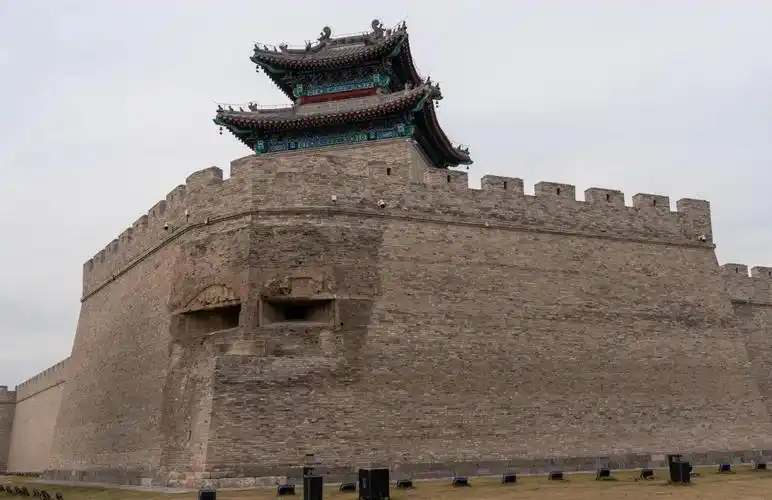
Of the original Ming wall, only a fractured southwest remnant and a meticulously restored southeast segment survive. The latter, faithfully reconstructed between 2018 and 2021 according to Ming imperial building codes, is dominated by the Kuixing Pavilion—a traditional multi-tiered tower with upswept eaves that any visitor to a Chinese temple town will recognize. The walkway atop this section runs roughly six meters wide, broad enough to recall the ramparts of Europe's great medieval walled cities. Carcassonne in southern France and Ávila in central Spain offer useful comparisons, though this corner of Anyang feels distinctly Chinese in its timber-and-tile aesthetic and its quieter scale.
Beyond military function, the wall encapsulates Anyang's layered identity as both Shang capital and Ming prefectural seat. After dusk, projection mapping transforms the masonry into a luminous canvas where oracle bone glyphs and taotie-style bronze patterns drift across the surface—a modern homage to Anyang's reputation as China's "City of Writing." The visual approach echoes heritage lighting at sites like Toledo's Alcázar or Carcassonne's nightly illumination, but the iconography is unmistakably Chinese, drawing visitors into a 3,300-year visual conversation that feels unexpectedly moving for travelers expecting only a static ruin.
The Kuixing Pavilion and southeast wall section open Tuesday through Sunday from 9:00 to 20:00, with extended hours to 21:00 during June, July, and August. Admission is free, though an online reservation is required. Internal exhibition halls occasionally close for maintenance, so calling ahead is advisable. There is no elevator access; expect to climb stone steps to reach the rampart walk, and wear sturdy non-slip footwear. English signage is limited—downloading a translation app or arranging a local guide will significantly enrich the experience. The site has no on-site café, but plentiful street food surrounds the approach.
Aim to arrive in the late afternoon. Begin inside the Kuixing Pavilion, where the "My City, Its Stories" exhibition explains Anyang's seven-dynasty pedigree, then ascend the rampart for a bird's-eye view of the old town's tile-roofed lanes. Stay as twilight descends: the projection show begins shortly after sunset and runs in repeating cycles. Afterward, walk ten minutes north to the photogenic Cangxiang Street, then continue to the leaning Wenfeng Pagoda and the City God Temple. Together, these stops form a compact half-day circuit that captures Anyang's commercial, spiritual, and architectural heritage in a single unhurried outing—ideal for visitors with limited time in Henan province.
Anyang's city wall traces its origins to the Ming Dynasty, when builders erected a fortification ring 6.6 kilometers long around the seat of Zhangde Prefecture in 1375. Yet this is far older ground: Anyang served as the final capital of the Shang Dynasty (c. 1300–1046 BCE), placing its court in the same century as Egypt's New Kingdom pharaohs and the twilight of Minoan Crete. The surrounding countryside yielded the famous oracle bones—dragon and turtle shells inscribed with the earliest verified Chinese writing—pushing the documented history of Chinese civilization back roughly a millennium. To stand on these ramparts is to occupy a political and ritual center familiar to readers of Bronze Age history.
Of the original Ming wall, only a fractured southwest remnant and a meticulously restored southeast segment survive. The latter, faithfully reconstructed between 2018 and 2021 according to Ming imperial building codes, is dominated by the Kuixing Pavilion—a traditional multi-tiered tower with upswept eaves that any visitor to a Chinese temple town will recognize. The walkway atop this section runs roughly six meters wide, broad enough to recall the ramparts of Europe's great medieval walled cities. Carcassonne in southern France and Ávila in central Spain offer useful comparisons, though this corner of Anyang feels distinctly Chinese in its timber-and-tile aesthetic and its quieter scale.
Beyond military function, the wall encapsulates Anyang's layered identity as both Shang capital and Ming prefectural seat. After dusk, projection mapping transforms the masonry into a luminous canvas where oracle bone glyphs and taotie-style bronze patterns drift across the surface—a modern homage to Anyang's reputation as China's "City of Writing." The visual approach echoes heritage lighting at sites like Toledo's Alcázar or Carcassonne's nightly illumination, but the iconography is unmistakably Chinese, drawing visitors into a 3,300-year visual conversation that feels unexpectedly moving for travelers expecting only a static ruin.
The Kuixing Pavilion and southeast wall section open Tuesday through Sunday from 9:00 to 20:00, with extended hours to 21:00 during June, July, and August. Admission is free, though an online reservation is required. Internal exhibition halls occasionally close for maintenance, so calling ahead is advisable. There is no elevator access; expect to climb stone steps to reach the rampart walk, and wear sturdy non-slip footwear. English signage is limited—downloading a translation app or arranging a local guide will significantly enrich the experience. The site has no on-site café, but plentiful street food surrounds the approach.
Aim to arrive in the late afternoon. Begin inside the Kuixing Pavilion, where the "My City, Its Stories" exhibition explains Anyang's seven-dynasty pedigree, then ascend the rampart for a bird's-eye view of the old town's tile-roofed lanes. Stay as twilight descends: the projection show begins shortly after sunset and runs in repeating cycles. Afterward, walk ten minutes north to the photogenic Cangxiang Street, then continue to the leaning Wenfeng Pagoda and the City God Temple. Together, these stops form a compact half-day circuit that captures Anyang's commercial, spiritual, and architectural heritage in a single unhurried outing—ideal for visitors with limited time in Henan province.