Anyang Museum
⭐ 4.00
No. 168, West Section of Zhonghua Road, Beiguan District, Anyang City, Henan Province, China
 Anyang served as the final capital of the Shang Dynasty, the earliest Chinese civilization verified by contemporary written records. The accidental discovery of "dragon bones"—oracle bones inscribed with China's oldest known script—in 1899 transformed global understanding of East Asian antiquity, much as Champollion's decoding of the Rosetta Stone unlocked ancient Egypt. The museum preserves this remarkable legacy, presenting the sophisticated urban culture that flourished along the Yellow River three thousand years ago, when Shang kings ruled from elaborate palace-temple complexes.
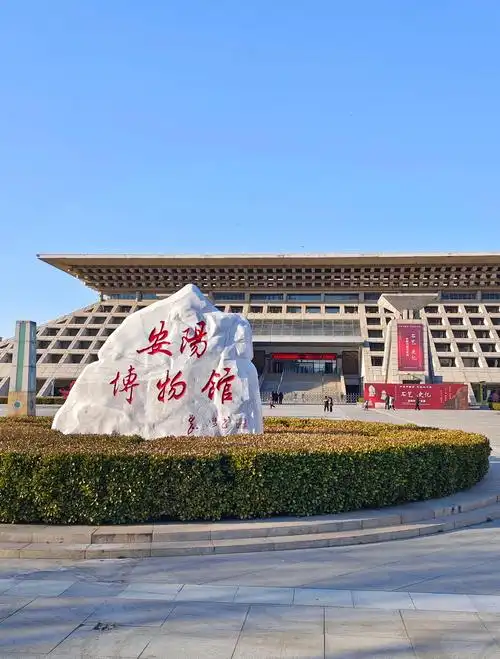
The modern museum building rises beneath a striking "inverted truncated pyramid" roof—a square, funnel-shaped crown that evokes the ancient cosmological ideal of "heaven is round, earth is square." Spanning roughly 20,000 square meters with 5,000 square meters of dedicated exhibition space, the airy, symmetrical halls provide a dignified stage for monumental artifacts, recalling the proportions of a ceremonial shrine. Clean sightlines, generous ceiling height, and ample natural light make artifact viewing a relaxed pleasure.
The collection's heart lies in Shang and Zhou dynasty bronzes—magnificent pieces such as the animal-mask patterned *jia* wine warmer and the cord-patterned *yan* steamer—whose elaborate taotie motifs predate comparable European Bronze Age artistry by nearly a millennium. Jade carvings reveal the ritual hierarchies of early Chinese elites, while oracle bone fragments offer intimate glimpses of royal divination. Selections from Lady Fu Hao's tomb, one of the twentieth century's most remarkable archaeological finds, have been displayed here, complemented by Qing dynasty porcelain and folk woodblock New Year prints.
As the cultural anchor of an ancient capital, the museum contextualizes Anyang's 3,000-year urban history within the broader sweep of Central Plains civilization. Its permanent exhibition traces local history from Neolithic settlements through the Shang zenith, the Zhou transformation, and later dynasties. By placing Anyang alongside other great river-valley civilizations of antiquity—Egypt, Mesopotamia, the Indus—it invites visitors to see China as part of a global story of early statecraft and writing.
The museum sits at 436 Wenming Avenue in Wenfeng District. Admission is free, with doors open Tuesday through Sunday from 9:00 a.m. to 5:00 p.m. (last entry at 4:30 p.m.); it closes on Mondays and adjusts hours during Chinese holidays. Visitors should bring valid photo ID for registration, and groups are kindly asked to book ahead. Guided tours in Chinese are available for a small fee and can be arranged in advance by phone.
Allow two to three hours to follow the suggested route—chronological history gallery, then bronzes, jades, and oracle bones—for the clearest narrative thread. History enthusiasts, families seeking an educational outing, and photographers drawn to atmospheric artifact displays will all find rewards. The museum pairs naturally with a visit to the nearby Yinxu ruins, the UNESCO-listed Shang palace and temple complex where many of these treasures were originally unearthed.
Anyang served as the final capital of the Shang Dynasty, the earliest Chinese civilization verified by contemporary written records. The accidental discovery of "dragon bones"—oracle bones inscribed with China's oldest known script—in 1899 transformed global understanding of East Asian antiquity, much as Champollion's decoding of the Rosetta Stone unlocked ancient Egypt. The museum preserves this remarkable legacy, presenting the sophisticated urban culture that flourished along the Yellow River three thousand years ago, when Shang kings ruled from elaborate palace-temple complexes.
The modern museum building rises beneath a striking "inverted truncated pyramid" roof—a square, funnel-shaped crown that evokes the ancient cosmological ideal of "heaven is round, earth is square." Spanning roughly 20,000 square meters with 5,000 square meters of dedicated exhibition space, the airy, symmetrical halls provide a dignified stage for monumental artifacts, recalling the proportions of a ceremonial shrine. Clean sightlines, generous ceiling height, and ample natural light make artifact viewing a relaxed pleasure.
The collection's heart lies in Shang and Zhou dynasty bronzes—magnificent pieces such as the animal-mask patterned *jia* wine warmer and the cord-patterned *yan* steamer—whose elaborate taotie motifs predate comparable European Bronze Age artistry by nearly a millennium. Jade carvings reveal the ritual hierarchies of early Chinese elites, while oracle bone fragments offer intimate glimpses of royal divination. Selections from Lady Fu Hao's tomb, one of the twentieth century's most remarkable archaeological finds, have been displayed here, complemented by Qing dynasty porcelain and folk woodblock New Year prints.
As the cultural anchor of an ancient capital, the museum contextualizes Anyang's 3,000-year urban history within the broader sweep of Central Plains civilization. Its permanent exhibition traces local history from Neolithic settlements through the Shang zenith, the Zhou transformation, and later dynasties. By placing Anyang alongside other great river-valley civilizations of antiquity—Egypt, Mesopotamia, the Indus—it invites visitors to see China as part of a global story of early statecraft and writing.
The museum sits at 436 Wenming Avenue in Wenfeng District. Admission is free, with doors open Tuesday through Sunday from 9:00 a.m. to 5:00 p.m. (last entry at 4:30 p.m.); it closes on Mondays and adjusts hours during Chinese holidays. Visitors should bring valid photo ID for registration, and groups are kindly asked to book ahead. Guided tours in Chinese are available for a small fee and can be arranged in advance by phone.
Allow two to three hours to follow the suggested route—chronological history gallery, then bronzes, jades, and oracle bones—for the clearest narrative thread. History enthusiasts, families seeking an educational outing, and photographers drawn to atmospheric artifact displays will all find rewards. The museum pairs naturally with a visit to the nearby Yinxu ruins, the UNESCO-listed Shang palace and temple complex where many of these treasures were originally unearthed.