Tangyin Yue Fei Temple
⭐ 4.50
No. 86, Yuemiao Street, Tangyin County, Anyang City, Henan Province, China
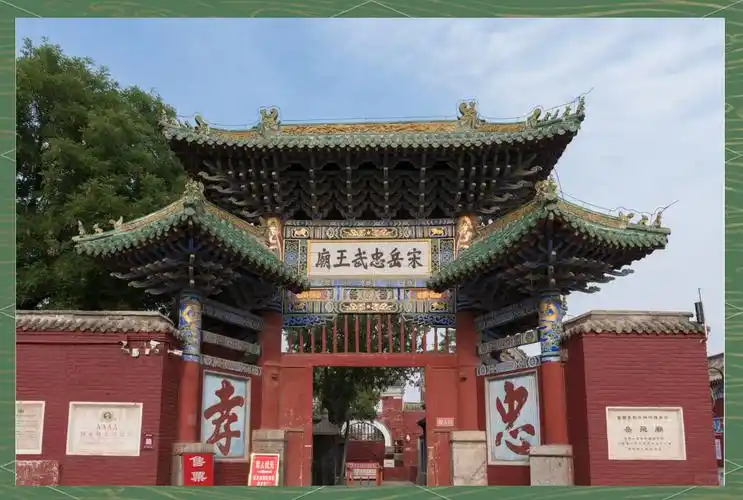 Rising in loyalty's own backyard, Tangyin Yue Fei Temple occupies the birthplace of the 1103–1142 Song Dynasty general whose unwavering defiance against the Jurchen Jin invaders inspired generations. Comparable in cultural gravitas to England's Warwick Castle or France's Loire Valley châteaux in national mythology, this was the soil that forged a warrior-poet immortalized in opera, film, and schoolchildren's recitations. First built in unknown antiquity and magnificently reconstructed in 1450 during the Ming Jingtai reign, the temple earned National Key Cultural Relics status in 2001 and AAAA scenic rating. Western visitors familiar with the martyrdom of Joan of Arc will recognize a kindred spirit—Yue Fei's tragic poisoning at Emperor Gaozong's behest remains Asia's archetypal tale of loyalty betrayed by political expediency.
The architectural experience unfolds across six sequential courtyards in the historic zone, crowned by the breathtaking Jingzhong (Loyalty) Memorial Arch. This three-bay, six-pillar wooden paifang with its nine-tier bracket sets represents Ming-era engineering at its most theatrical—think of it as the Chinese equivalent of a Gothic cathedral's west front, designed to overwhelm pilgrims before they even cross the threshold. Beyond lies a theatrical morality play in bronze: five kneeling iron figures representing the treacherous officials Qin Hui, Wang Shi, Moqi Xie, Zhang Jun, and Wang Jun face the sword-wielding statue of the loyal general Shi Quan. The Main Hall's 2.3-meter painted statue of Yue Fei sits beneath the famous "Restore My Rivers and Mountains" plaque, while his mother tattooing "Serve the Country" on his back is depicted in moving narrative sculptures.
The Stele Forest ranks among China's finest open-air calligraphy collections, featuring Yue Fei's own brushwork on classics like "Man Jiang Hong" and "The Sword Song," alongside imperial inscriptions from Ming Hongwu through Qing Qianlong and even Mao Zedong. The modern 11,800-square-meter Yue Fei Memorial Museum, the nation's largest dedicated to the general, employs immersive multimedia to chronicle his military genius, philosophical legacy, and enduring cultural influence—much as modern European war memorials now blend digital storytelling with traditional reverence to engage younger generations.
Practical planning is straightforward. Combined tickets for old and new halls cost just 50 RMB (under $7 USD), with complimentary admission for seniors over 60 and children under 1.4 meters. Summer hours run 8:00–18:00; winter 8:00–17:30. The site sits 30–40 minutes by taxi from downtown Anyang, with parking at roughly 5 RMB daily. Foreign visitors should book a Mandarin-speaking guide in advance through the official site or download a translation app—the carved inscriptions and moral symbolism reward patient decoding rather than rushed glances. Allow a full two to three hours.
For a richer cultural day-trip, pair your visit with the nearby Youli Cheng ruins, birthplace of the I Ching and just ten minutes away, before returning to Tangyin's old town streets for local specialties like bian fen cai flat noodle soup and Daokou braised chicken. Unlike the commercialized Forbidden City or Terracotta Warriors, this remains a working shrine where Chinese schoolchildren still lay flowers—offering Western travelers an authentic encounter with living history that few packaged tours ever reveal.
Rising in loyalty's own backyard, Tangyin Yue Fei Temple occupies the birthplace of the 1103–1142 Song Dynasty general whose unwavering defiance against the Jurchen Jin invaders inspired generations. Comparable in cultural gravitas to England's Warwick Castle or France's Loire Valley châteaux in national mythology, this was the soil that forged a warrior-poet immortalized in opera, film, and schoolchildren's recitations. First built in unknown antiquity and magnificently reconstructed in 1450 during the Ming Jingtai reign, the temple earned National Key Cultural Relics status in 2001 and AAAA scenic rating. Western visitors familiar with the martyrdom of Joan of Arc will recognize a kindred spirit—Yue Fei's tragic poisoning at Emperor Gaozong's behest remains Asia's archetypal tale of loyalty betrayed by political expediency.
The architectural experience unfolds across six sequential courtyards in the historic zone, crowned by the breathtaking Jingzhong (Loyalty) Memorial Arch. This three-bay, six-pillar wooden paifang with its nine-tier bracket sets represents Ming-era engineering at its most theatrical—think of it as the Chinese equivalent of a Gothic cathedral's west front, designed to overwhelm pilgrims before they even cross the threshold. Beyond lies a theatrical morality play in bronze: five kneeling iron figures representing the treacherous officials Qin Hui, Wang Shi, Moqi Xie, Zhang Jun, and Wang Jun face the sword-wielding statue of the loyal general Shi Quan. The Main Hall's 2.3-meter painted statue of Yue Fei sits beneath the famous "Restore My Rivers and Mountains" plaque, while his mother tattooing "Serve the Country" on his back is depicted in moving narrative sculptures.
The Stele Forest ranks among China's finest open-air calligraphy collections, featuring Yue Fei's own brushwork on classics like "Man Jiang Hong" and "The Sword Song," alongside imperial inscriptions from Ming Hongwu through Qing Qianlong and even Mao Zedong. The modern 11,800-square-meter Yue Fei Memorial Museum, the nation's largest dedicated to the general, employs immersive multimedia to chronicle his military genius, philosophical legacy, and enduring cultural influence—much as modern European war memorials now blend digital storytelling with traditional reverence to engage younger generations.
Practical planning is straightforward. Combined tickets for old and new halls cost just 50 RMB (under $7 USD), with complimentary admission for seniors over 60 and children under 1.4 meters. Summer hours run 8:00–18:00; winter 8:00–17:30. The site sits 30–40 minutes by taxi from downtown Anyang, with parking at roughly 5 RMB daily. Foreign visitors should book a Mandarin-speaking guide in advance through the official site or download a translation app—the carved inscriptions and moral symbolism reward patient decoding rather than rushed glances. Allow a full two to three hours.
For a richer cultural day-trip, pair your visit with the nearby Youli Cheng ruins, birthplace of the I Ching and just ten minutes away, before returning to Tangyin's old town streets for local specialties like bian fen cai flat noodle soup and Daokou braised chicken. Unlike the commercialized Forbidden City or Terracotta Warriors, this remains a working shrine where Chinese schoolchildren still lay flowers—offering Western travelers an authentic encounter with living history that few packaged tours ever reveal.