Wenfeng Tower
⭐ 4.50
Beiguan District, Anyang City, Henan Province, China
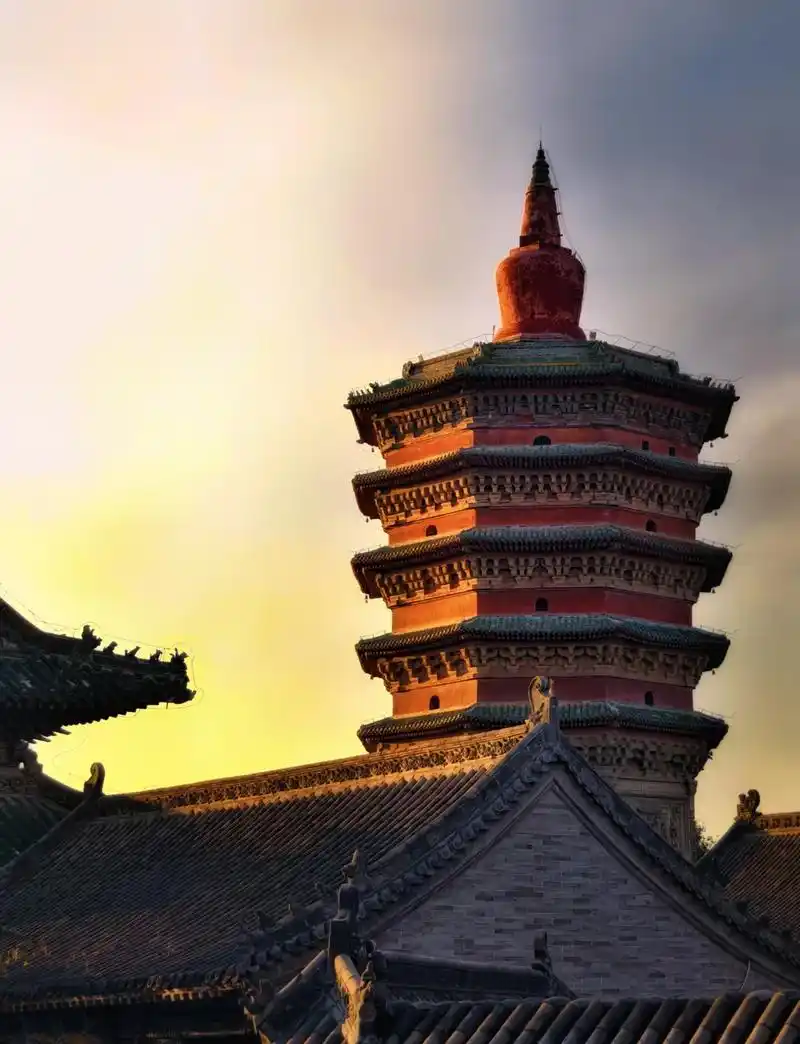 Standing 38.65 meters tall, Wenfeng Pagoda has watched over Anyang's old city for more than a millennium, a span nearly equal to the entire history of England's Canterbury Cathedral. The pagoda was originally built in 952 CE as part of Tianning Temple during the chaotic Five Dynasties period, an era roughly contemporary with the rise of the Holy Roman Empire under Otto I. Its current name dates to the Qing dynasty, when a provincial governor renamed it to honor local literary traditions. In 2001, the Chinese government elevated it to national key cultural relic status, recognizing both its architectural uniqueness and its role as a symbol of Anyang—itself a city whose written records stretch back to the Shang dynasty around 1300 BCE, making it among the oldest continuously inhabited cities in East Asia.
What immediately distinguishes Wenfeng Pagoda from virtually every other historic Chinese tower is its inverted silhouette: rather than tapering toward the top as do the great pagodas of Xi'an, Datong, or Kyoto's Tō-ji, this structure widens as it rises, creating an umbrella or parasol profile. Comparable in shape-shifting audacity to Antoni Gaudí's playful reversals of classical proportion, the design exists nowhere else among surviving ancient Chinese pagodas. The eight-sided brick-and-wood construction follows the standard densi-eaves (密檐) format, but the flared upper stories create an almost defiant visual statement that has puzzled and delighted architectural historians for centuries.
The pagoda's hybrid spiritual identity adds another layer of fascination. While its body follows Han Chinese Buddhist traditions—embodied in finely preserved Song and Yuan dynasty brick reliefs depicting the birth and teachings of Shakyamuni Buddha, Guanyin bodhisattva, and twin-dragon motifs—its crowning spire adopts the distinctive form of a Tibetan dagoba. This unlikely marriage of cultural elements reflects the cosmopolitan religious currents flowing across China during the 10th to 13th centuries, when trade and pilgrimage routes carried influences from Lhasa as readily as from Luoyang. The carvings have weathered remarkably well, offering visitors an accessible window into medieval Buddhist iconography without the crowds of more famous sites.
Climbing the pagoda itself is part of the experience. Inside, visitors ascend via 72 spiraling steps built into the thick walls in the traditional Chinese "wall-embedded folded ascent" style—a clever engineering solution found in many Asian towers, though rarely so well preserved. The uppermost platform, roughly 100 square meters, can accommodate over 200 people and rewards climbers with sweeping views across Anyang's old town toward the distant tail-end ridges of the Taihang Mountains, the same range that forms the spine of northern China. Photographers will find soft evening light particularly flattering for capturing the pagoda's dramatic profile, especially when ancient cypresses and red temple walls frame the scene.
Practical details make a visit straightforward. Wenfeng Pagoda sits at No. 1 Wenfeng South Street, Wenfeng District, inside the Tianning Temple compound, easily reached by city buses 26, 38, or 39 to the "Wenfeng Pagoda" stop, or by taxi from central Anyang. Admission runs approximately 25 yuan, with free entry for visitors over 60 and half-price student tickets; foreign guests should bring their passport for ticket purchase. Opening hours run 08:00 to 18:00 generally, extending to 20:30 with night visits available in peak season (May through October). Foreign-language guided tours require advance booking via 0372-5923227 to confirm availability. Visitors are reminded that steps are steep and narrow—wear sturdy non-slip shoes, accompany children and elderly companions, and never touch or carve the historic brickwork.
Pairing Wenfeng Pagoda with Anyang's other headline attractions makes for an unforgettable cultural day. The Yin Ruins (Yinxu), just minutes away, hold the ruins of the late Shang capital and oracle bones bearing the earliest known Chinese writing—a UNESCO World Heritage Site since 2006, parallel in significance to Rome's Forum or Athens's Acropolis for understanding a civilization's dawn. The nearby National Museum of Chinese Writing continues the narrative, while the restored Cangxiang Street historic district offers atmospheric evening walks through Ming and Qing-era lanes. Allocate half a day to a full day for this trio, beginning at Yin Ruins, continuing through the writing museum, and finishing at Wenfeng Pagoda for sunset. Drone flights are prohibited over the protected site, with violators facing serious legal consequences, so leave aerial equipment behind and experience this 1,000-year-old masterpiece at ground level where its stories unfold most vividly.
Standing 38.65 meters tall, Wenfeng Pagoda has watched over Anyang's old city for more than a millennium, a span nearly equal to the entire history of England's Canterbury Cathedral. The pagoda was originally built in 952 CE as part of Tianning Temple during the chaotic Five Dynasties period, an era roughly contemporary with the rise of the Holy Roman Empire under Otto I. Its current name dates to the Qing dynasty, when a provincial governor renamed it to honor local literary traditions. In 2001, the Chinese government elevated it to national key cultural relic status, recognizing both its architectural uniqueness and its role as a symbol of Anyang—itself a city whose written records stretch back to the Shang dynasty around 1300 BCE, making it among the oldest continuously inhabited cities in East Asia.
What immediately distinguishes Wenfeng Pagoda from virtually every other historic Chinese tower is its inverted silhouette: rather than tapering toward the top as do the great pagodas of Xi'an, Datong, or Kyoto's Tō-ji, this structure widens as it rises, creating an umbrella or parasol profile. Comparable in shape-shifting audacity to Antoni Gaudí's playful reversals of classical proportion, the design exists nowhere else among surviving ancient Chinese pagodas. The eight-sided brick-and-wood construction follows the standard densi-eaves (密檐) format, but the flared upper stories create an almost defiant visual statement that has puzzled and delighted architectural historians for centuries.
The pagoda's hybrid spiritual identity adds another layer of fascination. While its body follows Han Chinese Buddhist traditions—embodied in finely preserved Song and Yuan dynasty brick reliefs depicting the birth and teachings of Shakyamuni Buddha, Guanyin bodhisattva, and twin-dragon motifs—its crowning spire adopts the distinctive form of a Tibetan dagoba. This unlikely marriage of cultural elements reflects the cosmopolitan religious currents flowing across China during the 10th to 13th centuries, when trade and pilgrimage routes carried influences from Lhasa as readily as from Luoyang. The carvings have weathered remarkably well, offering visitors an accessible window into medieval Buddhist iconography without the crowds of more famous sites.
Climbing the pagoda itself is part of the experience. Inside, visitors ascend via 72 spiraling steps built into the thick walls in the traditional Chinese "wall-embedded folded ascent" style—a clever engineering solution found in many Asian towers, though rarely so well preserved. The uppermost platform, roughly 100 square meters, can accommodate over 200 people and rewards climbers with sweeping views across Anyang's old town toward the distant tail-end ridges of the Taihang Mountains, the same range that forms the spine of northern China. Photographers will find soft evening light particularly flattering for capturing the pagoda's dramatic profile, especially when ancient cypresses and red temple walls frame the scene.
Practical details make a visit straightforward. Wenfeng Pagoda sits at No. 1 Wenfeng South Street, Wenfeng District, inside the Tianning Temple compound, easily reached by city buses 26, 38, or 39 to the "Wenfeng Pagoda" stop, or by taxi from central Anyang. Admission runs approximately 25 yuan, with free entry for visitors over 60 and half-price student tickets; foreign guests should bring their passport for ticket purchase. Opening hours run 08:00 to 18:00 generally, extending to 20:30 with night visits available in peak season (May through October). Foreign-language guided tours require advance booking via 0372-5923227 to confirm availability. Visitors are reminded that steps are steep and narrow—wear sturdy non-slip shoes, accompany children and elderly companions, and never touch or carve the historic brickwork.
Pairing Wenfeng Pagoda with Anyang's other headline attractions makes for an unforgettable cultural day. The Yin Ruins (Yinxu), just minutes away, hold the ruins of the late Shang capital and oracle bones bearing the earliest known Chinese writing—a UNESCO World Heritage Site since 2006, parallel in significance to Rome's Forum or Athens's Acropolis for understanding a civilization's dawn. The nearby National Museum of Chinese Writing continues the narrative, while the restored Cangxiang Street historic district offers atmospheric evening walks through Ming and Qing-era lanes. Allocate half a day to a full day for this trio, beginning at Yin Ruins, continuing through the writing museum, and finishing at Wenfeng Pagoda for sunset. Drone flights are prohibited over the protected site, with violators facing serious legal consequences, so leave aerial equipment behind and experience this 1,000-year-old masterpiece at ground level where its stories unfold most vividly.