Yinxu
⭐ 4.20
Anyang City, Henan Province, China
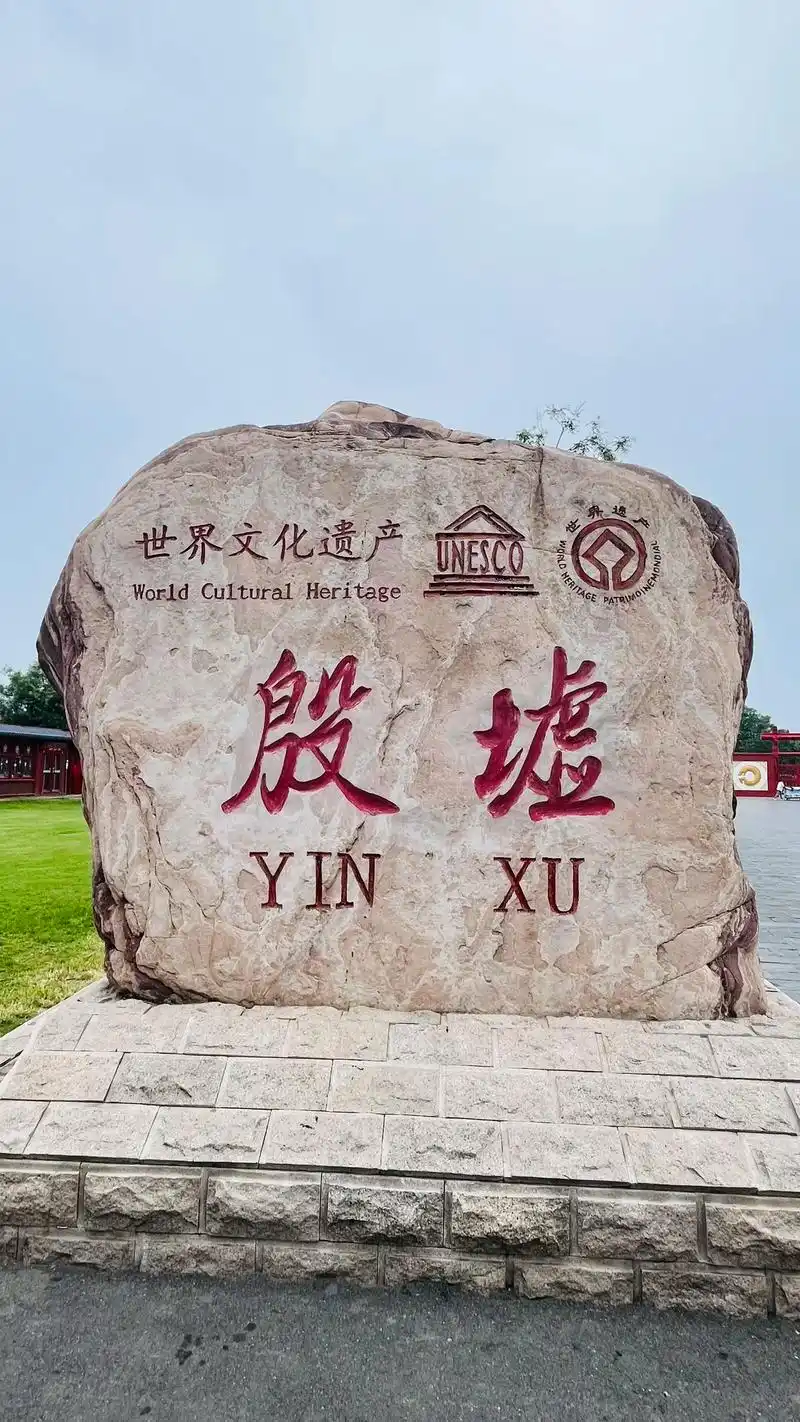 Yinxu takes us back to around 1300 BCE, when King Pan Geng relocated the Shang capital to this spot beside the Huan River, establishing what historians call "Yin"—the first stable, large-scale urban center in Chinese history. For roughly two and a half centuries, this was the nerve center of a sophisticated bronze-age kingdom, contemporary with the late New Kingdom pharaohs of Egypt, the Trojan War era of the Mediterranean, and the great Mycenaean palaces of Greece. After the Shang fell, the city vanished beneath the earth until the early twentieth century, when the accidental discovery of inscribed oracle bones rewrote history, pushing China's documented past back by a millennium and making Yinxu one of the most important archaeological sites in the world.
The Palace-Temple district is sometimes called the "Forbidden City of the Shang," and though its timber halls long ago returned to dust, the rammed-earth foundations and sacrificial pits remain remarkably evocative. Visitors can peer into the famous YH127 oracle bone cache—unearthed in a single dramatic excavation that yielded over 17,000 inscribed turtle shells and ox scapulae—along with Lady Fu Hao's tomb, an astonishing time-capsule belonging to a warrior queen and royal consort. The finds here rival in richness the royal tombs of Mycenae or the treasures of Ur, offering a glimpse into court ritual, divination, and warfare from a culture that flourished three centuries before Homer.
A short shuttle ride away, the Royal Tombs area preserves thirteen massive burial mounds plus thousands of ritual sacrifice pits, earning comparisons to Egypt's Valley of the Kings or Italy's Etruscan necropoleis. It is here that the legendary Houmuwu Ding was unearthed in 1939—a monumental 832-kilogram bronze cauldron that remains the heaviest ancient bronze ever cast anywhere on earth. The adjacent Yinxu Museum, opened in 2024 with a striking earth-sheltered architectural design, displays more than 4,000 artifacts across themed galleries including a "Shang Civilization in the World" exhibition and immersive XR experiences that bring the dynasty's politics, warfare, and craftsmanship vividly to life.
Practicalities are refreshingly straightforward. The new Yinxu Museum (around ¥80) sits at the intersection of Fangzhi Road and Shachang Road in Yindu District, while the Palace-Temple site (around ¥50) and Royal Tombs require separate tickets; free shuttle buses connect all three zones. Summer hours run 8:30–17:30 for the museum and 8:00–18:00 for the open-air sites, with shorter winter schedules. Book in advance via the WeChat account "殷墟博物馆," and consider renting an audio guide (about ¥30) or hiring a docent—without context, the ruins can feel deceptively quiet. Photography is prohibited in core excavation areas and most museum galleries, so respect the signage and simply let your eyes do the work.
Plan a full five to six hours, following the logical route: museum first (about three hours), then Palace-Temple (two hours), finishing at the Royal Tombs (one hour). Spring and autumn bring the most comfortable weather, though summers can be punishing in the unshaded excavation fields, so bring a hat, water, and sunscreen. After dark, catch the open-air performance "Great City of Shang" along the Huan River, or wander the nearby archaeology-themed cultural town for atmospheric evening strolls. Yinxu is not a site that dazzles with marble columns and gilded domes—its power lies in the humbler magic of cracked bones, bronze alloys, and earth that still whispers with three millennia of memory. Few places on earth let you stand so close to the birth of literacy itself.
Yinxu takes us back to around 1300 BCE, when King Pan Geng relocated the Shang capital to this spot beside the Huan River, establishing what historians call "Yin"—the first stable, large-scale urban center in Chinese history. For roughly two and a half centuries, this was the nerve center of a sophisticated bronze-age kingdom, contemporary with the late New Kingdom pharaohs of Egypt, the Trojan War era of the Mediterranean, and the great Mycenaean palaces of Greece. After the Shang fell, the city vanished beneath the earth until the early twentieth century, when the accidental discovery of inscribed oracle bones rewrote history, pushing China's documented past back by a millennium and making Yinxu one of the most important archaeological sites in the world.
The Palace-Temple district is sometimes called the "Forbidden City of the Shang," and though its timber halls long ago returned to dust, the rammed-earth foundations and sacrificial pits remain remarkably evocative. Visitors can peer into the famous YH127 oracle bone cache—unearthed in a single dramatic excavation that yielded over 17,000 inscribed turtle shells and ox scapulae—along with Lady Fu Hao's tomb, an astonishing time-capsule belonging to a warrior queen and royal consort. The finds here rival in richness the royal tombs of Mycenae or the treasures of Ur, offering a glimpse into court ritual, divination, and warfare from a culture that flourished three centuries before Homer.
A short shuttle ride away, the Royal Tombs area preserves thirteen massive burial mounds plus thousands of ritual sacrifice pits, earning comparisons to Egypt's Valley of the Kings or Italy's Etruscan necropoleis. It is here that the legendary Houmuwu Ding was unearthed in 1939—a monumental 832-kilogram bronze cauldron that remains the heaviest ancient bronze ever cast anywhere on earth. The adjacent Yinxu Museum, opened in 2024 with a striking earth-sheltered architectural design, displays more than 4,000 artifacts across themed galleries including a "Shang Civilization in the World" exhibition and immersive XR experiences that bring the dynasty's politics, warfare, and craftsmanship vividly to life.
Practicalities are refreshingly straightforward. The new Yinxu Museum (around ¥80) sits at the intersection of Fangzhi Road and Shachang Road in Yindu District, while the Palace-Temple site (around ¥50) and Royal Tombs require separate tickets; free shuttle buses connect all three zones. Summer hours run 8:30–17:30 for the museum and 8:00–18:00 for the open-air sites, with shorter winter schedules. Book in advance via the WeChat account "殷墟博物馆," and consider renting an audio guide (about ¥30) or hiring a docent—without context, the ruins can feel deceptively quiet. Photography is prohibited in core excavation areas and most museum galleries, so respect the signage and simply let your eyes do the work.
Plan a full five to six hours, following the logical route: museum first (about three hours), then Palace-Temple (two hours), finishing at the Royal Tombs (one hour). Spring and autumn bring the most comfortable weather, though summers can be punishing in the unshaded excavation fields, so bring a hat, water, and sunscreen. After dark, catch the open-air performance "Great City of Shang" along the Huan River, or wander the nearby archaeology-themed cultural town for atmospheric evening strolls. Yinxu is not a site that dazzles with marble columns and gilded domes—its power lies in the humbler magic of cracked bones, bronze alloys, and earth that still whispers with three millennia of memory. Few places on earth let you stand so close to the birth of literacy itself.