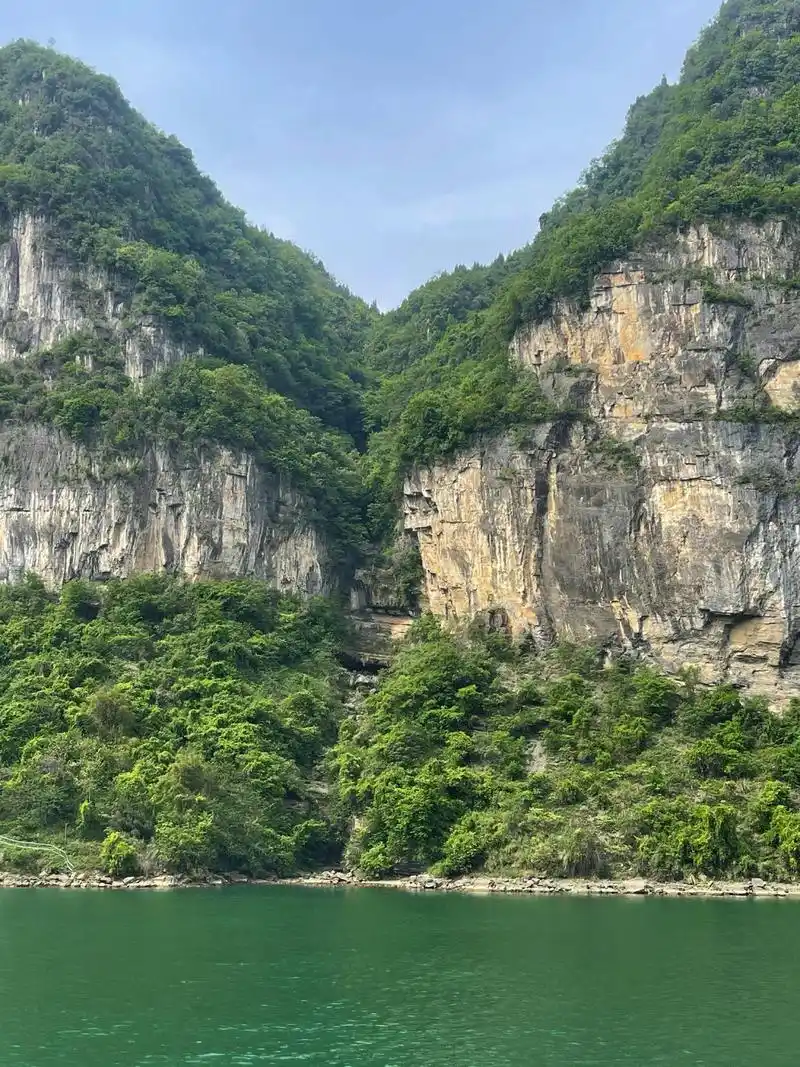
Yaozixia Scenic Area
⭐ 3.80
Yaozixia Scenic Area, Xizihu Town, Tongcheng City, Anqing City, Anhui Province, China
 The Dabie Mountains have been a strategic crossroads for over two millennia, dividing the Yangtze and Huai River plains much as the Alps separate northern from southern Europe. In the 1930s, these rugged ridgelines became a guerrilla stronghold for the Chinese Red Army—comparable in significance to Italy's Apennine partisans during the Second World War. The Red 28th Army established its mountain base here, and the reserve still preserves a complete complex of revolutionary sites, including the Red 28th Army Memorial Hall and the Nie Family Old House. These weathered structures offer a tangible link to the conflicts that shaped modern China.
At roughly 300,000 mu of contiguous old-growth woodland, Yaoluoping ranks among the last virgin forests in a region where lowland plains have swallowed almost every comparable ecosystem. Botanists call it a "natural gene bank," and the air carries some of the highest concentrations of negative oxygen ions measured in the country—an experience like walking through a Scottish pinewood after heavy rain. The Ten-Mile Gallery is a stone-lined irrigation path that ribbons through the hills for five miles, flanked by cascading waterfalls and wild azalea banks that erupt in pink and crimson each May.
The summit of Duozhijian rises above the canopy, where travelers who begin before dawn can watch clouds pour into the valleys like cream spilling from a pitcher—a phenomenon as theatrical as the Foehn clouds tumbling over the Pyrenees. Below, ridgelines stack up in receding blue layers, the very vista that inspired classical Chinese landscape painting for centuries. Photographers particularly prize October, when the hardwood forests ignite in a patchwork of crimson, ochre, and amber that rivals Vermont's autumn displays—except here, you may well have the entire mountainside to yourself.
Tucked into the surrounding valleys, hamlets have eked out a living from these mountains for generations, their traditions untouched by the commercialization that has reshaped much of rural China. Stone-built Buddhist temples like the Shifo and Guanyin shrines cling to forested slopes, their weathered eaves evoking the age-old monastic retreats found in remote Tuscan or Spanish sierra hermitages. In village guesthouses, travelers can sample hearty mountain fare: clay-pot chicken stewed with ginger and wild herbs, smoked pork wok-tossed with just-cut bamboo shoots, and corn cakes fired over pinewood—meals that turn a day hike into a lasting memory.
Yaoluoping remains stubbornly uncommercialized—there are no shops inside the reserve, so come prepared. The nearest gateway cities are Hefei (about three hours by car) and Anqing (two hours), and self-driving is essentially the only practical option; public transport reaches the county seat but not the park itself. Summer is ideal for escaping the Yangtze basin heat, while autumn draws photographers for the foliage. Mountain weather can be unpredictable: pack a waterproof layer, sturdy hiking boots with ankle support, and strong insect repellent—the same kit you'd bring for a June trek in the Scottish Highlands. Download offline maps before you go, as mobile signal is patchy.
The Dabie Mountains have been a strategic crossroads for over two millennia, dividing the Yangtze and Huai River plains much as the Alps separate northern from southern Europe. In the 1930s, these rugged ridgelines became a guerrilla stronghold for the Chinese Red Army—comparable in significance to Italy's Apennine partisans during the Second World War. The Red 28th Army established its mountain base here, and the reserve still preserves a complete complex of revolutionary sites, including the Red 28th Army Memorial Hall and the Nie Family Old House. These weathered structures offer a tangible link to the conflicts that shaped modern China.
At roughly 300,000 mu of contiguous old-growth woodland, Yaoluoping ranks among the last virgin forests in a region where lowland plains have swallowed almost every comparable ecosystem. Botanists call it a "natural gene bank," and the air carries some of the highest concentrations of negative oxygen ions measured in the country—an experience like walking through a Scottish pinewood after heavy rain. The Ten-Mile Gallery is a stone-lined irrigation path that ribbons through the hills for five miles, flanked by cascading waterfalls and wild azalea banks that erupt in pink and crimson each May.
The summit of Duozhijian rises above the canopy, where travelers who begin before dawn can watch clouds pour into the valleys like cream spilling from a pitcher—a phenomenon as theatrical as the Foehn clouds tumbling over the Pyrenees. Below, ridgelines stack up in receding blue layers, the very vista that inspired classical Chinese landscape painting for centuries. Photographers particularly prize October, when the hardwood forests ignite in a patchwork of crimson, ochre, and amber that rivals Vermont's autumn displays—except here, you may well have the entire mountainside to yourself.
Tucked into the surrounding valleys, hamlets have eked out a living from these mountains for generations, their traditions untouched by the commercialization that has reshaped much of rural China. Stone-built Buddhist temples like the Shifo and Guanyin shrines cling to forested slopes, their weathered eaves evoking the age-old monastic retreats found in remote Tuscan or Spanish sierra hermitages. In village guesthouses, travelers can sample hearty mountain fare: clay-pot chicken stewed with ginger and wild herbs, smoked pork wok-tossed with just-cut bamboo shoots, and corn cakes fired over pinewood—meals that turn a day hike into a lasting memory.
Yaoluoping remains stubbornly uncommercialized—there are no shops inside the reserve, so come prepared. The nearest gateway cities are Hefei (about three hours by car) and Anqing (two hours), and self-driving is essentially the only practical option; public transport reaches the county seat but not the park itself. Summer is ideal for escaping the Yangtze basin heat, while autumn draws photographers for the foliage. Mountain weather can be unpredictable: pack a waterproof layer, sturdy hiking boots with ankle support, and strong insect repellent—the same kit you'd bring for a June trek in the Scottish Highlands. Download offline maps before you go, as mobile signal is patchy.