Anqing Zoo
⭐ 3.80
Anqing Zoo, Yixiu District, Anqing City, Anhui Province, China
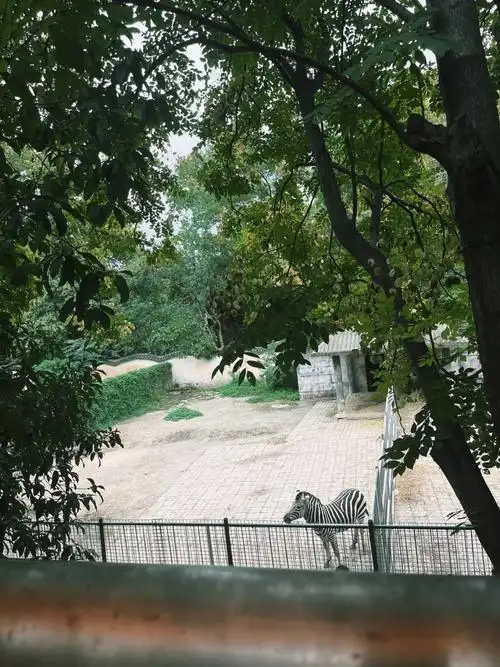 Anqing Zoo traces its origins to 1956, when it began as a modest animal exhibit within Linghu Park during the early years of the People's Republic. Officially renamed in 2006 after a renovation, it remains one of the few Chinese public zoos that has preserved its original mid-century layout and vintage enclosures. For Western visitors, this evokes a sense of stepping back to the era of Europe's classical zoological gardens, such as Berlin's Zoologischer Garten in its 19th-century heyday or London's original Regent's Park menagerie—places where the architecture of animal display itself tells a story. More than a zoological attraction, the zoo carries the childhood memories of generations of Anqing residents, functioning as a living piece of the city's social history.
The park's design reflects the garden-zoo hybrid popular in 1950s China, with sunken pit enclosures for monkeys and bears allowing visitors to peer down from surrounding walls—much like the classic bear pits once common at Vienna's Tiergarten Schönbrunn or the older sections of Paris's Ménagerie du Jardin des Plantes. Weathered stone cages, cement railings, and moss-touched flagstone pathways lend a timeless atmosphere rarely found in modern facilities. A delightful row of twelve zodiac animal sculptures near the entrance adds cultural flair, blending Chinese folk tradition with the spirit of the zoo.
The collection spans roughly 300 animals across 50 species, with standout residents including giant pandas, Amur (Siberian) tigers, African lions, giraffes, red pandas, and Hamadryas baboons. The interpretive ratio is impressive: about 70% of the animals are nationally protected species, giving the modest zoo surprising conservation weight. Interactive feeding zones allow children to approach gentle residents like peacocks and alpacas, echoing the hands-on touch experiences that have made family zoos like Whipsnade or Australia Zoo enduring favorites.
Beyond its zoological role, the facility serves as Anqing's official wildlife rescue station, playing a vital part in regional conservation and rehabilitation efforts. But what truly distinguishes the experience is its everyday ambiance—the elderly gentlemen playing chess under the trees, parents pushing strollers across the bamboo groves, the gentle rhythm of local life unfolding among the animal enclosures. This is a place where wildlife observation meets the unhurried tempo of a historic Chinese riverside city, offering visitors a window into authentic Anqing culture that few polished attractions can match.
Practical information: The zoo is open daily from 7:00 AM to 6:00 PM, with an ideal visit duration of two to three hours. Entry tickets are remarkably affordable at roughly 20–30 yuan, and disabled visitors enter free with valid identification. The address is No. 186 Huxin South Road, Daguan District, within Linghu Park; buses serve the Yiyuan or Linghu Park stops, and parking is available on-site. First-time visitors should aim for the 7:30–10:00 AM window for the most active animals and quieter walkways. Begin at the zodiac sculptures, then weave through the monkey hill, bear pit, and lion-tiger pavilion before ending at the hippo house and panda hall. In summer, combine your visit with a stroll through Linghu Park's lotus-dotted lake and relax by the water at dusk—this is when Anqing Zoo truly reveals its soul as both a wildlife haven and a nostalgic urban retreat.
Anqing Zoo traces its origins to 1956, when it began as a modest animal exhibit within Linghu Park during the early years of the People's Republic. Officially renamed in 2006 after a renovation, it remains one of the few Chinese public zoos that has preserved its original mid-century layout and vintage enclosures. For Western visitors, this evokes a sense of stepping back to the era of Europe's classical zoological gardens, such as Berlin's Zoologischer Garten in its 19th-century heyday or London's original Regent's Park menagerie—places where the architecture of animal display itself tells a story. More than a zoological attraction, the zoo carries the childhood memories of generations of Anqing residents, functioning as a living piece of the city's social history.
The park's design reflects the garden-zoo hybrid popular in 1950s China, with sunken pit enclosures for monkeys and bears allowing visitors to peer down from surrounding walls—much like the classic bear pits once common at Vienna's Tiergarten Schönbrunn or the older sections of Paris's Ménagerie du Jardin des Plantes. Weathered stone cages, cement railings, and moss-touched flagstone pathways lend a timeless atmosphere rarely found in modern facilities. A delightful row of twelve zodiac animal sculptures near the entrance adds cultural flair, blending Chinese folk tradition with the spirit of the zoo.
The collection spans roughly 300 animals across 50 species, with standout residents including giant pandas, Amur (Siberian) tigers, African lions, giraffes, red pandas, and Hamadryas baboons. The interpretive ratio is impressive: about 70% of the animals are nationally protected species, giving the modest zoo surprising conservation weight. Interactive feeding zones allow children to approach gentle residents like peacocks and alpacas, echoing the hands-on touch experiences that have made family zoos like Whipsnade or Australia Zoo enduring favorites.
Beyond its zoological role, the facility serves as Anqing's official wildlife rescue station, playing a vital part in regional conservation and rehabilitation efforts. But what truly distinguishes the experience is its everyday ambiance—the elderly gentlemen playing chess under the trees, parents pushing strollers across the bamboo groves, the gentle rhythm of local life unfolding among the animal enclosures. This is a place where wildlife observation meets the unhurried tempo of a historic Chinese riverside city, offering visitors a window into authentic Anqing culture that few polished attractions can match.
Practical information: The zoo is open daily from 7:00 AM to 6:00 PM, with an ideal visit duration of two to three hours. Entry tickets are remarkably affordable at roughly 20–30 yuan, and disabled visitors enter free with valid identification. The address is No. 186 Huxin South Road, Daguan District, within Linghu Park; buses serve the Yiyuan or Linghu Park stops, and parking is available on-site. First-time visitors should aim for the 7:30–10:00 AM window for the most active animals and quieter walkways. Begin at the zodiac sculptures, then weave through the monkey hill, bear pit, and lion-tiger pavilion before ending at the hippo house and panda hall. In summer, combine your visit with a stroll through Linghu Park's lotus-dotted lake and relax by the water at dusk—this is when Anqing Zoo truly reveals its soul as both a wildlife haven and a nostalgic urban retreat.