Linghu Park
⭐ 3.80
Linghu Park Scenic Area, Daguan District, Anqing City, Anhui Province, China
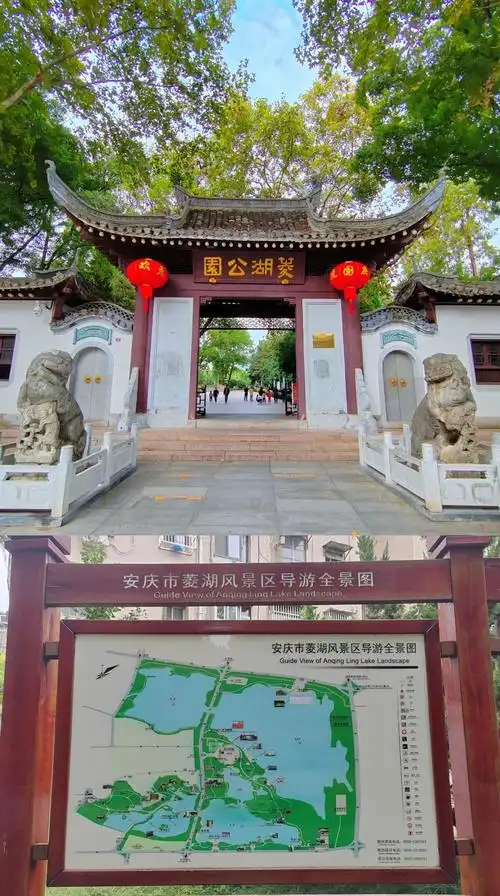 With roots stretching more than a hundred years, Linghu Park—literally "Water Chestnut Lake Park"—takes its name from the chestnuts once harvested from its waters. Its celebrated "Linghu Night Moon" scene ranks among Anqing's classical Eight Scenic Views, evoking comparisons to moonlit evenings on Switzerland's Lake Geneva or the romantic lakeshore strolls immortalized in English Romantic poetry. The grounds also preserve relics of the 1861 Battle of Anqing during the Taiping Rebellion—one of the 19th century's deadliest civil wars, which claimed an estimated 20 million lives—alongside a solemn Bloodstained Clothes Pavilion commemorating fallen revolutionaries. These memorials parallel the war cemeteries scattered across European battlefields from Waterloo to Normandy.
The park's signature design features five interconnected lakes threaded by winding boardwalks, stone bridges, and arched walkways—a hydraulic scheme rivaling the engineered waterways of Peterhof outside St. Petersburg or the cascading ornamental pools at Villa d'Este near Rome. Pavilions, terraced halls, and moon-viewing platforms emerge organically from wooded hillsides, while a continuous three-kilometer promenade invites leisurely cycling, jogging, and boat rides. Spring brings cherry blossoms reminiscent of Japan's hanami season; summer transforms the lakes into seas of pink lotus and water chestnuts, with reeds swaying and egrets gliding overhead in compositions straight from classical Chinese scroll paintings.
Anqing proudly claims distinction as the birthplace of Huangmei Opera, a lyrical folk tradition celebrated for its melodic sweetness and emotional storytelling—comparable in spirit to Italian opera's heartfelt arias. The elegant Huangmei Pavilion honors legendary performer Yan Fengying with a dignified white marble statue, while visitors frequently encounter amateur singers performing beside the lake, much like impromptu concerts in Paris's Luxembourg Gardens. Nearby, the Deng Shiru Stele Museum showcases the Qing-dynasty master's late-career calligraphy and seal-carving innovations—works so technically revolutionary that Chinese art historians rank him among the Renaissance innovators who transformed their own artistic traditions.
Admission is completely free, with generous daily hours from 5:00 AM to 11:00 PM—ideal for sunrise photographers chasing golden light over the water and night owls seeking the famous moonlit views. Allow three to four hours to walk the complete loop, relax with a picnic on the lakeside lawns, or rent a paddleboat to experience "Linghu Night Moon" from the water itself. Mobile payment via WeChat Pay and Alipay works universally, though carrying small cash helps with occasional vendors. Summer visitors should pack mosquito repellent; weekday mornings provide the most tranquil atmosphere before crowds arrive.
Beyond its scenic beauty, Linghu charms visitors through whimsical local touches: twelve zodiac stone sculptures scattered throughout the grounds have become beloved photo backdrops, with every Anqing native traditionally posing beside their birth-year animal—a custom echoing the zodiac fountains of Italian Renaissance gardens. In 2026, the park's East Lake will host a prestigious national "Ten Thousand Sails" regatta featuring racing yachts and paddleboard demonstrations. Whether drawn by Huangmei Opera's melodies, Deng Shiru's brushwork, the battle-scarred history, or simply the chance to absorb unhurried life in this ancient cultural capital, Linghu Park offers an authentically Chinese urban sanctuary that rewards unhurried exploration.
With roots stretching more than a hundred years, Linghu Park—literally "Water Chestnut Lake Park"—takes its name from the chestnuts once harvested from its waters. Its celebrated "Linghu Night Moon" scene ranks among Anqing's classical Eight Scenic Views, evoking comparisons to moonlit evenings on Switzerland's Lake Geneva or the romantic lakeshore strolls immortalized in English Romantic poetry. The grounds also preserve relics of the 1861 Battle of Anqing during the Taiping Rebellion—one of the 19th century's deadliest civil wars, which claimed an estimated 20 million lives—alongside a solemn Bloodstained Clothes Pavilion commemorating fallen revolutionaries. These memorials parallel the war cemeteries scattered across European battlefields from Waterloo to Normandy.
The park's signature design features five interconnected lakes threaded by winding boardwalks, stone bridges, and arched walkways—a hydraulic scheme rivaling the engineered waterways of Peterhof outside St. Petersburg or the cascading ornamental pools at Villa d'Este near Rome. Pavilions, terraced halls, and moon-viewing platforms emerge organically from wooded hillsides, while a continuous three-kilometer promenade invites leisurely cycling, jogging, and boat rides. Spring brings cherry blossoms reminiscent of Japan's hanami season; summer transforms the lakes into seas of pink lotus and water chestnuts, with reeds swaying and egrets gliding overhead in compositions straight from classical Chinese scroll paintings.
Anqing proudly claims distinction as the birthplace of Huangmei Opera, a lyrical folk tradition celebrated for its melodic sweetness and emotional storytelling—comparable in spirit to Italian opera's heartfelt arias. The elegant Huangmei Pavilion honors legendary performer Yan Fengying with a dignified white marble statue, while visitors frequently encounter amateur singers performing beside the lake, much like impromptu concerts in Paris's Luxembourg Gardens. Nearby, the Deng Shiru Stele Museum showcases the Qing-dynasty master's late-career calligraphy and seal-carving innovations—works so technically revolutionary that Chinese art historians rank him among the Renaissance innovators who transformed their own artistic traditions.
Admission is completely free, with generous daily hours from 5:00 AM to 11:00 PM—ideal for sunrise photographers chasing golden light over the water and night owls seeking the famous moonlit views. Allow three to four hours to walk the complete loop, relax with a picnic on the lakeside lawns, or rent a paddleboat to experience "Linghu Night Moon" from the water itself. Mobile payment via WeChat Pay and Alipay works universally, though carrying small cash helps with occasional vendors. Summer visitors should pack mosquito repellent; weekday mornings provide the most tranquil atmosphere before crowds arrive.
Beyond its scenic beauty, Linghu charms visitors through whimsical local touches: twelve zodiac stone sculptures scattered throughout the grounds have become beloved photo backdrops, with every Anqing native traditionally posing beside their birth-year animal—a custom echoing the zodiac fountains of Italian Renaissance gardens. In 2026, the park's East Lake will host a prestigious national "Ten Thousand Sails" regatta featuring racing yachts and paddleboard demonstrations. Whether drawn by Huangmei Opera's melodies, Deng Shiru's brushwork, the battle-scarred history, or simply the chance to absorb unhurried life in this ancient cultural capital, Linghu Park offers an authentically Chinese urban sanctuary that rewards unhurried exploration.