Longshan Scenic Area
⭐ 3.60
Longshan Scenic Area, Quanjiao County, Chuzhou City, Anhui Province, China
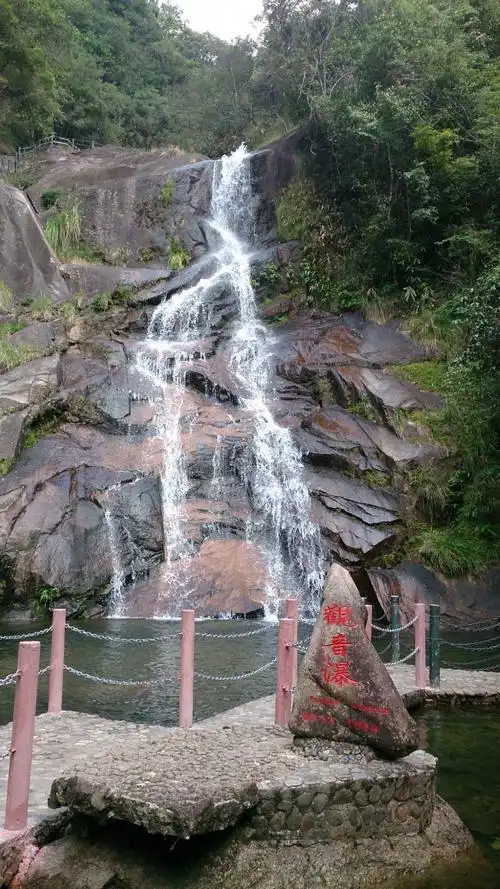 Longshan Temple, originally known as Baogong An, was founded in 502 AD, just decades after the fall of the Western Roman Empire and roughly contemporary with Saint Benedict's establishment of Monte Cassino in 529 AD. As Buddhism fanned eastward across Asia, this sanctuary became one of the enduring spiritual outposts of the Jianghuai region, a lowland crossroads between the Yangtze and Huai rivers where northern and southern Chinese cultures have long mingled. Surviving repairs through the Tang, Song, Ming and Qing dynasties give the complex a layered architectural pedigree that parallels Europe's continuously occupied religious houses such as Montserrat or Monte Athos, where successive generations rebuilt yet preserved the sacred core.
The temple complex climbs the lower slopes in classic Ming-Qing style, with grey-tiled roofs, carved stone lintels and weathered steles that feel reminiscent of a Tuscan hill abbey crossed with a Shinto shrine path. Beyond the worship halls, thirty-six named rock features, including the aptly named Dragon Cave, the narrow slit of One-Line Sky and the pilgrimage-boosting Back-Support Stone, scatter across the wooded ridges. A seven-kilometre ridgeline trail, the Jiaoling scenic route, threads past wind turbines turning on the summit and opens up dramatic long views toward the Yangtze floodplain.
Culturally, Longshan has anchored the region since late antiquity. Its Qingming Temple Fair, held each spring when peach blossoms smother the valleys, has been recognised as intangible cultural heritage and draws pilgrims and hikers in equal measure. Within the broader scenic area, the Tianzao Museum of Strange Stones houses nearly a thousand fossils and mineral specimens, blending natural science with the contemplative pace of a monastery visit.
Practically speaking, the temple grounds and public hiking paths are free to enter, while the stone museum, glamping pitches and seasonal fruit-picking orchards charge separate fees. Spring (March to April) brings peach blossom and temple fair buzz; autumn rewards visitors with persimmons, chestnuts and crisp hiking weather. Allow a half to full day for the temple and ridge walk alone, or stretch to a two-day slow-travel itinerary by staying at one of the boutique guesthouses in the Dashu resort zone.
There is no direct public transport between the temple and the resort, which sit roughly twenty kilometres apart, so self-driving or hiring a car is essential. Pack sturdy non-slip shoes for the granite steps, bring mosquito repellent and sun protection in summer, and dress modestly when entering the prayer halls. Photographers, families seeking a relaxed rural day, Buddhists tracing ancient pilgrimage routes, and city dwellers craving a quiet mountain breather will all find their own rhythm here among the pines, prayer flags and turning turbines.
Longshan Temple, originally known as Baogong An, was founded in 502 AD, just decades after the fall of the Western Roman Empire and roughly contemporary with Saint Benedict's establishment of Monte Cassino in 529 AD. As Buddhism fanned eastward across Asia, this sanctuary became one of the enduring spiritual outposts of the Jianghuai region, a lowland crossroads between the Yangtze and Huai rivers where northern and southern Chinese cultures have long mingled. Surviving repairs through the Tang, Song, Ming and Qing dynasties give the complex a layered architectural pedigree that parallels Europe's continuously occupied religious houses such as Montserrat or Monte Athos, where successive generations rebuilt yet preserved the sacred core.
The temple complex climbs the lower slopes in classic Ming-Qing style, with grey-tiled roofs, carved stone lintels and weathered steles that feel reminiscent of a Tuscan hill abbey crossed with a Shinto shrine path. Beyond the worship halls, thirty-six named rock features, including the aptly named Dragon Cave, the narrow slit of One-Line Sky and the pilgrimage-boosting Back-Support Stone, scatter across the wooded ridges. A seven-kilometre ridgeline trail, the Jiaoling scenic route, threads past wind turbines turning on the summit and opens up dramatic long views toward the Yangtze floodplain.
Culturally, Longshan has anchored the region since late antiquity. Its Qingming Temple Fair, held each spring when peach blossoms smother the valleys, has been recognised as intangible cultural heritage and draws pilgrims and hikers in equal measure. Within the broader scenic area, the Tianzao Museum of Strange Stones houses nearly a thousand fossils and mineral specimens, blending natural science with the contemplative pace of a monastery visit.
Practically speaking, the temple grounds and public hiking paths are free to enter, while the stone museum, glamping pitches and seasonal fruit-picking orchards charge separate fees. Spring (March to April) brings peach blossom and temple fair buzz; autumn rewards visitors with persimmons, chestnuts and crisp hiking weather. Allow a half to full day for the temple and ridge walk alone, or stretch to a two-day slow-travel itinerary by staying at one of the boutique guesthouses in the Dashu resort zone.
There is no direct public transport between the temple and the resort, which sit roughly twenty kilometres apart, so self-driving or hiring a car is essential. Pack sturdy non-slip shoes for the granite steps, bring mosquito repellent and sun protection in summer, and dress modestly when entering the prayer halls. Photographers, families seeking a relaxed rural day, Buddhists tracing ancient pilgrimage routes, and city dwellers craving a quiet mountain breather will all find their own rhythm here among the pines, prayer flags and turning turbines.