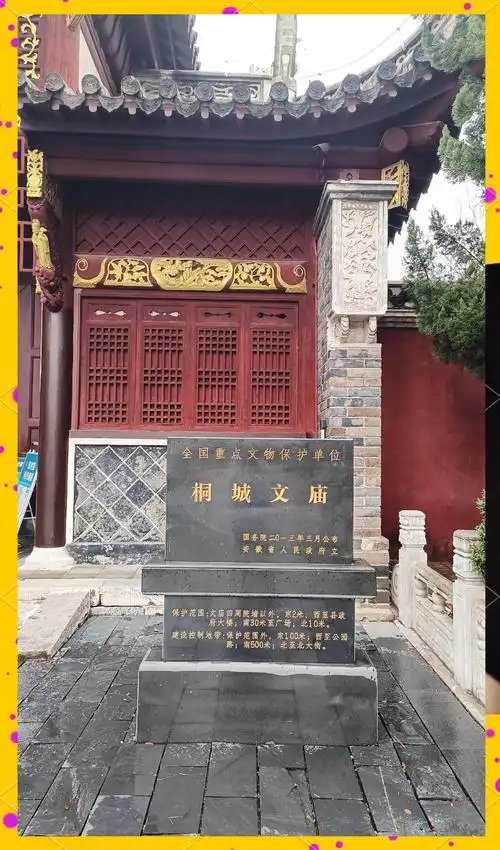
Tongcheng Confucian Temple
⭐ 3.80
Tongcheng, Anqing, Anhui, China
 Historical context and world‑history links
Built during the Yuan dynasty’s Yanyou era (1314‑1320), the Tongcheng Confucius Temple predates the Black Death and the early stirrings of the European Renaissance. While European cathedrals were rising in stone and stained glass, China was constructing wooden halls that fused ritual and education—a “temple‑school” model that can be likened to the medieval university‑church complexes of Bologna or Oxford. Surviving Ming and Qing renovations have preserved its original layout, making it one of the most complete examples of Jianghuai Confucian architecture and a tangible link to the centuries‑long spread of Confucian thought across East Asia.
Architectural highlights
The temple follows a strict north‑south axis, beginning with a modest gate tower, passing through the Lingxing Gate, the serene Pan Pond and its “Scholar’s Bridge,” and culminating in the magnificent Dacheng Hall. This hall is the crown jewel: its timber frame employs a rare 45‑degree diagonal bracket set, a technique reminiscent of the intricate rib‑vault construction of late‑Gothic European churches, yet rendered entirely in wood. Scholars have hailed the soaring lines and rhythmic geometry as “a melody of beauty,” showcasing the high craftsmanship of Yuan‑dynasty carpenters.
Cultural significance
Beyond its architectural splendor, the temple embodies the intellectual spirit of the Tongcheng School, a literary movement that flourished from the 17th to 19th centuries, much like the humanist circles that shaped Renaissance Italy. Inside, visitors encounter statues of Confucius and his twelve disciples, Qing‑dynasty imperial calligraphy plaques, and exhibits on the legendary opera performer Yan Fengying, all of which weave together the region’s Confucian, literary, and folk‑art heritage. The Pan Bridge remains a symbolic wish‑bridge for those hoping to succeed in examinations—a custom echoing the European tradition of praying at saints’ shrines for academic triumph.
Practical visit information
The museum sits at No. 2 Longmian Middle Road, on the northern edge of the city‑center square in Tongcheng, Anqing. Admission is free; the site opens Tuesday through Sunday from 9 am to 5 pm, with the last entry at 4:30 pm, and closes on Mondays. Visitors can reach the temple by taking Bus 1 and alighting at the Square stop. A typical visit lasts 1 to 1.5 hours—enough time to follow the central axis from the gate tower to the Chongsheng Shrine while pausing to admire the Dacheng Hall’s brackets and the tranquil Pan Pond.
Why visit and nearby extensions
For travelers seeking an off‑the‑beaten‑path cultural gem, the Tongcheng Confucius Temple offers a peaceful contrast to the bustling megacities of eastern China. Its quiet courtyards invite contemplation, while the rare Yuan‑era timberwork provides a visual feast for architecture enthusiasts. After exploring the temple, a short walk leads to the historic Six‑Foot Lane—a narrow alley famed for its story of humility—and the lively old street, where local snacks and crafts await. Together they form a half‑day itinerary that blends Confucian solemnity, folk charm, and the everyday rhythm of Tongcheng life.
Historical context and world‑history links
Built during the Yuan dynasty’s Yanyou era (1314‑1320), the Tongcheng Confucius Temple predates the Black Death and the early stirrings of the European Renaissance. While European cathedrals were rising in stone and stained glass, China was constructing wooden halls that fused ritual and education—a “temple‑school” model that can be likened to the medieval university‑church complexes of Bologna or Oxford. Surviving Ming and Qing renovations have preserved its original layout, making it one of the most complete examples of Jianghuai Confucian architecture and a tangible link to the centuries‑long spread of Confucian thought across East Asia.
Architectural highlights
The temple follows a strict north‑south axis, beginning with a modest gate tower, passing through the Lingxing Gate, the serene Pan Pond and its “Scholar’s Bridge,” and culminating in the magnificent Dacheng Hall. This hall is the crown jewel: its timber frame employs a rare 45‑degree diagonal bracket set, a technique reminiscent of the intricate rib‑vault construction of late‑Gothic European churches, yet rendered entirely in wood. Scholars have hailed the soaring lines and rhythmic geometry as “a melody of beauty,” showcasing the high craftsmanship of Yuan‑dynasty carpenters.
Cultural significance
Beyond its architectural splendor, the temple embodies the intellectual spirit of the Tongcheng School, a literary movement that flourished from the 17th to 19th centuries, much like the humanist circles that shaped Renaissance Italy. Inside, visitors encounter statues of Confucius and his twelve disciples, Qing‑dynasty imperial calligraphy plaques, and exhibits on the legendary opera performer Yan Fengying, all of which weave together the region’s Confucian, literary, and folk‑art heritage. The Pan Bridge remains a symbolic wish‑bridge for those hoping to succeed in examinations—a custom echoing the European tradition of praying at saints’ shrines for academic triumph.
Practical visit information
The museum sits at No. 2 Longmian Middle Road, on the northern edge of the city‑center square in Tongcheng, Anqing. Admission is free; the site opens Tuesday through Sunday from 9 am to 5 pm, with the last entry at 4:30 pm, and closes on Mondays. Visitors can reach the temple by taking Bus 1 and alighting at the Square stop. A typical visit lasts 1 to 1.5 hours—enough time to follow the central axis from the gate tower to the Chongsheng Shrine while pausing to admire the Dacheng Hall’s brackets and the tranquil Pan Pond.
Why visit and nearby extensions
For travelers seeking an off‑the‑beaten‑path cultural gem, the Tongcheng Confucius Temple offers a peaceful contrast to the bustling megacities of eastern China. Its quiet courtyards invite contemplation, while the rare Yuan‑era timberwork provides a visual feast for architecture enthusiasts. After exploring the temple, a short walk leads to the historic Six‑Foot Lane—a narrow alley famed for its story of humility—and the lively old street, where local snacks and crafts await. Together they form a half‑day itinerary that blends Confucian solemnity, folk charm, and the everyday rhythm of Tongcheng life.