Zhenfeng Pagoda
⭐ 3.80
Zhenfeng Pagoda, Yingjiang District, Anqing City, Anhui Province, China
 **Historical Context**
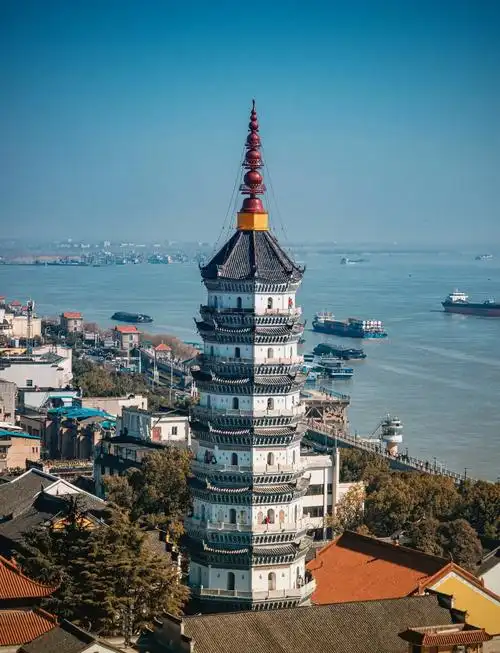
Zhenfeng Tower was erected in 1570, during the reign of Emperor Longqing of the Ming Dynasty—a period that coincided roughly with the late European Renaissance, when Shakespeare was writing his earliest plays and El Escorial was rising outside Madrid. Originally named "Ten-Thousand Buddha Tower," it was renamed to reflect the hope of "reviving literary wind," a nod to the flourishing Tongcheng School of literature, one of China's most influential literary movements. The pagoda also served a navigational purpose, guiding Yangtze shipping as a river landmark—a function similar to European lighthouses of the era. Designated a nationally protected cultural relic in 1988, it stands today as a sentinel of Anqing's four-century-long cultural prominence along the Yangtze.
**Architecture**
The tower's octagonal, seven-story design echoes the geometric principles seen in Ming pagodas across China, but its ingenious "tower-within-a-tower" construction—where outer and inner brick walls interlock for seismic resistance—anticipates engineering concepts that would not become standard in the West for centuries. Climbing steadily upward with each tier, its proportions recall the balanced verticality of Italy's campaniles. More than 600 brick-carved Buddha figures adorn its facades, interspersed with some 50 stone inscriptions from the Ming and Qing dynasties, making the structure both a religious monument and an open-air museum of calligraphy.
**Cultural Significance**
For Anqing residents, Zhenfeng is more than an ancient edifice; it is the city's defining icon and a living symbol of regional identity. Local lore holds that the pagoda anchors the city like a keel steadies a boat—an apt metaphor for a settlement built where the Yangtze runs broad and swift. Western scholars and missionaries traversing the river route in the 19th century documented the tower in their journals, contributing to its place in early cross-cultural accounts of inland China.
**Climbing the Tower**
What truly sets Zhenfeng apart is its disorienting interior staircase. Although only 168 steps lead to the top, the route deliberately shifts direction at the third floor and reverses again between the fifth and sixth floors, creating a maze-like ascent that challenges navigation as much as endurance. Passages are narrow, ceilings low, and the climb steep—visitors prone to vertigo or those with mobility concerns should think twice. At the summit, the Yangtze unfurls in a silver ribbon, and at sunset the ancient rooftops of Anqing glow in amber light, offering a scene worthy of any Romantic-era landscape painting.
**Practical Visit Information**
The tower sits within Yingjiang Temple at 148 Yanjiang East Road, Yingjiang District, Anqing, and is reachable via city buses 1, 7, 10, and 14. Entry to the temple costs roughly 10 yuan, with an additional 20 yuan to climb the tower; opening hours run from 8:00 a.m. to 5:30 p.m. Allow 1 to 1.5 hours—begin by exploring the temple's Tianwang and Mahavira halls before tackling the stairs.
**Visitor Tips**
Mornings and late afternoons offer the gentlest light and coolest breezes for both climbing and photography. Wear sturdy, non-slip footwear, carry water (the interior is unventilated and stifling in summer), and observe temple etiquette by keeping voices low and refraining from photographing monks during ceremonies. Afterward, stroll along the river embankment to capture the classic "tower-reflecting-in-the-river" view, then wander the nearby Daobashi historic district to soak up Anqing's old-town atmosphere.
**Historical Context**
Zhenfeng Tower was erected in 1570, during the reign of Emperor Longqing of the Ming Dynasty—a period that coincided roughly with the late European Renaissance, when Shakespeare was writing his earliest plays and El Escorial was rising outside Madrid. Originally named "Ten-Thousand Buddha Tower," it was renamed to reflect the hope of "reviving literary wind," a nod to the flourishing Tongcheng School of literature, one of China's most influential literary movements. The pagoda also served a navigational purpose, guiding Yangtze shipping as a river landmark—a function similar to European lighthouses of the era. Designated a nationally protected cultural relic in 1988, it stands today as a sentinel of Anqing's four-century-long cultural prominence along the Yangtze.
**Architecture**
The tower's octagonal, seven-story design echoes the geometric principles seen in Ming pagodas across China, but its ingenious "tower-within-a-tower" construction—where outer and inner brick walls interlock for seismic resistance—anticipates engineering concepts that would not become standard in the West for centuries. Climbing steadily upward with each tier, its proportions recall the balanced verticality of Italy's campaniles. More than 600 brick-carved Buddha figures adorn its facades, interspersed with some 50 stone inscriptions from the Ming and Qing dynasties, making the structure both a religious monument and an open-air museum of calligraphy.
**Cultural Significance**
For Anqing residents, Zhenfeng is more than an ancient edifice; it is the city's defining icon and a living symbol of regional identity. Local lore holds that the pagoda anchors the city like a keel steadies a boat—an apt metaphor for a settlement built where the Yangtze runs broad and swift. Western scholars and missionaries traversing the river route in the 19th century documented the tower in their journals, contributing to its place in early cross-cultural accounts of inland China.
**Climbing the Tower**
What truly sets Zhenfeng apart is its disorienting interior staircase. Although only 168 steps lead to the top, the route deliberately shifts direction at the third floor and reverses again between the fifth and sixth floors, creating a maze-like ascent that challenges navigation as much as endurance. Passages are narrow, ceilings low, and the climb steep—visitors prone to vertigo or those with mobility concerns should think twice. At the summit, the Yangtze unfurls in a silver ribbon, and at sunset the ancient rooftops of Anqing glow in amber light, offering a scene worthy of any Romantic-era landscape painting.
**Practical Visit Information**
The tower sits within Yingjiang Temple at 148 Yanjiang East Road, Yingjiang District, Anqing, and is reachable via city buses 1, 7, 10, and 14. Entry to the temple costs roughly 10 yuan, with an additional 20 yuan to climb the tower; opening hours run from 8:00 a.m. to 5:30 p.m. Allow 1 to 1.5 hours—begin by exploring the temple's Tianwang and Mahavira halls before tackling the stairs.
**Visitor Tips**
Mornings and late afternoons offer the gentlest light and coolest breezes for both climbing and photography. Wear sturdy, non-slip footwear, carry water (the interior is unventilated and stifling in summer), and observe temple etiquette by keeping voices low and refraining from photographing monks during ceremonies. Afterward, stroll along the river embankment to capture the classic "tower-reflecting-in-the-river" view, then wander the nearby Daobashi historic district to soak up Anqing's old-town atmosphere.