Drum Tower Scenic Area
⭐ 3.20
Drum Tower Scenic Area, Fengyang County, Chuzhou City, Anhui Province, China
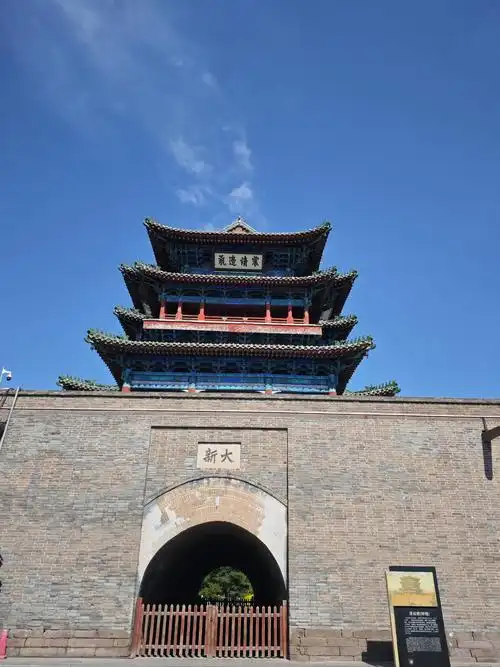 The Drum Tower dates to 1375, when Zhu Yuanzhang—founder of the Ming Dynasty and one of history's most remarkable self-made rulers—was constructing a new imperial capital at Fengyang. Just four years earlier, his armies had expelled the Mongol Yuan Dynasty, and he harboured ambitions to eclipse both Beijing and Nanjing. The drum tower served as the city's time-keeping and defensive nerve centre, earning the epithet "First Drum Tower under Heaven." In European terms, this era mirrors the late Plantagenet period in England or Florence's rebuilding after the Black Death—an age when ambitious rulers reshaped their realms. The capital project, however, was abandoned within six years, leaving an archaeological ghost town of rare historical value.
What strikes visitors first is the sheer scale of the platform: 72 metres long, 34.25 metres wide, and towering 15.8 metres high—surpassing the footprint of many a European medieval belfry, from Bruges to Ghent to Florence's Palazzo Vecchio. The base remains genuine Ming craftsmanship, where artisans left their names chiselled into the brickwork alongside official inscriptions. Above sits the 1995 timber reconstruction, a faithful interpretation of the original design. Inside, the Zhu Yuanzhang Exhibition Hall chronicles the emperor's extraordinary rise from peasant orphan to dynasty founder, contextualised against Ming urban planning principles.
The drum tower functions as one piece of a larger historical puzzle. Together with the surviving Bell Tower, the Ming Imperial Tombs to the east, and the abandoned city walls, it forms a unique heritage axis documenting an unfinished Ming capital—an extraordinary rarity in world history, comparable to the abandoned Inca citadel of Machu Picchu or Europe's incomplete Gothic cathedrals. Designated an Anhui Provincial Key Cultural Relic, the site offers tangible evidence of early Ming architectural regulations and Confucian ritual planning that would later define the Forbidden City.
Admission is 30 yuan, with free entry for children under 1.2 metres and Anhui residents over 70. Opening hours run from 8:00 to 17:00 daily. Crucially, the tower sits in Fengyang County, not Chuzhou city itself—roughly 40 kilometres distant, with limited public transport. Self-driving or ride-hailing apps such as DiDi are strongly recommended. Allow 1.5 to 2 hours for a complete visit, and time your arrival for either the 9–11 a.m. window or after 3:30 p.m., when soft light flatters both the brickwork and panoramic views across the old town.
This is a destination for travellers who prefer depth over crowds, those drawn to sites where history feels weathered rather than polished. Where China's marquee attractions often draw thousands, the Ming Zhongdu Drum Tower offers a contemplative encounter with one of Asia's most consequential dynasties. Consider pairing it with a half-day at the nearby Ming Imperial Tombs—modest precursors to the mausoleums at Nanjing and Beijing—and perhaps the dramatic karst formations of Wolf Lane Valley for a fuller Fengyang experience. Few places in China let you stand atop genuine 14th-century masonry while contemplating ambitions that reshaped a continent.
The Drum Tower dates to 1375, when Zhu Yuanzhang—founder of the Ming Dynasty and one of history's most remarkable self-made rulers—was constructing a new imperial capital at Fengyang. Just four years earlier, his armies had expelled the Mongol Yuan Dynasty, and he harboured ambitions to eclipse both Beijing and Nanjing. The drum tower served as the city's time-keeping and defensive nerve centre, earning the epithet "First Drum Tower under Heaven." In European terms, this era mirrors the late Plantagenet period in England or Florence's rebuilding after the Black Death—an age when ambitious rulers reshaped their realms. The capital project, however, was abandoned within six years, leaving an archaeological ghost town of rare historical value.
What strikes visitors first is the sheer scale of the platform: 72 metres long, 34.25 metres wide, and towering 15.8 metres high—surpassing the footprint of many a European medieval belfry, from Bruges to Ghent to Florence's Palazzo Vecchio. The base remains genuine Ming craftsmanship, where artisans left their names chiselled into the brickwork alongside official inscriptions. Above sits the 1995 timber reconstruction, a faithful interpretation of the original design. Inside, the Zhu Yuanzhang Exhibition Hall chronicles the emperor's extraordinary rise from peasant orphan to dynasty founder, contextualised against Ming urban planning principles.
The drum tower functions as one piece of a larger historical puzzle. Together with the surviving Bell Tower, the Ming Imperial Tombs to the east, and the abandoned city walls, it forms a unique heritage axis documenting an unfinished Ming capital—an extraordinary rarity in world history, comparable to the abandoned Inca citadel of Machu Picchu or Europe's incomplete Gothic cathedrals. Designated an Anhui Provincial Key Cultural Relic, the site offers tangible evidence of early Ming architectural regulations and Confucian ritual planning that would later define the Forbidden City.
Admission is 30 yuan, with free entry for children under 1.2 metres and Anhui residents over 70. Opening hours run from 8:00 to 17:00 daily. Crucially, the tower sits in Fengyang County, not Chuzhou city itself—roughly 40 kilometres distant, with limited public transport. Self-driving or ride-hailing apps such as DiDi are strongly recommended. Allow 1.5 to 2 hours for a complete visit, and time your arrival for either the 9–11 a.m. window or after 3:30 p.m., when soft light flatters both the brickwork and panoramic views across the old town.
This is a destination for travellers who prefer depth over crowds, those drawn to sites where history feels weathered rather than polished. Where China's marquee attractions often draw thousands, the Ming Zhongdu Drum Tower offers a contemplative encounter with one of Asia's most consequential dynasties. Consider pairing it with a half-day at the nearby Ming Imperial Tombs—modest precursors to the mausoleums at Nanjing and Beijing—and perhaps the dramatic karst formations of Wolf Lane Valley for a fuller Fengyang experience. Few places in China let you stand atop genuine 14th-century masonry while contemplating ambitions that reshaped a continent.