The Old Bund
⭐ 4.50
Old Bund Scenic Area, Yongjiang Subdistrict, Jiangbei District, Ningbo, Zhejiang, China
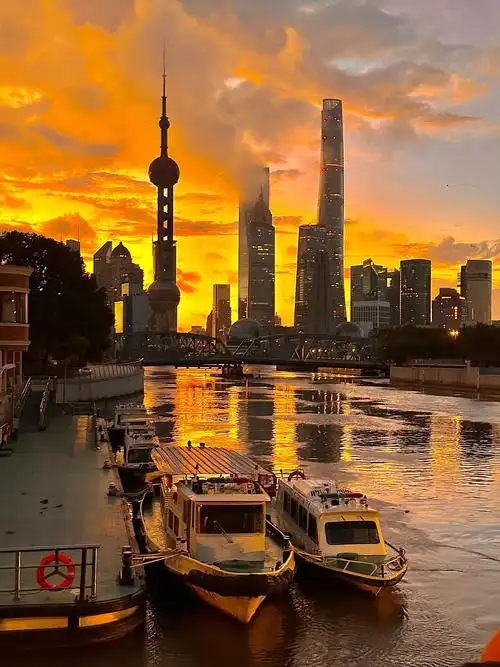 As one of the five treaty ports mandated by the Treaty of Nanjing in 1842, Ningbo was thrust onto the world stage just two years later, predating Shanghai's famous Bund by twenty years. This makes Old Bund arguably the original "Bund" concept in China and a pivotal site in the era of European commercial expansion into East Asia—comparable in significance to early colonial trading posts in Hong Kong or Macau. The well-preserved Zhejiang Customs House, former British Consulate, and old police station stand as tangible witnesses to this complex chapter of global trade history, when Ningbo became one of the first Chinese cities to open its doors to international commerce.
The architectural ensemble here rivals riverside districts in any European capital. The Gothic Revival Catholic Church, designated a nationally protected heritage site, features soaring spires and flying buttresses that echo London's Westminster or Cologne's great cathedrals. Along the waterfront, former consulates and merchant residences showcase refined facades with intricate stonework and classical proportions, creating an atmosphere reminiscent of a Belle Époque European town rather than a Chinese city center. Strolling these cobbled lanes feels like stepping into a living museum of 19th-century cosmopolitan architecture.
Beyond its historical gravitas, the district pulses with contemporary cultural energy. The Ningbo Art Museum anchors the area with rotating exhibitions, while a lively mix of river-view restaurants, craft beer pubs, cocktail lounges, and independent design shops cater to modern tastes. Many establishments accept international credit cards and offer bilingual service, making the area particularly welcoming for foreign visitors. The nightlife scene rivals Shanghai's famous Bund promenades but with a more intimate, locally authentic character.
For the best experience, arrive around 5:00 PM when soft golden light illuminates the historic facades and the evening atmosphere begins to build. By 7:00 PM, the full illumination transforms the waterfront into a sparkling spectacle, with synchronized light shows reflecting off the waters where the Yong, Fenghua, and Yao rivers merge. Plan for two to three hours of exploration; extending into dinner and drinks makes for a perfect evening. The district pairs naturally with the nearby Tianyi Square shopping area or a river cruise through the dramatic three-river confluence.
Practical details make visiting effortless: the entire district is open free of charge around the clock. Take Metro Line 1 to Dongmenkou Station, or alight at the Laowaitan bus stop—public transit is strongly recommended as parking is scarce and expensive. Note that historic buildings may only be photographed externally; access is restricted to public areas. When visiting bars, confirm prices before ordering, and keep valuables secure during the busy evening hours when crowds gather along the illuminated waterfront promenade.
As one of the five treaty ports mandated by the Treaty of Nanjing in 1842, Ningbo was thrust onto the world stage just two years later, predating Shanghai's famous Bund by twenty years. This makes Old Bund arguably the original "Bund" concept in China and a pivotal site in the era of European commercial expansion into East Asia—comparable in significance to early colonial trading posts in Hong Kong or Macau. The well-preserved Zhejiang Customs House, former British Consulate, and old police station stand as tangible witnesses to this complex chapter of global trade history, when Ningbo became one of the first Chinese cities to open its doors to international commerce.
The architectural ensemble here rivals riverside districts in any European capital. The Gothic Revival Catholic Church, designated a nationally protected heritage site, features soaring spires and flying buttresses that echo London's Westminster or Cologne's great cathedrals. Along the waterfront, former consulates and merchant residences showcase refined facades with intricate stonework and classical proportions, creating an atmosphere reminiscent of a Belle Époque European town rather than a Chinese city center. Strolling these cobbled lanes feels like stepping into a living museum of 19th-century cosmopolitan architecture.
Beyond its historical gravitas, the district pulses with contemporary cultural energy. The Ningbo Art Museum anchors the area with rotating exhibitions, while a lively mix of river-view restaurants, craft beer pubs, cocktail lounges, and independent design shops cater to modern tastes. Many establishments accept international credit cards and offer bilingual service, making the area particularly welcoming for foreign visitors. The nightlife scene rivals Shanghai's famous Bund promenades but with a more intimate, locally authentic character.
For the best experience, arrive around 5:00 PM when soft golden light illuminates the historic facades and the evening atmosphere begins to build. By 7:00 PM, the full illumination transforms the waterfront into a sparkling spectacle, with synchronized light shows reflecting off the waters where the Yong, Fenghua, and Yao rivers merge. Plan for two to three hours of exploration; extending into dinner and drinks makes for a perfect evening. The district pairs naturally with the nearby Tianyi Square shopping area or a river cruise through the dramatic three-river confluence.
Practical details make visiting effortless: the entire district is open free of charge around the clock. Take Metro Line 1 to Dongmenkou Station, or alight at the Laowaitan bus stop—public transit is strongly recommended as parking is scarce and expensive. Note that historic buildings may only be photographed externally; access is restricted to public areas. When visiting bars, confirm prices before ordering, and keep valuables secure during the busy evening hours when crowds gather along the illuminated waterfront promenade.