Ningbo Museum
⭐ 4.60
Ningbo Museum Scenic Area, Yinzhou District, Ningbo City, Zhejiang Province, China
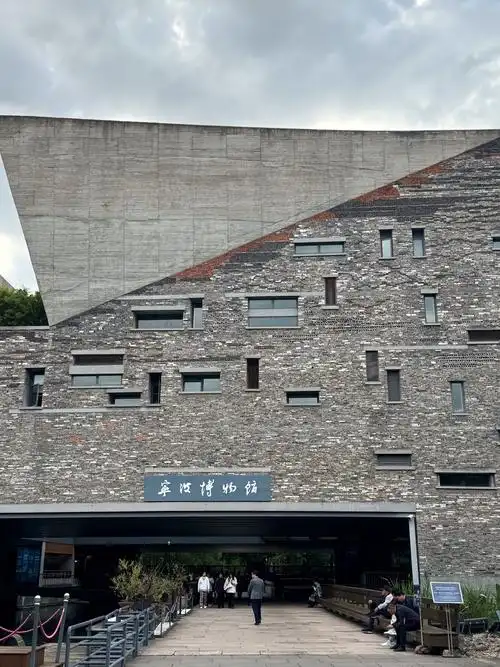 Wang Shu, recipient of the 2012 Pritzker Prize—the same honor awarded to Frank Gehry and Zaha Hadid—created a building that functions as both museum and monumental artwork. The signature "Wa Tan" wall incorporates roughly a million salvaged bricks, tiles, and earthenware shards laid by hand, producing a richly textured façade that evokes eroded riverbanks and weathered ship hulls. Shadow patterns shift dramatically throughout the day, drawing architecture enthusiasts and photographers who liken the surface to a stratigraphic cross-section of an ancient city. The design earned China's prestigious Luban Prize for construction excellence.
The second floor houses "Oriental Divine Vessel," the museum's flagship exhibition charting Ningbo's seven-millennia arc from Neolithic Hemudu rice-farming villages through the Tang-Yangtze trading ports to the Opium War era when Britain designated it one of the original five treaty ports. Standout artifacts include 7,000-year-old cultivated rice grains—predating Mesopotamian agriculture—Eastern Han celadon ewers from the renowned Yue kilns, and Song dynasty jade discs and bamboo carvings. These treasures illuminate why Marco Polo described Ningbo as "one of the finest ports in the world," rivaling Venice or Bruges in maritime commerce.
The third-floor "Old Ningbo" folk gallery transports visitors into atmospheric late-Qing street scenes through detailed dioramas: elaborate bridal processions with the famous "Ten-Li Red Dowry" tradition, traditional tea houses and storytelling parlors, and recreated apothecary shops. Displays of intangible heritage crafts such as gilded lacquerware and bone-wood inlay techniques add tactile depth. The immersive, tableau-style approach—reminiscent of London's reconstructed Victorian streets at the Museum of London—appeals strongly to families and school groups seeking experiential learning rather than static display cases.
Admission is free but requires advance real-name registration through the museum's official website or WeChat account. From central Ningbo, take Metro Line 3 to Yinzhou District Government Station, with the adjacent Wanda Plaza offering convenient dining options before or after your visit. Allow two-and-a-half to three hours; a recommended clockwise route ascends from folk life on the third floor through chronological history on the second, ending with rotating special exhibitions on the ground floor to avoid backtracking during busy periods.
The museum closes on Mondays except during national holidays, with last entry at 16:00 and final closure at 17:00. Some special exhibitions prohibit photography, and tripods with flash are forbidden throughout. The museum shop typically closes around 16:30, so purchase souvenirs early. Visitor amenities include complimentary Wi-Fi, luggage storage, wheelchair loan, and a nursing room. Summer brings typhoon-season humidity and heavy rain—check official social media for unexpected closures before traveling, particularly from July through September.
Wang Shu, recipient of the 2012 Pritzker Prize—the same honor awarded to Frank Gehry and Zaha Hadid—created a building that functions as both museum and monumental artwork. The signature "Wa Tan" wall incorporates roughly a million salvaged bricks, tiles, and earthenware shards laid by hand, producing a richly textured façade that evokes eroded riverbanks and weathered ship hulls. Shadow patterns shift dramatically throughout the day, drawing architecture enthusiasts and photographers who liken the surface to a stratigraphic cross-section of an ancient city. The design earned China's prestigious Luban Prize for construction excellence.
The second floor houses "Oriental Divine Vessel," the museum's flagship exhibition charting Ningbo's seven-millennia arc from Neolithic Hemudu rice-farming villages through the Tang-Yangtze trading ports to the Opium War era when Britain designated it one of the original five treaty ports. Standout artifacts include 7,000-year-old cultivated rice grains—predating Mesopotamian agriculture—Eastern Han celadon ewers from the renowned Yue kilns, and Song dynasty jade discs and bamboo carvings. These treasures illuminate why Marco Polo described Ningbo as "one of the finest ports in the world," rivaling Venice or Bruges in maritime commerce.
The third-floor "Old Ningbo" folk gallery transports visitors into atmospheric late-Qing street scenes through detailed dioramas: elaborate bridal processions with the famous "Ten-Li Red Dowry" tradition, traditional tea houses and storytelling parlors, and recreated apothecary shops. Displays of intangible heritage crafts such as gilded lacquerware and bone-wood inlay techniques add tactile depth. The immersive, tableau-style approach—reminiscent of London's reconstructed Victorian streets at the Museum of London—appeals strongly to families and school groups seeking experiential learning rather than static display cases.
Admission is free but requires advance real-name registration through the museum's official website or WeChat account. From central Ningbo, take Metro Line 3 to Yinzhou District Government Station, with the adjacent Wanda Plaza offering convenient dining options before or after your visit. Allow two-and-a-half to three hours; a recommended clockwise route ascends from folk life on the third floor through chronological history on the second, ending with rotating special exhibitions on the ground floor to avoid backtracking during busy periods.
The museum closes on Mondays except during national holidays, with last entry at 16:00 and final closure at 17:00. Some special exhibitions prohibit photography, and tripods with flash are forbidden throughout. The museum shop typically closes around 16:30, so purchase souvenirs early. Visitor amenities include complimentary Wi-Fi, luggage storage, wheelchair loan, and a nursing room. Summer brings typhoon-season humidity and heavy rain—check official social media for unexpected closures before traveling, particularly from July through September.