Dongqian Lake
⭐ 4.60
Dongqian Lake Scenic Area, Dongqian Lake Town, Haishu District, Ningbo City, Zhejiang Province, China
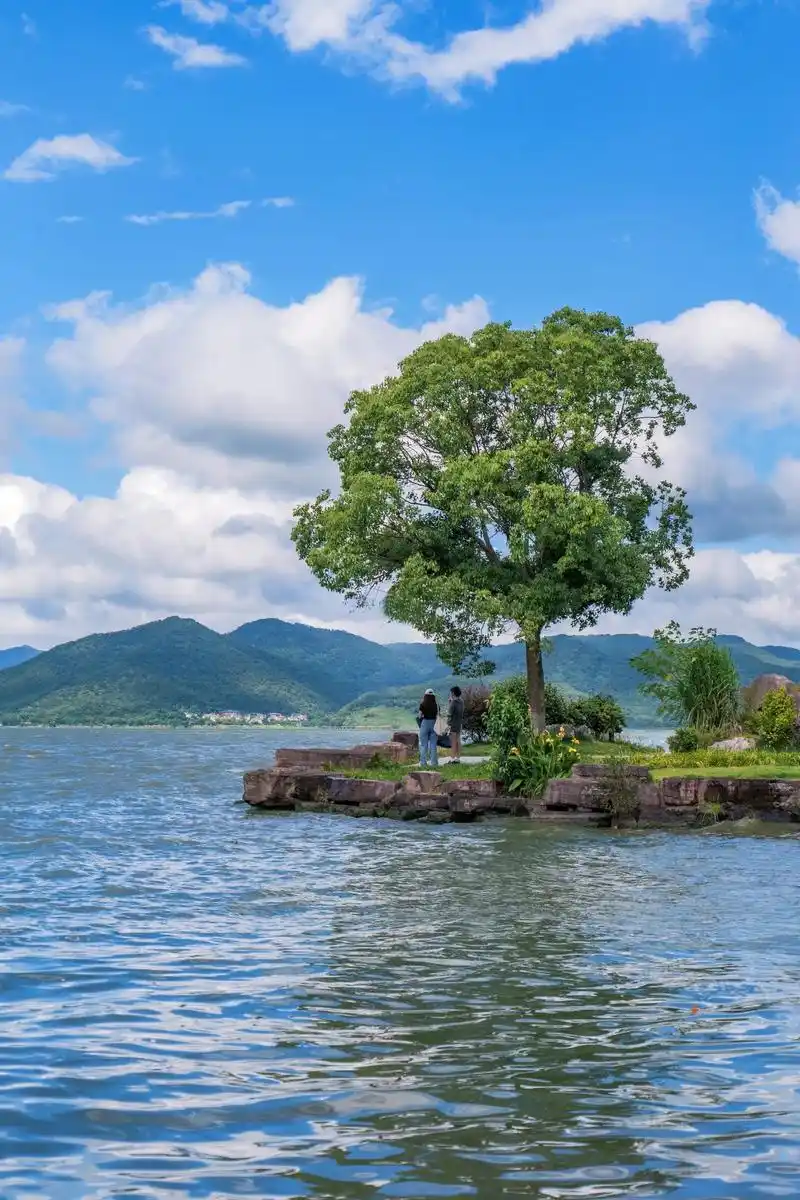 Carved out during the Tang Dynasty's Tianbao era (742–756 CE) and repeatedly dredged under the Northern Song, Dongqian Lake carries a continuous 1,200-year history as both a working hydraulic system and a cultural landscape. The reformer-statesman Wang Anshi—contemporary of William the Conqueror and arguably the most consequential economic minister of his millennium—served locally and left celebrated accounts of flood management. Today the lake divides into three basins (Guzi, Mei, and Outer Lake) separated by the earthen Taogong Dike, a barrier whose ambition recalls the great medieval dyke systems built along Europe's North Sea coasts.
The crown jewel of the lakeside attractions is the Southern Song Stone Carving Park, where over 200 stone figures of court officials, generals, and mythological guardians stand in silent formation. Dating to the 12th and 13th centuries, these weathered sculptures rival in expressive power the Romanesque statuary lining Europe's great cathedrals, offering a rare glimpse into southern China's funerary art. Just offshore, the Xiaoputuo peninsula hosts a tranquil Chan (Zen) Buddhist temple whose understated halls reflect the restrained aesthetic prized by Song literati—monastic simplicity wrapped in distinctly East Asian sensibility.
At Hanling Village, a maze of bluestone alleys and whitewashed courtyard homes preserves the layout of a Song-era market town almost untouched by time—comparable to wandering a Tuscan hill hamlet or a Cotswold village, but with unmistakably Chinese proportions. Nearby, Fuquan Mountain's terraced tea gardens produce the celebrated "East Sea Dragon Tongue" variety, sustaining a tea-and-Zen tradition that predates Europe's first documented tea imports by several centuries. Visitors can wander between rows of bushes, pausing at hilltop pavilions where monks have brewed leaves in the same ritual manner for generations.
The entire lakeshore is freely accessible, though individual sites charge modest entry fees of roughly 30 yuan (about $4) for venues such as Xiaoputuo and the Stone Carving Park. Ningbo Metro Line 4 reaches the area, but renting a bicycle, e-scooter, or car remains the most rewarding way to explore the 45-kilometer greenway. The stretch from Academician Center to Limin Village—nicknamed "Ningbo's Little Erhai" for its calm, reflective waters framed by low hills—is particularly photogenic, dotted with cafés and wooden viewing decks perfect for lingering.
Spring and autumn deliver the mildest weather and most flattering light, while summer visitors should plan outings for early morning or dusk to escape midday heat. Active travelers will find sailing, kayaking, white-water rafting on tributary streams, and lakeside camping, while those craving slower pleasures can settle into a boutique waterside guesthouse for a two-night stay, watching sunrises melt across the water and nights fill with stars. Don't leave without sampling the "Four Treasures of Qian Lake"—grass carp, river shrimp, snails, and other freshwater delicacies—best enjoyed at a family-run restaurant overlooking the water.
Carved out during the Tang Dynasty's Tianbao era (742–756 CE) and repeatedly dredged under the Northern Song, Dongqian Lake carries a continuous 1,200-year history as both a working hydraulic system and a cultural landscape. The reformer-statesman Wang Anshi—contemporary of William the Conqueror and arguably the most consequential economic minister of his millennium—served locally and left celebrated accounts of flood management. Today the lake divides into three basins (Guzi, Mei, and Outer Lake) separated by the earthen Taogong Dike, a barrier whose ambition recalls the great medieval dyke systems built along Europe's North Sea coasts.
The crown jewel of the lakeside attractions is the Southern Song Stone Carving Park, where over 200 stone figures of court officials, generals, and mythological guardians stand in silent formation. Dating to the 12th and 13th centuries, these weathered sculptures rival in expressive power the Romanesque statuary lining Europe's great cathedrals, offering a rare glimpse into southern China's funerary art. Just offshore, the Xiaoputuo peninsula hosts a tranquil Chan (Zen) Buddhist temple whose understated halls reflect the restrained aesthetic prized by Song literati—monastic simplicity wrapped in distinctly East Asian sensibility.
At Hanling Village, a maze of bluestone alleys and whitewashed courtyard homes preserves the layout of a Song-era market town almost untouched by time—comparable to wandering a Tuscan hill hamlet or a Cotswold village, but with unmistakably Chinese proportions. Nearby, Fuquan Mountain's terraced tea gardens produce the celebrated "East Sea Dragon Tongue" variety, sustaining a tea-and-Zen tradition that predates Europe's first documented tea imports by several centuries. Visitors can wander between rows of bushes, pausing at hilltop pavilions where monks have brewed leaves in the same ritual manner for generations.
The entire lakeshore is freely accessible, though individual sites charge modest entry fees of roughly 30 yuan (about $4) for venues such as Xiaoputuo and the Stone Carving Park. Ningbo Metro Line 4 reaches the area, but renting a bicycle, e-scooter, or car remains the most rewarding way to explore the 45-kilometer greenway. The stretch from Academician Center to Limin Village—nicknamed "Ningbo's Little Erhai" for its calm, reflective waters framed by low hills—is particularly photogenic, dotted with cafés and wooden viewing decks perfect for lingering.
Spring and autumn deliver the mildest weather and most flattering light, while summer visitors should plan outings for early morning or dusk to escape midday heat. Active travelers will find sailing, kayaking, white-water rafting on tributary streams, and lakeside camping, while those craving slower pleasures can settle into a boutique waterside guesthouse for a two-night stay, watching sunrises melt across the water and nights fill with stars. Don't leave without sampling the "Four Treasures of Qian Lake"—grass carp, river shrimp, snails, and other freshwater delicacies—best enjoyed at a family-run restaurant overlooking the water.