Guanyang Town, Fuding
⭐ 3.80
Guanyang Town, Fuding City, Ningde City, Fujian Province, China
 **A Highland Crossroads with Ancient Geological Secrets**
Guanyang's most extraordinary feature lies hidden in Yanxi Stream within Xitou Village: a remarkable westward-flowing S-shaped river valley, an anomaly in a region where most streams drain east toward the Pacific. Scattered along its bed are more than a hundred perfectly rounded Quaternary-era glacial potholes, often called "ice mills" by geologists. These smooth, basin-like depressions were carved by meltwater some two million years ago and resemble formations found in Scandinavia and Iceland. Combined with a dramatic three-tiered waterfall (60 metres wide at its broadest) and a downstream volcanic rock forest, the valley offers a 2.5-hour wading trek best attempted with a local guide in summer.
**A Ming-Dynasty Wooden Bridge of Quiet Grandeur**
The Xiyang Laoren Bridge, first built around 1506 during the reign of the Ming Emperor Zhengde, ranks as Fuding's only surviving timber rainbow-beam covered bridge and is protected at the provincial level. Its interlocking mortise-and-tenon construction — assembled without nails — parallels the engineering philosophy of Switzerland's famous Kapellbrücke in Lucerne, though this remote Fujian example predates most comparable European covered bridges in continuous rural use. A small shrine at its centre reflects the Chinese tradition of bridges as sacred passages, while the timber corridor still shelters villagers from mountain storms during monsoon months.
**Living Villages and Mountain Heritage**
Nearby Jinchai Stream Village preserves the Jinzhu Bridge, another Ming-era crossing, alongside the Zhu Family Ancestral Hall and a cluster of Ming and Qing dynasty houses. Together they form one of southeastern China's most authentic highland village ensembles, comparable in atmosphere to the stone hamlets of Italy's Dolomites but built from timber and rammed earth. Local traditions remain vibrant: Shenqing Village hosts traditional bullfighting contests, while Xiyang continues its rare "thread lion" performance, an art form almost unknown outside the region.
**The Heartland of High-Mountain White Tea**
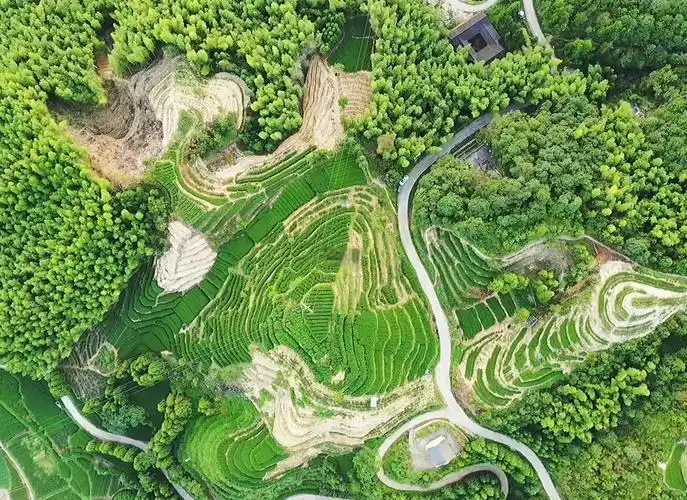
Guanyang produces some of Fuding's most prized white tea, the silver-needle and white peony varieties celebrated across China. Comparable to Darjeeling's high-grown estates in India or Sri Lanka's Nuwara Eliya, the 600-metre elevation, persistent mist, and cool temperatures slow leaf growth, producing buds with thick downy "white hair" and a famously delicate, sweet flavour. Between March and May, visitors can join tea pickers in the terraced gardens and follow the leaf through withering and drying in village workshops. Local farmhouse kitchens serve hearty highland fare worth seeking out: Fuding pork-slice soup, potato balls, and loach-noodle stew.
**Planning Your Visit**
Guanyang lies roughly 40 minutes by car from Fuding city centre, with no public buses serving individual attractions; self-driving or hiring a private vehicle is essential. Tourist infrastructure remains genuinely rustic — expect basic village homestays, limited signage, scarce restrooms, and occasional road closures during the rainy season. Two days and one night is the ideal rhythm: arrive by midday, wade the Yanxi glacial valley in the afternoon and overnight in a Xitou homestay; on day two explore the Xiyang Bridge and Jinchai Stream village before returning in the afternoon. The best seasons are summer (June to August) for cool relief from the coast and hiking the streams, and spring (March to May) for tea-picking and flowering mountain slopes.
**A Highland Crossroads with Ancient Geological Secrets**
Guanyang's most extraordinary feature lies hidden in Yanxi Stream within Xitou Village: a remarkable westward-flowing S-shaped river valley, an anomaly in a region where most streams drain east toward the Pacific. Scattered along its bed are more than a hundred perfectly rounded Quaternary-era glacial potholes, often called "ice mills" by geologists. These smooth, basin-like depressions were carved by meltwater some two million years ago and resemble formations found in Scandinavia and Iceland. Combined with a dramatic three-tiered waterfall (60 metres wide at its broadest) and a downstream volcanic rock forest, the valley offers a 2.5-hour wading trek best attempted with a local guide in summer.
**A Ming-Dynasty Wooden Bridge of Quiet Grandeur**
The Xiyang Laoren Bridge, first built around 1506 during the reign of the Ming Emperor Zhengde, ranks as Fuding's only surviving timber rainbow-beam covered bridge and is protected at the provincial level. Its interlocking mortise-and-tenon construction — assembled without nails — parallels the engineering philosophy of Switzerland's famous Kapellbrücke in Lucerne, though this remote Fujian example predates most comparable European covered bridges in continuous rural use. A small shrine at its centre reflects the Chinese tradition of bridges as sacred passages, while the timber corridor still shelters villagers from mountain storms during monsoon months.
**Living Villages and Mountain Heritage**
Nearby Jinchai Stream Village preserves the Jinzhu Bridge, another Ming-era crossing, alongside the Zhu Family Ancestral Hall and a cluster of Ming and Qing dynasty houses. Together they form one of southeastern China's most authentic highland village ensembles, comparable in atmosphere to the stone hamlets of Italy's Dolomites but built from timber and rammed earth. Local traditions remain vibrant: Shenqing Village hosts traditional bullfighting contests, while Xiyang continues its rare "thread lion" performance, an art form almost unknown outside the region.
**The Heartland of High-Mountain White Tea**
Guanyang produces some of Fuding's most prized white tea, the silver-needle and white peony varieties celebrated across China. Comparable to Darjeeling's high-grown estates in India or Sri Lanka's Nuwara Eliya, the 600-metre elevation, persistent mist, and cool temperatures slow leaf growth, producing buds with thick downy "white hair" and a famously delicate, sweet flavour. Between March and May, visitors can join tea pickers in the terraced gardens and follow the leaf through withering and drying in village workshops. Local farmhouse kitchens serve hearty highland fare worth seeking out: Fuding pork-slice soup, potato balls, and loach-noodle stew.
**Planning Your Visit**
Guanyang lies roughly 40 minutes by car from Fuding city centre, with no public buses serving individual attractions; self-driving or hiring a private vehicle is essential. Tourist infrastructure remains genuinely rustic — expect basic village homestays, limited signage, scarce restrooms, and occasional road closures during the rainy season. Two days and one night is the ideal rhythm: arrive by midday, wade the Yanxi glacial valley in the afternoon and overnight in a Xitou homestay; on day two explore the Xiyang Bridge and Jinchai Stream village before returning in the afternoon. The best seasons are summer (June to August) for cool relief from the coast and hiking the streams, and spring (March to May) for tea-picking and flowering mountain slopes.