Ningde Museum
⭐ 3.80
Jiaocheng District, Ningde City, Fujian Province, China
 The Mindong region, where Ningde sits along the Taiwan Strait, has been a maritime crossroads since Neolithic times. The museum's signature artifact assemblage comes from a Yuan Dynasty (1271–1368) shipwreck, placing it alongside the more famous Sinan and Nanhai One wrecks as a vital chapter in East Asian maritime archaeology. Contemporaneous with the late medieval trading networks that linked Venice to Quanzhou, these artifacts illuminate Mindong's role in the South China Sea's bustling medieval commerce.
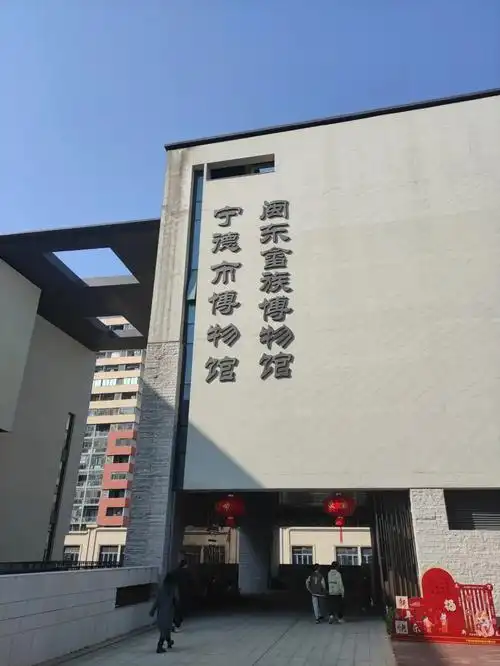
The museum building itself is a study in contemporary Chinese civic architecture, ranking as a national third-tier institution. Its spacious 1,500-square-meter exhibition halls feature wide corridors, barrier-free access, and central climate control. The clean, light-filled interiors may feel understated compared to grand European institutions like the British Museum or Vienna's Kunsthistorisches, but the modern design provides a serene backdrop for close examination of delicate textiles and bronze artifacts.
Culturally, the museum's standout is its "Thousand Years of the Mountain People" gallery, an unparalleled survey of She minority customs. The She, one of China's oldest ethnic groups, have lived in the mountain enclaves of Fujian, Zhejiang, and Jiangxi for centuries, retaining a unique animist-influenced culture. Visitors can examine traditional She wedding attire, ritual objects, and musical instruments, gaining rare insight into a community largely unknown outside China.
Practical details make visiting straightforward. The museum is just a short walk from Ningde Railway Station and opens Tuesday through Sunday from 9:00 a.m. to 5:30 p.m. in summer and 5:00 p.m. in winter, closed Mondays. Admission is free, though a valid passport is required for entry. Free guided tours run hourly and are highly recommended; booking ahead ensures a spot. Allow 1.5 to 2 hours for a satisfying visit.
What distinguishes this museum from larger Chinese institutions is its intimacy and interactivity. A holographic recreation of a traditional covered bridge, a phantom-theater presentation of a She wedding ceremony, and VR martial arts experiences transform passive viewing into immersive cultural engagement. Regular "Ningbo Academy" workshops and junior docent programs make it especially rewarding for families and school groups seeking meaningful engagement with authentic regional Chinese heritage.
The Mindong region, where Ningde sits along the Taiwan Strait, has been a maritime crossroads since Neolithic times. The museum's signature artifact assemblage comes from a Yuan Dynasty (1271–1368) shipwreck, placing it alongside the more famous Sinan and Nanhai One wrecks as a vital chapter in East Asian maritime archaeology. Contemporaneous with the late medieval trading networks that linked Venice to Quanzhou, these artifacts illuminate Mindong's role in the South China Sea's bustling medieval commerce.
The museum building itself is a study in contemporary Chinese civic architecture, ranking as a national third-tier institution. Its spacious 1,500-square-meter exhibition halls feature wide corridors, barrier-free access, and central climate control. The clean, light-filled interiors may feel understated compared to grand European institutions like the British Museum or Vienna's Kunsthistorisches, but the modern design provides a serene backdrop for close examination of delicate textiles and bronze artifacts.
Culturally, the museum's standout is its "Thousand Years of the Mountain People" gallery, an unparalleled survey of She minority customs. The She, one of China's oldest ethnic groups, have lived in the mountain enclaves of Fujian, Zhejiang, and Jiangxi for centuries, retaining a unique animist-influenced culture. Visitors can examine traditional She wedding attire, ritual objects, and musical instruments, gaining rare insight into a community largely unknown outside China.
Practical details make visiting straightforward. The museum is just a short walk from Ningde Railway Station and opens Tuesday through Sunday from 9:00 a.m. to 5:30 p.m. in summer and 5:00 p.m. in winter, closed Mondays. Admission is free, though a valid passport is required for entry. Free guided tours run hourly and are highly recommended; booking ahead ensures a spot. Allow 1.5 to 2 hours for a satisfying visit.
What distinguishes this museum from larger Chinese institutions is its intimacy and interactivity. A holographic recreation of a traditional covered bridge, a phantom-theater presentation of a She wedding ceremony, and VR martial arts experiences transform passive viewing into immersive cultural engagement. Regular "Ningbo Academy" workshops and junior docent programs make it especially rewarding for families and school groups seeking meaningful engagement with authentic regional Chinese heritage.