Fu'an Tongjiang Academy
⭐ 2.80
Tongjiang Academy, Xitan Town, Fu'an City, Ningde City, Fujian Province, China
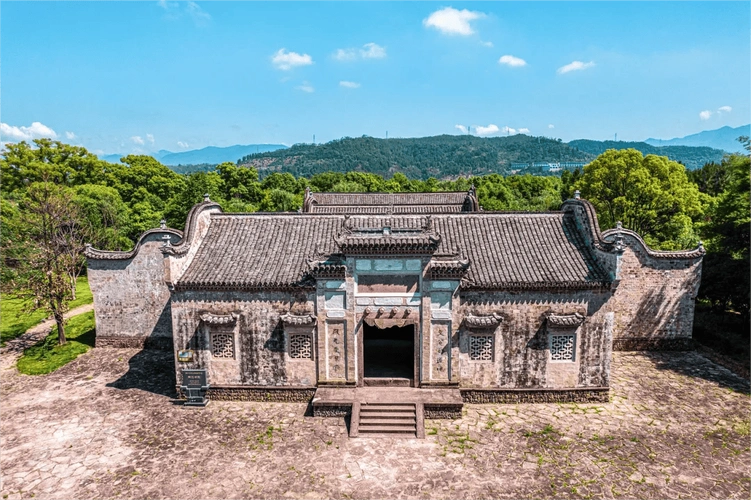 Founded during the Qiandao era of the Southern Song dynasty (1165–1173), Tongjiang Academy takes its name from its position beside the Tong River. Its founder, the Xianju scholar Fang Zhuo, invited Zhu Xi to lecture—a thinker often compared to Europe's Thomas Aquinas for his role in defining orthodox thought. Zhu Xi personally inscribed the academy's plaque, elevating it to one of eastern Zhejiang's most respected Confucian seats. The academy survived dynastic upheaval and fire until a major Qing-dynasty rebuilding in 1870 faithfully restored its original layout.
The surviving complex is a classic siheyuan, or courtyard compound, anchored on a central axis running from the main gate through the Dingshan Hall and culminating in the Dacheng Hall, named after the "Great Completion" hall found in Confucian temples nationwide. Side wings house study rooms and a stone-stele corridor displaying ancient inscriptions. The most photographed feature is an 800-year-old evergreen tree whose gnarled trunk and spreading canopy lend the courtyard a monastic, almost timeless atmosphere against the whitewashed walls and dark tiles.
Tongjiang Academy offers tangible evidence of how Neo-Confucianism spread through southern China during the Song and Ming dynasties, a period that scholars sometimes liken to Europe's twelfth-century Scholastic revival. The stele corridor preserves inscriptions by Zhu Xi and Wang Shipeng, another celebrated Song-era scholar-official. A dedicated exhibition hall highlights Xianju's remarkable heritage as the "homeland of censors," a county that produced an unusually high number of imperial ombudsmen, reflecting the region's strong tradition of moral remonstrance. The site was designated a Zhejiang Provincial Cultural Relics Protection Unit in 2009.
The academy lies in Potan Township, Xianju County, about 40 minutes by car from the county seat. Most travelers arrive via Hangzhou or Taizhou city, then transfer to an intercity bus to Xianju before taking a local taxi or minibus. Admission typically runs 50–60 RMB, though rates may vary. Mandarin-language guided tours are available and should be booked by phone in advance; signage is largely Chinese-only, so a translation app is highly recommended. Plan one to two hours for the visit.
Early morning or late afternoon light is ideal for photographing the dark-tiled roofs against the ancient tree, and these quieter hours suit the site's contemplative spirit. Pair the academy with a stroll through nearby Potan Ancient Town, where salt-merchant lanes and dragon-lantern folk traditions provide a lively contrast to the scholarly stillness. Visitors interested in Song philosophy will find prior reading on Zhu Xi rewarding; even without background, the well-preserved layout, weathered steles, and riverside setting offer a quietly moving glimpse into imperial China's academic heart.
Founded during the Qiandao era of the Southern Song dynasty (1165–1173), Tongjiang Academy takes its name from its position beside the Tong River. Its founder, the Xianju scholar Fang Zhuo, invited Zhu Xi to lecture—a thinker often compared to Europe's Thomas Aquinas for his role in defining orthodox thought. Zhu Xi personally inscribed the academy's plaque, elevating it to one of eastern Zhejiang's most respected Confucian seats. The academy survived dynastic upheaval and fire until a major Qing-dynasty rebuilding in 1870 faithfully restored its original layout.
The surviving complex is a classic siheyuan, or courtyard compound, anchored on a central axis running from the main gate through the Dingshan Hall and culminating in the Dacheng Hall, named after the "Great Completion" hall found in Confucian temples nationwide. Side wings house study rooms and a stone-stele corridor displaying ancient inscriptions. The most photographed feature is an 800-year-old evergreen tree whose gnarled trunk and spreading canopy lend the courtyard a monastic, almost timeless atmosphere against the whitewashed walls and dark tiles.
Tongjiang Academy offers tangible evidence of how Neo-Confucianism spread through southern China during the Song and Ming dynasties, a period that scholars sometimes liken to Europe's twelfth-century Scholastic revival. The stele corridor preserves inscriptions by Zhu Xi and Wang Shipeng, another celebrated Song-era scholar-official. A dedicated exhibition hall highlights Xianju's remarkable heritage as the "homeland of censors," a county that produced an unusually high number of imperial ombudsmen, reflecting the region's strong tradition of moral remonstrance. The site was designated a Zhejiang Provincial Cultural Relics Protection Unit in 2009.
The academy lies in Potan Township, Xianju County, about 40 minutes by car from the county seat. Most travelers arrive via Hangzhou or Taizhou city, then transfer to an intercity bus to Xianju before taking a local taxi or minibus. Admission typically runs 50–60 RMB, though rates may vary. Mandarin-language guided tours are available and should be booked by phone in advance; signage is largely Chinese-only, so a translation app is highly recommended. Plan one to two hours for the visit.
Early morning or late afternoon light is ideal for photographing the dark-tiled roofs against the ancient tree, and these quieter hours suit the site's contemplative spirit. Pair the academy with a stroll through nearby Potan Ancient Town, where salt-merchant lanes and dragon-lantern folk traditions provide a lively contrast to the scholarly stillness. Visitors interested in Song philosophy will find prior reading on Zhu Xi rewarding; even without background, the well-preserved layout, weathered steles, and riverside setting offer a quietly moving glimpse into imperial China's academic heart.