Diantou Town, Fuding
⭐ 3.80
Diantou Town, Fuding City, Ningde City, Fujian Province, China
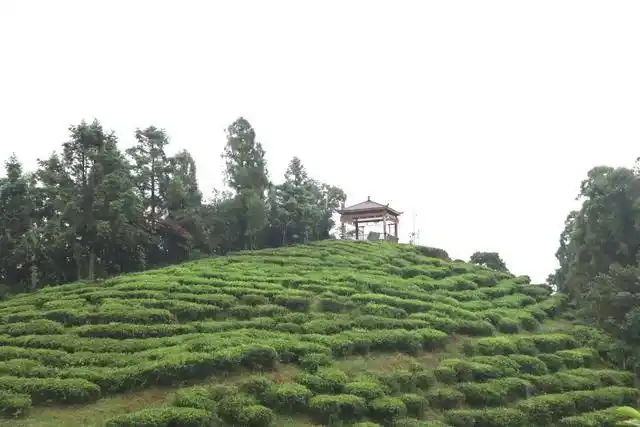 Diantou's white tea legacy stretches back to the Qing Dynasty's Jiaqing era (around 1800 CE), placing its origins in a period roughly contemporary with the Napoleonic Wars in Europe. The village of Bailiu still shelters century-old Da Bai tea mother trees—living botanical treasures that any horticulturalist or tea historian would compare to the oldest working vineyards in Burgundy or Tuscany. Each March, during the "Kai Cha" (Tea Opening) Festival, pilgrims and tea merchants gather to honor these plants, much like the vendange celebrations in France or the grape harvests along the Rhine.
The architecture here speaks of Fujian's deep cultural roots. Juzhou Village's Lian Shan residences, built during the Qianlong Emperor's reign (1771 onward), feature the famed "Sisters' Houses" with intricate carved wooden screens reminiscent of Scottish baronial detailing or Bavarian rococo woodwork—though distinctly Minnan in character. The old town preserves a provincial-protected Tianhou Temple honoring Mazu, the sea goddess whose worship parallels the Mediterranean veneration of maritime saints like Stella Maris. Painted walls and well-preserved street layouts transport visitors into a pre-modern Chinese trading hub.
At the heart of the tea experience stands the Liumiao White Tea Museum, a contemporary cultural center that rivals London's twin tea museums for depth. Here, visitors explore the entire journey from leaf to cup, including demonstrations of the prized "gong mei" sun-drying technique, aging cellars stocked with vintage cakes, and hands-on workshops where guests craft their own tea. Yangzhong Street, dubbed "China's First White Tea Street," buzzes with merchants trading fresh leaves from the Fujian-Zhejiang borderlands—evoking the historic auction houses of Amsterdam or London's old tea warehouses along the Thames.
Reaching Diantou requires a high-speed rail journey to Fuding Station, followed by a 20-minute taxi ride. Quality guesthouses cluster around Hua Xi Yuan White Tea Town and licensed tea-farm homestays—avoid unlicensed rural operators. While shopkeepers in town centers manage basic English, rural areas strongly benefit from booking an English-speaking guide in advance. Spring (March–May) and autumn (September–November) offer ideal weather; summers bring heat, humidity, and mosquitoes that require serious preparation.
A rewarding two-day itinerary begins at the Liumiao Museum, then winds through Bailiu Village and the bustling Yangzhong Street, capped by an evening tea ceremony around a charcoal brazier—similar to Japanese chanoyu but distinctly Fujianese. Day two brings cycling or hiking through Jiangmei Village's thousand-acre tea terraces along the scenic Dian-Bai route, followed by riverside camping at Juzhou Village or sunset views at the dramatic barefoot-reef coastline. With extra time, combine Diantou with the breathtaking Taimu Mountain (40 minutes by car) for a complete "mountain-sea-tea" journey through one of China's most picturesque regions.
Diantou's white tea legacy stretches back to the Qing Dynasty's Jiaqing era (around 1800 CE), placing its origins in a period roughly contemporary with the Napoleonic Wars in Europe. The village of Bailiu still shelters century-old Da Bai tea mother trees—living botanical treasures that any horticulturalist or tea historian would compare to the oldest working vineyards in Burgundy or Tuscany. Each March, during the "Kai Cha" (Tea Opening) Festival, pilgrims and tea merchants gather to honor these plants, much like the vendange celebrations in France or the grape harvests along the Rhine.
The architecture here speaks of Fujian's deep cultural roots. Juzhou Village's Lian Shan residences, built during the Qianlong Emperor's reign (1771 onward), feature the famed "Sisters' Houses" with intricate carved wooden screens reminiscent of Scottish baronial detailing or Bavarian rococo woodwork—though distinctly Minnan in character. The old town preserves a provincial-protected Tianhou Temple honoring Mazu, the sea goddess whose worship parallels the Mediterranean veneration of maritime saints like Stella Maris. Painted walls and well-preserved street layouts transport visitors into a pre-modern Chinese trading hub.
At the heart of the tea experience stands the Liumiao White Tea Museum, a contemporary cultural center that rivals London's twin tea museums for depth. Here, visitors explore the entire journey from leaf to cup, including demonstrations of the prized "gong mei" sun-drying technique, aging cellars stocked with vintage cakes, and hands-on workshops where guests craft their own tea. Yangzhong Street, dubbed "China's First White Tea Street," buzzes with merchants trading fresh leaves from the Fujian-Zhejiang borderlands—evoking the historic auction houses of Amsterdam or London's old tea warehouses along the Thames.
Reaching Diantou requires a high-speed rail journey to Fuding Station, followed by a 20-minute taxi ride. Quality guesthouses cluster around Hua Xi Yuan White Tea Town and licensed tea-farm homestays—avoid unlicensed rural operators. While shopkeepers in town centers manage basic English, rural areas strongly benefit from booking an English-speaking guide in advance. Spring (March–May) and autumn (September–November) offer ideal weather; summers bring heat, humidity, and mosquitoes that require serious preparation.
A rewarding two-day itinerary begins at the Liumiao Museum, then winds through Bailiu Village and the bustling Yangzhong Street, capped by an evening tea ceremony around a charcoal brazier—similar to Japanese chanoyu but distinctly Fujianese. Day two brings cycling or hiking through Jiangmei Village's thousand-acre tea terraces along the scenic Dian-Bai route, followed by riverside camping at Juzhou Village or sunset views at the dramatic barefoot-reef coastline. With extra time, combine Diantou with the breathtaking Taimu Mountain (40 minutes by car) for a complete "mountain-sea-tea" journey through one of China's most picturesque regions.