Mount Taimu
⭐ 4.70
Taimushan Scenic Area, Taimushan Town, Fuding City, Ningde City, Fujian Province, China
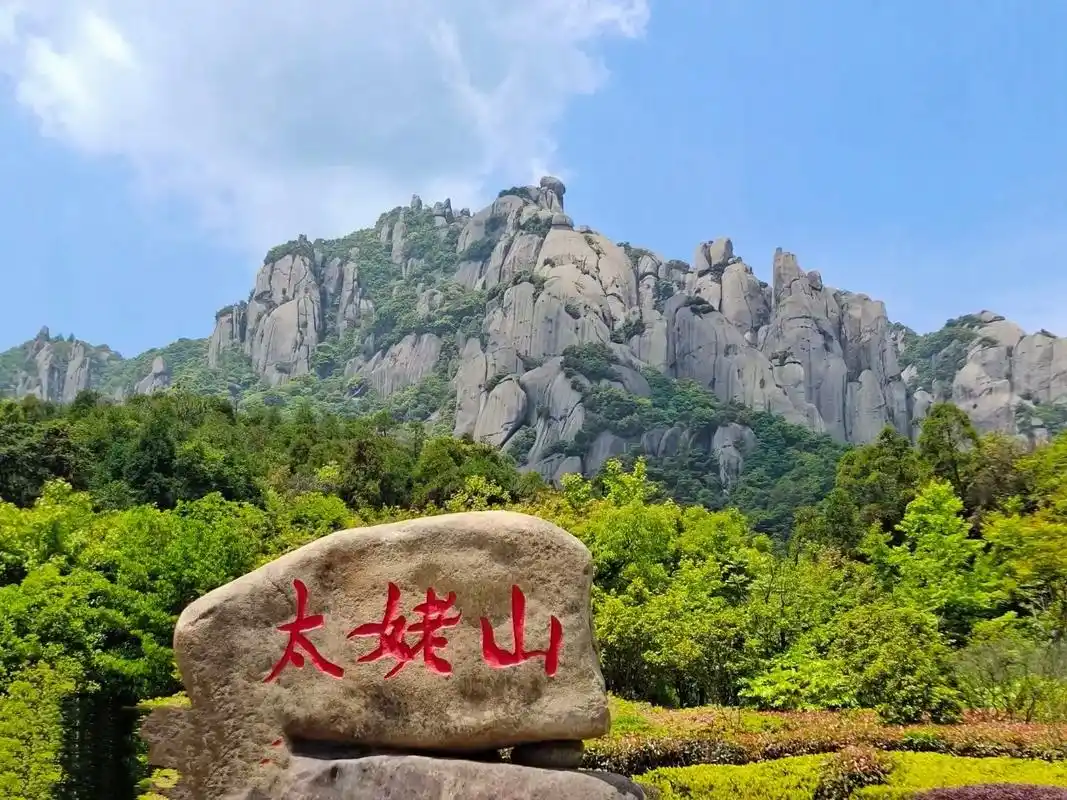 Rising dramatically from the East China Sea coast, Taimu Mountain belongs to the same family of ancient granite peak formations that sculpt such celebrated landscapes as China's Huangshan and even Scotland's Isle of Skye, yet it stands apart as China's premier coastal mountain range. Three sides face the open ocean, and with over 90 percent forest coverage, the granite spires rise through lush subtropical vegetation. The summit of Moxiao Peak offers panoramas reminiscent of looking out from the cliffs of Norway's fjords, only with the added spectacle of seasonal cloud seas rolling in from the Pacific. Summer temperatures inside the mountain's caves remain a refreshing 20°C, making it a natural retreat from the coastal heat.
The mountain's famed "Four Wonders" unfold across distinct terrains. Peaks such as Moxiao and Wulong Ridge deliver the vertiginous drama of the Italian Dolomites, while formations like the Husband-and-Wife Peaks and Nine Carp Ascending are nature's own surrealist sculptures. The One-Line Sky crevice narrows to just 20 centimeters—a squeeze tighter than many medieval European arrow slits—while Gourd Cave twists like the catacombs beneath Paris, demanding that visitors crouch, crawl, and wriggle through its passages for a genuinely playful adventure.
Human history weaves through this wild setting across two millennia. The ruins of Guoxing Temple, an ancient Buddhist complex that once rivaled Fujian's coastal monasteries, survive as seven weatherworn stone columns that recall the dignity of a Greek temple stripped to its essentials. Nearby, Baiyun Temple remains an active Buddhist site, while Taoist altars and folk shrines reflect the syncretic religious traditions typical of southeastern China. These sacred layers give the mountain a depth comparable to the cultural tapestries of Spain's Montserrat or Greece's Meteora monasteries perched on impossible rock pillars.
Reaching Taimu is refreshingly straightforward for international travelers. High-speed rail connects to Taimushan Station, from where a dedicated shuttle bus delivers visitors to the entrance in roughly 20 minutes. Admission runs approximately 138 yuan, including sightseeing shuttle service. Modern conveniences include escalators assisting the descent, and the park offers several graded routes—easy, classic, and challenging—suiting families, casual hikers, and seasoned trekkers alike. Note that there is no cable car, so be prepared for significant walking.
For the best experience, wear sturdy anti-slip footwear, carry a light jacket for cooler cave interiors, and bring a flashlight for the deeper tunnels. Spring and autumn offer the highest probability of breathtaking cloud-sea formations. Arrive by 7:30 a.m. to beat the crowds and capture sunrise, and avoid entering the longer cave passages after 4:30 p.m. when daylight fades inside the mountain. With its unique blend of oceanic drama, geological wonder, and spiritual heritage, Taimu Mountain rewards travelers seeking something beyond China's better-known inland peaks.
Rising dramatically from the East China Sea coast, Taimu Mountain belongs to the same family of ancient granite peak formations that sculpt such celebrated landscapes as China's Huangshan and even Scotland's Isle of Skye, yet it stands apart as China's premier coastal mountain range. Three sides face the open ocean, and with over 90 percent forest coverage, the granite spires rise through lush subtropical vegetation. The summit of Moxiao Peak offers panoramas reminiscent of looking out from the cliffs of Norway's fjords, only with the added spectacle of seasonal cloud seas rolling in from the Pacific. Summer temperatures inside the mountain's caves remain a refreshing 20°C, making it a natural retreat from the coastal heat.
The mountain's famed "Four Wonders" unfold across distinct terrains. Peaks such as Moxiao and Wulong Ridge deliver the vertiginous drama of the Italian Dolomites, while formations like the Husband-and-Wife Peaks and Nine Carp Ascending are nature's own surrealist sculptures. The One-Line Sky crevice narrows to just 20 centimeters—a squeeze tighter than many medieval European arrow slits—while Gourd Cave twists like the catacombs beneath Paris, demanding that visitors crouch, crawl, and wriggle through its passages for a genuinely playful adventure.
Human history weaves through this wild setting across two millennia. The ruins of Guoxing Temple, an ancient Buddhist complex that once rivaled Fujian's coastal monasteries, survive as seven weatherworn stone columns that recall the dignity of a Greek temple stripped to its essentials. Nearby, Baiyun Temple remains an active Buddhist site, while Taoist altars and folk shrines reflect the syncretic religious traditions typical of southeastern China. These sacred layers give the mountain a depth comparable to the cultural tapestries of Spain's Montserrat or Greece's Meteora monasteries perched on impossible rock pillars.
Reaching Taimu is refreshingly straightforward for international travelers. High-speed rail connects to Taimushan Station, from where a dedicated shuttle bus delivers visitors to the entrance in roughly 20 minutes. Admission runs approximately 138 yuan, including sightseeing shuttle service. Modern conveniences include escalators assisting the descent, and the park offers several graded routes—easy, classic, and challenging—suiting families, casual hikers, and seasoned trekkers alike. Note that there is no cable car, so be prepared for significant walking.
For the best experience, wear sturdy anti-slip footwear, carry a light jacket for cooler cave interiors, and bring a flashlight for the deeper tunnels. Spring and autumn offer the highest probability of breathtaking cloud-sea formations. Arrive by 7:30 a.m. to beat the crowds and capture sunrise, and avoid entering the longer cave passages after 4:30 p.m. when daylight fades inside the mountain. With its unique blend of oceanic drama, geological wonder, and spiritual heritage, Taimu Mountain rewards travelers seeking something beyond China's better-known inland peaks.