Xinjiang Academy
⭐ 4.50
Xinjiang Academy, Xinzhou District, Shangrao City, Jiangxi Province, China
 **A Scholar's Retreat Steeped in History**
Founded in the late 17th century under Emperor Kangxi, Xinjiang Academy predates many of Europe's Enlightenment-era universities and shares a kindred spirit with Oxford and Cambridge colleges of the same period. As one of Jiangxi's four great ancient academies—alongside the famed Bailudong—it trained generations of scholar-officials during the Qing dynasty, when Confucian education formed the backbone of Chinese civil society. The academy's three-century survival through dynastic upheaval, war, and modernization makes it a living monument comparable in significance to well-preserved European monastic schools like those of Cluny or the Spanish university of Salamanca.
**Architecture in Harmony with Nature**
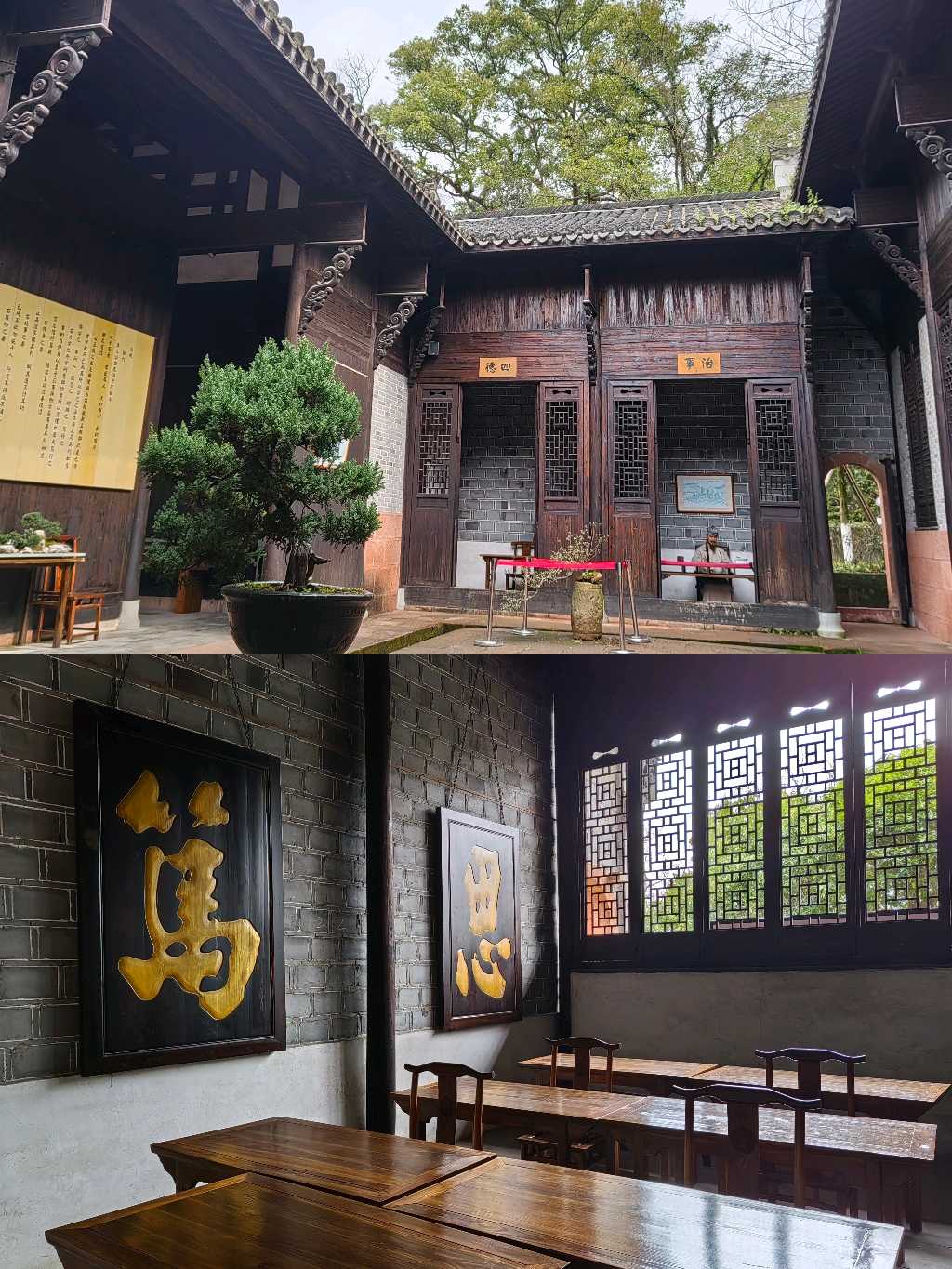
The complex follows the classical Chinese principle of "mountain behind, water in front," with the towering Zhongshan hills as its backdrop and the meandering Xin River at its feet. Its strict central-axis layout unfolds in three progressive courtyards—front hall, sky well, and rear chamber—connected by covered walkways reminiscent of Italian Renaissance loggias in their sense of measured rhythm. Delicately carved wooden doors, Ming and Qing stone inscriptions, and sweeping upturned eaves give the halls an air of dignified refinement, making the academy an invaluable case study for understanding Qing-era educational architecture.
**The Legendary Ginkgo and Its Living Companion**
The academy's most photographed treasure is a towering ginkgo tree estimated at over a century old, which blazes into brilliant gold each autumn and draws visitors from across the region. Even more remarkable is the rare Drynaria fern that grows epiphytically along its ancient trunk—a delicate green crown that contrasts strikingly with the weathered bark. This singular natural phenomenon, where botany and heritage intertwine, has no direct parallel in European landscapes and offers photographers a uniquely Chinese visual spectacle.
**A Living Cultural Institution**
Beyond its architectural beauty, the academy houses a small museum displaying classical texts, calligraphic manuscripts, and poetry by Xin Qiji—the celebrated Southern Song patriot who was born in this very region. Visitors can browse reading rooms, attend regular book clubs, and participate in intangible cultural heritage workshops that keep traditional crafts alive. Much like a restored European guild hall repurposed for community use, the academy pulses with contemporary energy while honoring its scholarly roots.
**Practical Information for Visitors**
Admission is free and no reservation is required, though the academy is closed on Mondays and open Tuesday through Sunday. The nearest dining options lie a short walk away along Shuinan Food Street, where local specialties such as buckwheat cakes and meat wontons (rou yan) provide an authentic taste of Shangrao. Comfortable flat shoes are recommended due to the stone-paved courtyards, and visitors are asked to maintain a respectful quiet in keeping with the site's scholarly heritage.
**When to Visit**
Early morning and late afternoon offer the softest natural light for photography, when the grey bricks glow warmly and the courtyards are nearly empty. Autumn visitors will be rewarded with the ginkgo's golden canopy, while spring brings fresh greenery to the bamboo-lined paths. Allow at least one to two hours to absorb the atmosphere fully—lingering, as the scholars once did, over ink and inspiration.
**A Scholar's Retreat Steeped in History**
Founded in the late 17th century under Emperor Kangxi, Xinjiang Academy predates many of Europe's Enlightenment-era universities and shares a kindred spirit with Oxford and Cambridge colleges of the same period. As one of Jiangxi's four great ancient academies—alongside the famed Bailudong—it trained generations of scholar-officials during the Qing dynasty, when Confucian education formed the backbone of Chinese civil society. The academy's three-century survival through dynastic upheaval, war, and modernization makes it a living monument comparable in significance to well-preserved European monastic schools like those of Cluny or the Spanish university of Salamanca.
**Architecture in Harmony with Nature**
The complex follows the classical Chinese principle of "mountain behind, water in front," with the towering Zhongshan hills as its backdrop and the meandering Xin River at its feet. Its strict central-axis layout unfolds in three progressive courtyards—front hall, sky well, and rear chamber—connected by covered walkways reminiscent of Italian Renaissance loggias in their sense of measured rhythm. Delicately carved wooden doors, Ming and Qing stone inscriptions, and sweeping upturned eaves give the halls an air of dignified refinement, making the academy an invaluable case study for understanding Qing-era educational architecture.
**The Legendary Ginkgo and Its Living Companion**
The academy's most photographed treasure is a towering ginkgo tree estimated at over a century old, which blazes into brilliant gold each autumn and draws visitors from across the region. Even more remarkable is the rare Drynaria fern that grows epiphytically along its ancient trunk—a delicate green crown that contrasts strikingly with the weathered bark. This singular natural phenomenon, where botany and heritage intertwine, has no direct parallel in European landscapes and offers photographers a uniquely Chinese visual spectacle.
**A Living Cultural Institution**
Beyond its architectural beauty, the academy houses a small museum displaying classical texts, calligraphic manuscripts, and poetry by Xin Qiji—the celebrated Southern Song patriot who was born in this very region. Visitors can browse reading rooms, attend regular book clubs, and participate in intangible cultural heritage workshops that keep traditional crafts alive. Much like a restored European guild hall repurposed for community use, the academy pulses with contemporary energy while honoring its scholarly roots.
**Practical Information for Visitors**
Admission is free and no reservation is required, though the academy is closed on Mondays and open Tuesday through Sunday. The nearest dining options lie a short walk away along Shuinan Food Street, where local specialties such as buckwheat cakes and meat wontons (rou yan) provide an authentic taste of Shangrao. Comfortable flat shoes are recommended due to the stone-paved courtyards, and visitors are asked to maintain a respectful quiet in keeping with the site's scholarly heritage.
**When to Visit**
Early morning and late afternoon offer the softest natural light for photography, when the grey bricks glow warmly and the courtyards are nearly empty. Autumn visitors will be rewarded with the ginkgo's golden canopy, while spring brings fresh greenery to the bamboo-lined paths. Allow at least one to two hours to absorb the atmosphere fully—lingering, as the scholars once did, over ink and inspiration.