Liugong Island
⭐ 4.80
Liugong Island Scenic Area, Huancui District, Weihai, Shandong, China
 **A Crucible of Imperial Ambition and Defeat**
Liugong Island's story begins in 1888, when the Qing Dynasty established the Beiyang Fleet here, rapidly building it into Asia's premier naval force, complete with ironclad warships rivaling Britain's Royal Navy of the era. By 1895, however, the island had become the site of one of the most consequential defeats in modern history: the fall of Weihaiwei to Imperial Japan. For Western visitors familiar with the Charge of the Light Brigade or the Battle of Tsushima, Liugong Island resonates as a parallel turning point, a moment when an old empire's military modernization collided with the rising power of Meiji Japan. The island's haunting nickname, the "Island of National Awakening," reflects its enduring role in Chinese historical memory.
**An Open-Air Naval Architecture Museum**
The island preserves China's most complete ensemble of late-Qing naval military architecture. The Beiyang Fleet Admiralty Headquarters stands as the nerve center where strategic decisions shaped East Asian geopolitics; nearby, the remains of the Naval Academy tell the story of China's first modern naval education. A full-scale, 1:1 reconstruction of the battleship Dingyuan, the fleet's crown jewel and once the pride of Asia, allows visitors to walk the decks and grasp the scale of late-19th-century naval engineering. Scattered British colonial-era villas from the early 20th century add a surprising European architectural layer, since Weihaiwei was leased to Britain from 1898 to 1930.
**Museums That Bring History to Life**
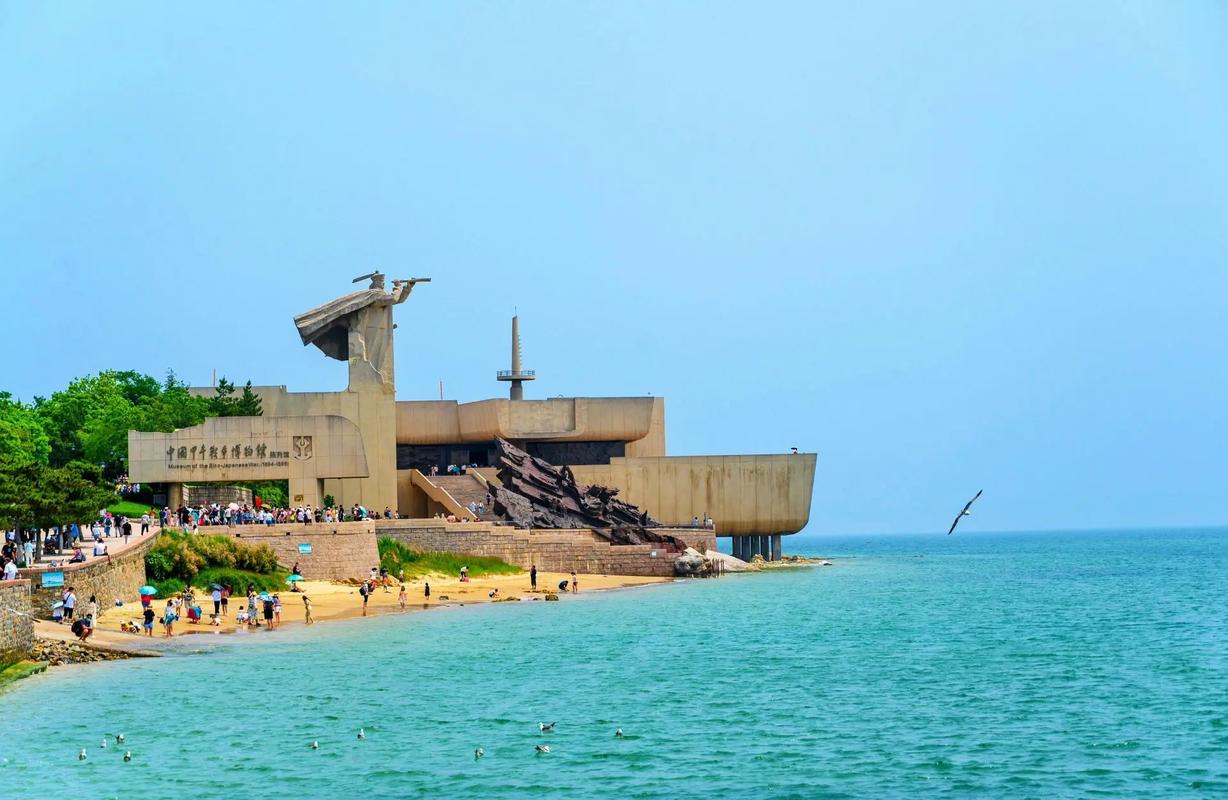
The Sino-Japanese War Museum serves as the island's interpretive heart, housing thousands of artifacts, original documents, and weapons that chronicle the Beiyang Fleet's rise and fall with somber depth. For those intrigued by naval technology, the decommissioned Type 033 submarine No. 279 can be boarded and explored, a rare hands-on experience reminiscent of submarine museum tours in the United States or Germany. Complementing these exhibits, the immersive theater production "Ode to the Dingyuan" brings the battleship's final battle to life through stirring multimedia storytelling, blending education with genuine emotional impact.
**Practical Tips for the Western Visitor**
Reaching the island is straightforward: ferries depart from the Beizhu Island Wharf in central Weihai, with the crossing taking just 15–20 minutes. Adult admission is 122 RMB, including round-trip ferry tickets and entry to the main museums. Because the island's attractions are widely dispersed, plan for at least 4–5 hours; convenient sightseeing trams connect the main sites, saving tired legs. Note that the entire island is smoke-free, comfortable walking shoes are essential, and sailings may be suspended in heavy fog or strong winds, so check weather forecasts and book tickets online in advance.
**Why Liugong Island Belongs on Your Itinerary**
What makes Liugong Island exceptional among Asian historical destinations is the rare combination of natural beauty and profound historical weight. A recommended route—ferry terminal, Admiralty Headquarters, main museum, Dingyuan replica, Expo Park, submarine, coastal batteries, Flagstaff Hill, and return—avoids backtracking and builds to a memorable climax atop Flagstaff Hill, where panoramic views over Weihai Bay, the mountains, sea, and silent forts create a photographer's dream. Dining options on the island are limited and pricey, so bring water and snacks; for a proper meal, return to Weihai city for local specialties like mackerel dumplings, a Shandong culinary classic that rewards a day of exploration.
**A Crucible of Imperial Ambition and Defeat**
Liugong Island's story begins in 1888, when the Qing Dynasty established the Beiyang Fleet here, rapidly building it into Asia's premier naval force, complete with ironclad warships rivaling Britain's Royal Navy of the era. By 1895, however, the island had become the site of one of the most consequential defeats in modern history: the fall of Weihaiwei to Imperial Japan. For Western visitors familiar with the Charge of the Light Brigade or the Battle of Tsushima, Liugong Island resonates as a parallel turning point, a moment when an old empire's military modernization collided with the rising power of Meiji Japan. The island's haunting nickname, the "Island of National Awakening," reflects its enduring role in Chinese historical memory.
**An Open-Air Naval Architecture Museum**
The island preserves China's most complete ensemble of late-Qing naval military architecture. The Beiyang Fleet Admiralty Headquarters stands as the nerve center where strategic decisions shaped East Asian geopolitics; nearby, the remains of the Naval Academy tell the story of China's first modern naval education. A full-scale, 1:1 reconstruction of the battleship Dingyuan, the fleet's crown jewel and once the pride of Asia, allows visitors to walk the decks and grasp the scale of late-19th-century naval engineering. Scattered British colonial-era villas from the early 20th century add a surprising European architectural layer, since Weihaiwei was leased to Britain from 1898 to 1930.
**Museums That Bring History to Life**
The Sino-Japanese War Museum serves as the island's interpretive heart, housing thousands of artifacts, original documents, and weapons that chronicle the Beiyang Fleet's rise and fall with somber depth. For those intrigued by naval technology, the decommissioned Type 033 submarine No. 279 can be boarded and explored, a rare hands-on experience reminiscent of submarine museum tours in the United States or Germany. Complementing these exhibits, the immersive theater production "Ode to the Dingyuan" brings the battleship's final battle to life through stirring multimedia storytelling, blending education with genuine emotional impact.
**Practical Tips for the Western Visitor**
Reaching the island is straightforward: ferries depart from the Beizhu Island Wharf in central Weihai, with the crossing taking just 15–20 minutes. Adult admission is 122 RMB, including round-trip ferry tickets and entry to the main museums. Because the island's attractions are widely dispersed, plan for at least 4–5 hours; convenient sightseeing trams connect the main sites, saving tired legs. Note that the entire island is smoke-free, comfortable walking shoes are essential, and sailings may be suspended in heavy fog or strong winds, so check weather forecasts and book tickets online in advance.
**Why Liugong Island Belongs on Your Itinerary**
What makes Liugong Island exceptional among Asian historical destinations is the rare combination of natural beauty and profound historical weight. A recommended route—ferry terminal, Admiralty Headquarters, main museum, Dingyuan replica, Expo Park, submarine, coastal batteries, Flagstaff Hill, and return—avoids backtracking and builds to a memorable climax atop Flagstaff Hill, where panoramic views over Weihai Bay, the mountains, sea, and silent forts create a photographer's dream. Dining options on the island are limited and pricey, so bring water and snacks; for a proper meal, return to Weihai city for local specialties like mackerel dumplings, a Shandong culinary classic that rewards a day of exploration.