Tianlong Mountain Grottoes
⭐ 4.20
Tianlong Mountain Grottoes, Jinyuan District, Taiyuan, Shanxi Province, China
 Tianlongshan Grottoes trace their origins to the Eastern Wei dynasty around the mid-6th century, with construction continuing through the Northern Qi, Sui, and Tang periods for nearly two hundred years. Situated near the ancient city of Jinyang, once a thriving Buddhist center of northern China, the caves parallel the great sculptural traditions of contemporary Europe, such as those of Bamberg or Cluny, capturing the same transitional moment when religious art began reflecting humanistic warmth rather than purely otherworldly mystery. Designated a National Key Cultural Heritage Site in 2001, the complex remains essential to understanding how Buddhist iconography spread and evolved across northern China.
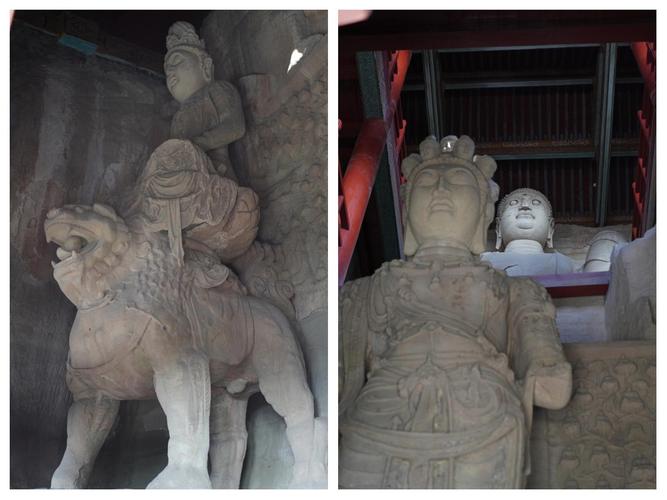
The artistic crown of Tianlongshan lies in Cave 9, known as Manshan Pavilion, on the western peak. Its 7.55-meter seated Tang dynasty Maitreya Buddha and 5.5-meter standing Eleven-Faced Guanyin display the refined "Tianlongshan style," characterized by the "wet drapery" technique where robes ripple against the body like liquid silk. The Guanyin's serene, rounded features and graceful posture evoke comparisons with classical Greek sculpture, marking a crucial shift from divine transcendence to humanized beauty that parallels the Italian Renaissance's rediscovery of classical ideals half a millennium later.
In the early twentieth century, the grottoes suffered devastating looting, with roughly 150 tons of sculptural fragments dispersed across museums and private collections in Europe, America, and Japan. The 2021 repatriation of a Northern Qi Buddha head from Cave 8, missing for a century, stands as a landmark victory in the global fight against cultural heritage theft. The site's museum now features a dedicated National Treasure Return Hall alongside a digital restoration gallery, allowing visitors to experience both the tragedy of loss and the triumph of recovery in deeply moving fashion.
Beyond its artistic treasures, Tianlongshan enchants with natural beauty, where forest coverage exceeds 85 percent and eight classical scenic views include ancient pines, mountain streams, and mist-shrouded pavilions. Wooden walkways wind along the cliffside, connecting caves while offering sweeping views of the surrounding peaks, creating an experience that blends spiritual pilgrimage with outdoor adventure reminiscent of hiking trails in the Italian Apennines or the wooded hills above Salzburg.
The grottoes sit roughly 36 to 40 kilometers southwest of Taiyuan city center, about 14 kilometers from the famous Jinci Temple. Drivers can navigate to Tianlongshan Grottoes Museum, which offers an eco-friendly parking area. Public transport travelers should take bus 804 or 856 to the terminus, then transfer to the scenic shuttle (4 yuan). Admission starts at 50 yuan for adults and includes the museum, with half-price tickets for students and seniors and free entry for children under six. The site opens from 8:30 a.m. to 6:00 p.m. during peak season, and visitors should allow two to three hours for a thorough exploration.
Begin at the visitor center to purchase tickets, then climb the eastern peak's walkway from bottom to top before crossing to the western peak and the essential Cave 9. Afterward, descend to the National Treasure Return Hall to learn the full story of the lost and recovered masterpieces. Morning visits are best, particularly in summer when midday heat and thunderstorms are common. Wear sturdy, non-slip footwear as the stone steps can be uneven, and remember that touching sculptures or using flash photography is strictly prohibited. Combining Tianlongshan with Jinci Temple makes an ideal day trip through the cultural heartland of ancient Jinyang.
Tianlongshan Grottoes trace their origins to the Eastern Wei dynasty around the mid-6th century, with construction continuing through the Northern Qi, Sui, and Tang periods for nearly two hundred years. Situated near the ancient city of Jinyang, once a thriving Buddhist center of northern China, the caves parallel the great sculptural traditions of contemporary Europe, such as those of Bamberg or Cluny, capturing the same transitional moment when religious art began reflecting humanistic warmth rather than purely otherworldly mystery. Designated a National Key Cultural Heritage Site in 2001, the complex remains essential to understanding how Buddhist iconography spread and evolved across northern China.
The artistic crown of Tianlongshan lies in Cave 9, known as Manshan Pavilion, on the western peak. Its 7.55-meter seated Tang dynasty Maitreya Buddha and 5.5-meter standing Eleven-Faced Guanyin display the refined "Tianlongshan style," characterized by the "wet drapery" technique where robes ripple against the body like liquid silk. The Guanyin's serene, rounded features and graceful posture evoke comparisons with classical Greek sculpture, marking a crucial shift from divine transcendence to humanized beauty that parallels the Italian Renaissance's rediscovery of classical ideals half a millennium later.
In the early twentieth century, the grottoes suffered devastating looting, with roughly 150 tons of sculptural fragments dispersed across museums and private collections in Europe, America, and Japan. The 2021 repatriation of a Northern Qi Buddha head from Cave 8, missing for a century, stands as a landmark victory in the global fight against cultural heritage theft. The site's museum now features a dedicated National Treasure Return Hall alongside a digital restoration gallery, allowing visitors to experience both the tragedy of loss and the triumph of recovery in deeply moving fashion.
Beyond its artistic treasures, Tianlongshan enchants with natural beauty, where forest coverage exceeds 85 percent and eight classical scenic views include ancient pines, mountain streams, and mist-shrouded pavilions. Wooden walkways wind along the cliffside, connecting caves while offering sweeping views of the surrounding peaks, creating an experience that blends spiritual pilgrimage with outdoor adventure reminiscent of hiking trails in the Italian Apennines or the wooded hills above Salzburg.
The grottoes sit roughly 36 to 40 kilometers southwest of Taiyuan city center, about 14 kilometers from the famous Jinci Temple. Drivers can navigate to Tianlongshan Grottoes Museum, which offers an eco-friendly parking area. Public transport travelers should take bus 804 or 856 to the terminus, then transfer to the scenic shuttle (4 yuan). Admission starts at 50 yuan for adults and includes the museum, with half-price tickets for students and seniors and free entry for children under six. The site opens from 8:30 a.m. to 6:00 p.m. during peak season, and visitors should allow two to three hours for a thorough exploration.
Begin at the visitor center to purchase tickets, then climb the eastern peak's walkway from bottom to top before crossing to the western peak and the essential Cave 9. Afterward, descend to the National Treasure Return Hall to learn the full story of the lost and recovered masterpieces. Morning visits are best, particularly in summer when midday heat and thunderstorms are common. Wear sturdy, non-slip footwear as the stone steps can be uneven, and remember that touching sculptures or using flash photography is strictly prohibited. Combining Tianlongshan with Jinci Temple makes an ideal day trip through the cultural heartland of ancient Jinyang.