To stand on the banks of the Fenhe is to stand at the very wellspring of Chinese civilization. This waterway, the Yellow River's second-largest tributary, nourishes a region mythologized as the cradle of ancient dynasties. Emperor Yao, the legendary sage-king who founded the first Chinese state around 2300 BCE, is said to have drawn his people here, drilled the nation's earliest wells, and divided his realm into the "Nine Provinces." Long before Rome's aqueducts channeled water across an empire, Yao was teaching humanity to harness it, a legacy still honored throughout this sprawling park.
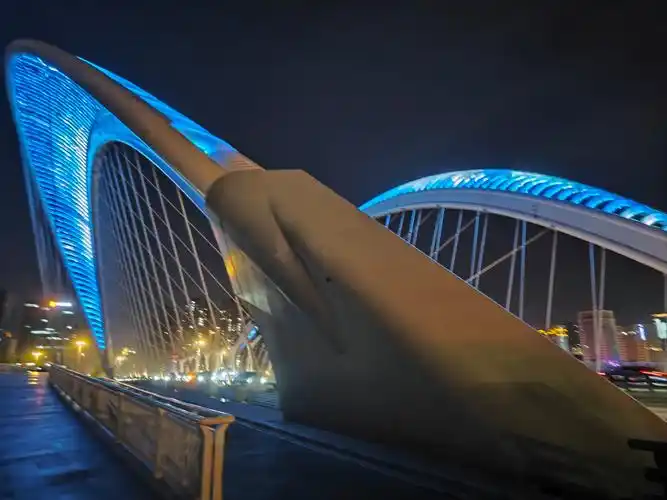
The park's landscape architecture draws on Shanxi's Ming and Qing vernacular traditions, producing pavilions and bridges that echo Europe's classical garden follies yet remain unmistakably Chinese. The five-pavilion Xiangyun Bridge, with its seven arches rippling across the water, recalls the serene geometry of Palladian bridges at Wilton House. Meanwhile, the Xuanlou tower offers a panoramic vantage reminiscent of hilltop follies in Italian villa gardens, rewarding visitors with sweeping views of the river and skyline.
At the Yao Well Garden, tradition asserts you stand above the very site where the sage-king first taught his subjects to draw groundwater, a Chinese parallel to the sacred springs of Delphi or the baptismal fonts of medieval Europe. Wooden waterwheels turn lazily beside pavilions styled after Song-dynasty painting scrolls, while the nearby Jiuzhou Square monumentalizes Yao's political vision. The adjacent Linfen Museum and Library extend this cultural immersion into the contemporary era.
Practicalities are refreshingly simple. The park is open around the clock and entirely free, no reservations required. Visitors arriving by car will find complimentary parking at every entrance, while budget travelers can reach the Binhe Road stops via buses 1, 10, or 108. Given the corridor's considerable length, renting a bicycle or hopping aboard the 10-yuan electric shuttle is strongly advised. Drinking fountains dot the landscape, and clean restrooms are readily available.
For atmosphere, arrive at dawn between 6:30 and 8:30 AM, when mist rises off the wetlands and over 150 migratory bird species begin their day, an ornithological rival to Camargue or Danube Delta experiences. Alternatively, time your visit for the 6:00 to 8:30 PM golden hour, when the setting sun ignites the river and the bridges illuminate in synchronized displays, transforming this ecological corridor into a luminous urban stage. Families will find expansive lawn zones perfect for children to roam, while birdwatchers should bring binoculars and patience.
Before departing, venture to the park's exits for an authentic taste of Shanxi's storied cuisine. Hand-shaved daoxiaomian noodles, a regional craft dating back over a thousand years and often compared to Italy's artisanal pasta traditions, are served sizzling from street-side woks. Pair them with wantuo, a cool, chewy millet jelly beloved by locals, the perfect finish to a day spent wandering through 5,000 years of living history.