Tianjin Yangliuqing Woodblock New Year Pictures Museum

⭐ 4.50

No. 111, Sanhe Li, Tonglou, Hexi District, Tianjin, China
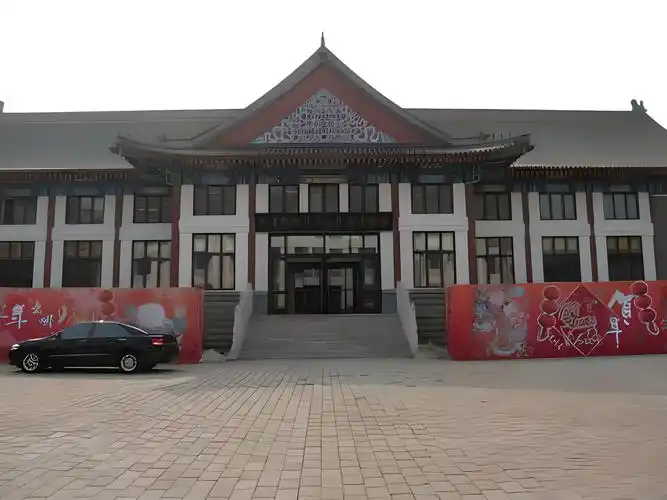
Tianjin Yangliuqing Woodblock New Year Pictures Museum
**Historical Origins** Yangliuqing woodblock prints emerged in the late Ming dynasty during the reign of the Chongzhen Emperor (1628–1644), placing their origins in the same era as Rembrandt's etchings and just decades after Albrecht Dürer revolutionized European printmaking. Celebrated alongside the Suzhou Taohuawu prints as "Southern Peach, Northern Willow," they functioned originally as talismans to ward off evil spirits before evolving into a visual encyclopedia of Chinese folk life—mirroring how European broadsheets and chapbooks evolved from religious imagery into chronicles of everyday society during the early modern period. **Collections and Architecture** Spread across 1,724 square meters of exhibition space with a 446-meter viewing route, the museum showcases rare Ming-era masterpieces including the singular "Great Fortune Star" print, alongside galleries dedicated to original woodblocks—over 6,400 blocks capable of producing more than 1,300 distinct patterns. Comparable in scope to Germany's Museum of Printing in Mainz or Italy's Museo della Stampa, the collection traces four centuries of artistic evolution from auspicious folk symbols to elaborate theatrical scenes and depictions of urban life, revealing deep roots in agricultural society and traditional cosmology. **The Craft of "Half-Printed, Half-Painted"** What distinguishes Yangliuqing prints from purely mechanical European woodcuts is their hybrid technique: artisans first apply color through woodblock stenciling, then hand-paint fine details and gradations with delicate brushes. The museum meticulously demonstrates the five traditional stages—drafting, carving, block-printing, hand-coloring, and mounting—sometimes with master craftsmen at work. This labor-intensive method, which echoes the hand-finishing of early European illuminated manuscripts, yields prints of remarkable chromatic richness and tactile warmth that pure printing alone cannot achieve. **Cultural Significance** Designated as part of China's inaugural National Intangible Cultural Heritage list in 2006, Yangliuqing prints encode collective memory through imagery of opera legends, historical tales, and auspicious motifs like the beloved "Surplus Year After Year" series—featuring chubby children clutching carp and lotus, symbols comparable in meaning to European folk art motifs like the cornucopia or four-leaf clover. Dedicated galleries comparing Yangliuqing with other Chinese print traditions—Zhuxianzhen, Taohuawu, and Mianzhu—offer visitors a comprehensive map of China's folk art landscape, much as a survey of European regional printmaking traditions would reveal broader cultural patterns. **Practical Visit Information** The museum sits at 111 Sanhelí, Tonglou, Hexi District, Tianjin, with free admission and no reservation required. Hours run 9:00 to 16:30 (last entry at 16:00); it closes Mondays except during public holidays. Plan 1.5 to 2 hours for a comfortable visit—weekday mornings offer the quietest experience, and catching a live demonstration by an inheritor of this intangible heritage elevates the visit considerably. Flash photography and tripods are prohibited to protect the delicate works. **Suggested Itinerary** Important to note: this museum is *not* the same as the New Year Picture Hall inside the Shijia Mansion (a 4A-rated attraction) within Yangliuqing Ancient Town in the Xiqing district, roughly 15 kilometers southwest. Travelers with extra time should combine both—morning at the Ancient Town for hands-on printing experiences and atmospheric historic streets, afternoon here for systematic connoisseurship of rare originals and ancient woodblocks, forming a complete cultural arc from active making to refined appreciation.

Traveler reviews

This is one of the must-see spots in Yangliuqing Old Town — it was the residence of the Shi family, one of Tianjin's eight great families. There are several courtyards stretching front to back, including the only surviving indoor theater of its kind in...
⭐ 5 · Logan Expand
Inside you'll find a large collection of historical Yangliuqing woodblock New Year prints, plus over 130 pieces o...
⭐ 3 · Blair Expand