Shangrao Concentration Camp Memorial Hall
⭐ 4.20
Shangrao Concentration Camp Memorial Hall, Xinzhou District, Shangrao City, Jiangxi Province, China
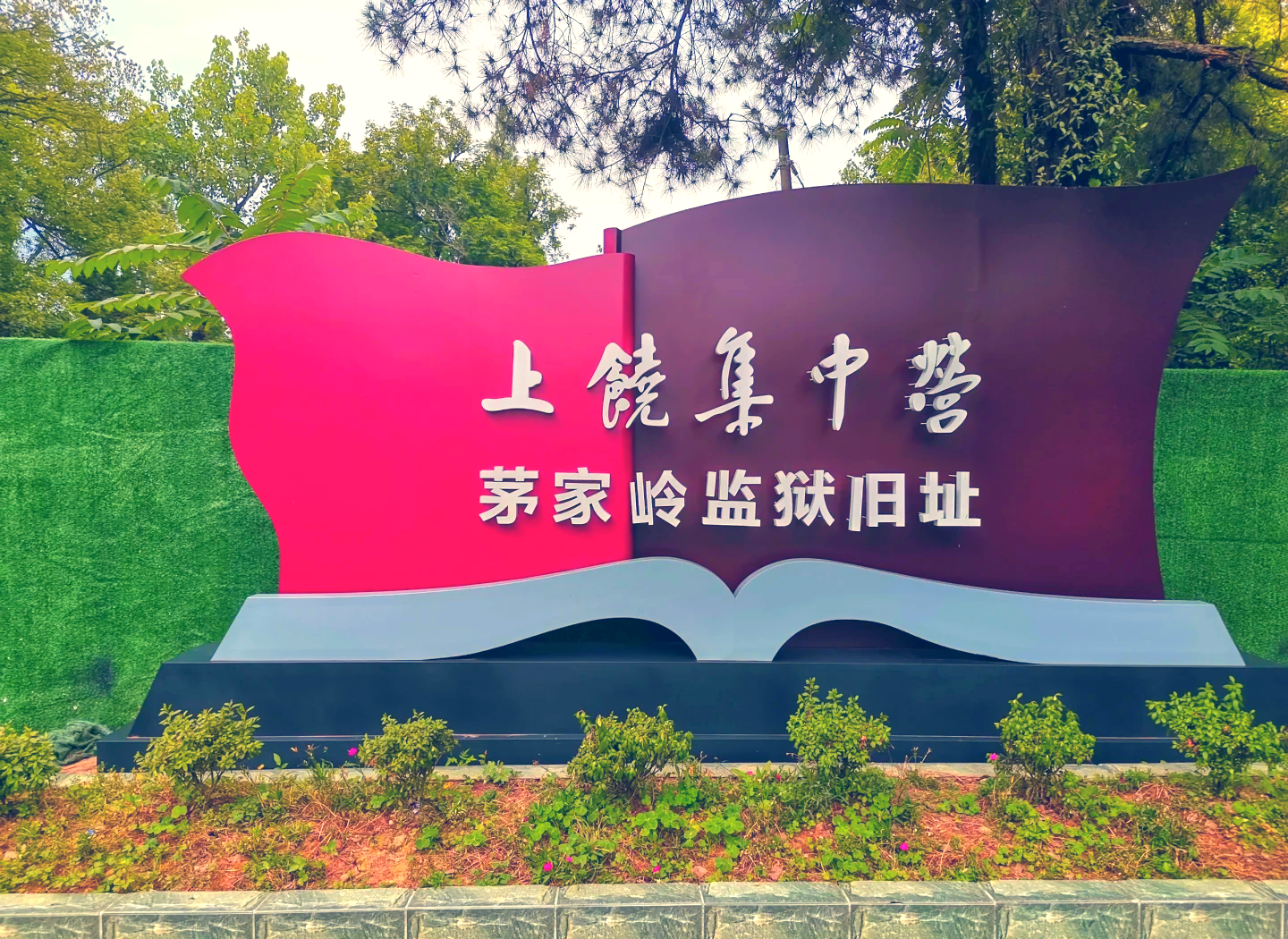 In January 1941, while China was still bleeding from its long war against Japanese invasion, the Nationalist government turned its guns on its own former allies in a surprise attack known as the Anhui South Incident. Some 900 officers, soldiers, and patriotic intellectuals of the Communist-led New Fourth Army, among them the renowned General Ye Ting, were rounded up and transported to sprawling prison compounds around Shangrao in northeastern Jiangxi. Similar in function to Robben Island in South Africa or the wartime gaols of occupied Europe, the camp became a crucible of defiance, producing dramatic prison uprisings at Maojialing and Chishi that have echoed through Chinese historical memory ever since.
Spread across roughly two square kilometers of forested hills outside Shangrao, the memorial complex encompasses 23 preserved or reconstructed sites, including the dreaded Maojialing Prison, interrogation blocks at Zhoutian and Licun, and the rock-hewn cells of Qifengyan. The main memorial building is a sober, symmetrical structure whose hushed entrance hall opens into four chronologically arranged exhibition galleries. Restored cells, original timber doors, and grim artifacts—racks, branding irons, and whips—stand beside documentary photographs, while discreet lighting and audio testimony heighten the visceral impact. The restrained design language deliberately echoes the disciplined solemnity of Soviet war memorials in Volgograd or Berlin's Hohenschönhausen Memorial.
Designated a National AAAA Tourist Attraction, a Secondary State Museum, and both a National Patriotism Education Base and National Defense Education Base, the site plays a central role in transmitting what Chinese educators call "red culture"—the moral legacy of the revolutionary generation. Tens of thousands of party members, civil servants, university students, and schoolchildren visit annually to renew their vows of civic duty, particularly around Party Day in July and National Day in October. For international travelers, the memorial offers an unvarnished window onto the bitter Sino-Kuomintang conflict that shaped modern China, often overlooked in Western histories focused on the Long March.
What makes Shangrao genuinely powerful is its refusal to sanitize history. Torture implements are displayed unflinchingly, but so are the prisoners' own clandestine letters, poems scratched into cell walls, and accounts of underground resistance networks. Standing in the tiny Maojialing cell where desperate men kicked through a mud-brick wall to launch their 1942 breakout, one feels the same unsettling proximity to courage and cruelty experienced in the cells of Nelson Mandela on Robben Island or French Resistance fighters at Montluc Prison in Lyon. It is history at its most human and most uncomfortable.
The memorial is open Tuesday through Sunday from 9:00 a.m. to 5:30 p.m., with last admission at 5:00 p.m. and extended evening hours during summer 2026; it is closed on Mondays. Admission is free. The address is No. 66 Lingyuan Road, Xinzhou District, Shangrao City, easily reached by taxi or local bus from the high-speed rail station. Allow two to three hours for a meaningful visit, and arrange guided tours in advance for groups of ten or more. Visitors are asked to dress modestly and maintain a respectful demeanor throughout. English-language interpretation is limited, so booking a translator or using a translation app is advisable.
In January 1941, while China was still bleeding from its long war against Japanese invasion, the Nationalist government turned its guns on its own former allies in a surprise attack known as the Anhui South Incident. Some 900 officers, soldiers, and patriotic intellectuals of the Communist-led New Fourth Army, among them the renowned General Ye Ting, were rounded up and transported to sprawling prison compounds around Shangrao in northeastern Jiangxi. Similar in function to Robben Island in South Africa or the wartime gaols of occupied Europe, the camp became a crucible of defiance, producing dramatic prison uprisings at Maojialing and Chishi that have echoed through Chinese historical memory ever since.
Spread across roughly two square kilometers of forested hills outside Shangrao, the memorial complex encompasses 23 preserved or reconstructed sites, including the dreaded Maojialing Prison, interrogation blocks at Zhoutian and Licun, and the rock-hewn cells of Qifengyan. The main memorial building is a sober, symmetrical structure whose hushed entrance hall opens into four chronologically arranged exhibition galleries. Restored cells, original timber doors, and grim artifacts—racks, branding irons, and whips—stand beside documentary photographs, while discreet lighting and audio testimony heighten the visceral impact. The restrained design language deliberately echoes the disciplined solemnity of Soviet war memorials in Volgograd or Berlin's Hohenschönhausen Memorial.
Designated a National AAAA Tourist Attraction, a Secondary State Museum, and both a National Patriotism Education Base and National Defense Education Base, the site plays a central role in transmitting what Chinese educators call "red culture"—the moral legacy of the revolutionary generation. Tens of thousands of party members, civil servants, university students, and schoolchildren visit annually to renew their vows of civic duty, particularly around Party Day in July and National Day in October. For international travelers, the memorial offers an unvarnished window onto the bitter Sino-Kuomintang conflict that shaped modern China, often overlooked in Western histories focused on the Long March.
What makes Shangrao genuinely powerful is its refusal to sanitize history. Torture implements are displayed unflinchingly, but so are the prisoners' own clandestine letters, poems scratched into cell walls, and accounts of underground resistance networks. Standing in the tiny Maojialing cell where desperate men kicked through a mud-brick wall to launch their 1942 breakout, one feels the same unsettling proximity to courage and cruelty experienced in the cells of Nelson Mandela on Robben Island or French Resistance fighters at Montluc Prison in Lyon. It is history at its most human and most uncomfortable.
The memorial is open Tuesday through Sunday from 9:00 a.m. to 5:30 p.m., with last admission at 5:00 p.m. and extended evening hours during summer 2026; it is closed on Mondays. Admission is free. The address is No. 66 Lingyuan Road, Xinzhou District, Shangrao City, easily reached by taxi or local bus from the high-speed rail station. Allow two to three hours for a meaningful visit, and arrange guided tours in advance for groups of ten or more. Visitors are asked to dress modestly and maintain a respectful demeanor throughout. English-language interpretation is limited, so booking a translator or using a translation app is advisable.