Water Park
⭐ 4.50
Shuishang Park East Road, Nankai District, Tianjin, China
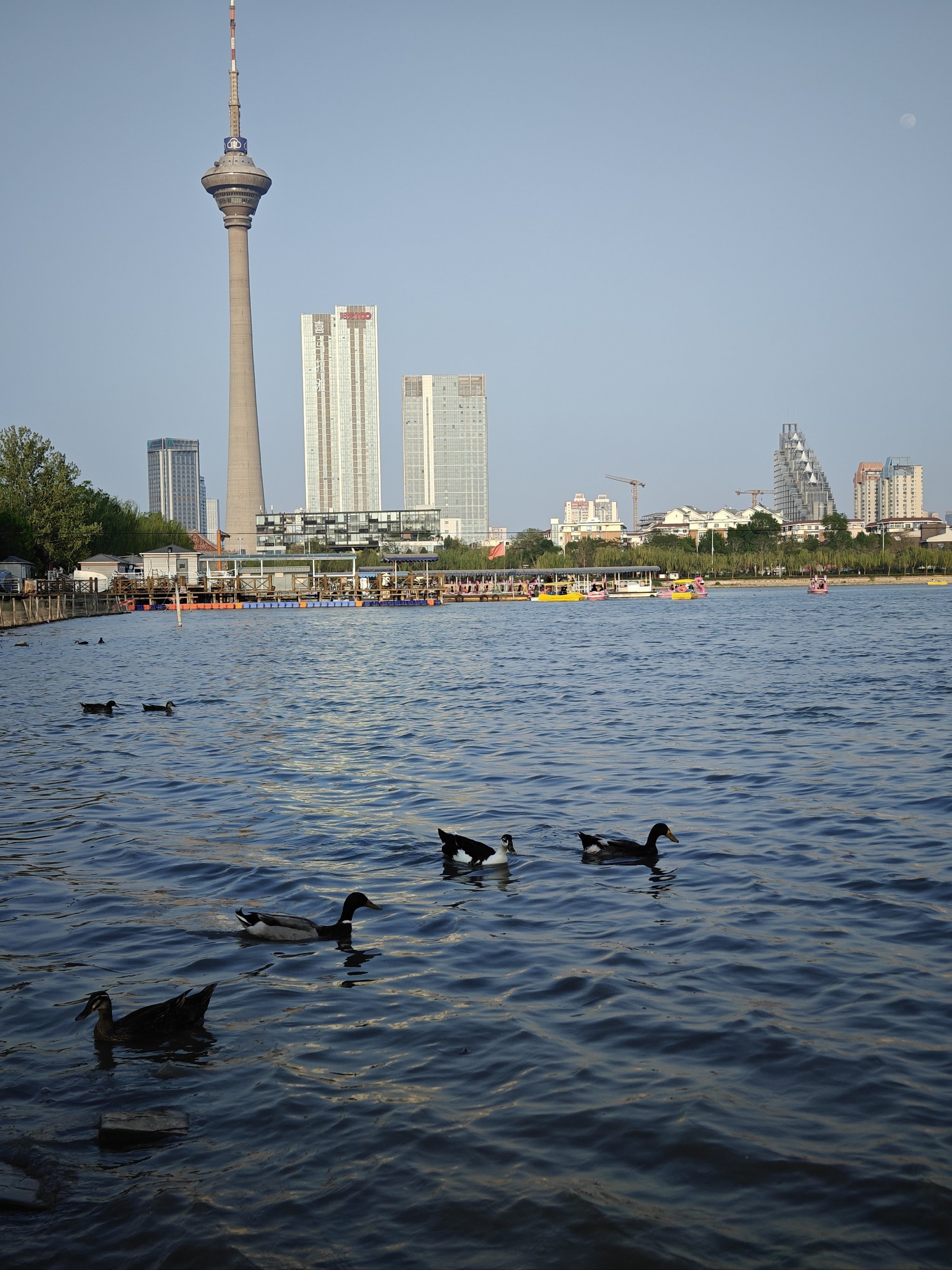 Founded in 1951 as one of the earliest large-scale public parks built in the young People's Republic, Tianjin Water Park arrived just as the city was reinventing itself from treaty-port trading hub into modern industrial metropolis. Comparable in ambition to Moscow's Gorky Park or the rebuilding of London's bomb-damaged green spaces in the 1950s, it embodies the era's faith in public leisure. More than seventy years on, it remains a beloved cultural landmark, holding generations of Tianjin family memories from spring blossom outings to winter morning tai chi.
The park's signature "Three Lakes, Nine Islands, Eight Bridges" layout—water covering some sixty percent of its surface—echoes the romantic lake traditions of classical Chinese gardens such as Suzhou's Humble Administrator's Garden, yet executed at a far grander civic scale. Winding Ming and Qing-style covered walkways link elegant pavilions, while the Tiaoyuan Pavilion rises above the central lake offering panoramic views reminiscent of those from a folly in an English landscape garden such as Stowe. Specialty gardens dedicated to plum blossoms, peonies, and especially chrysanthemums ensure floral interest through every season.
A highlight is the Kobe Garden, donated as a symbol of Sino-Japanese friendship and presenting an authentic Japanese dry-landscape courtyard of raked gravel and timber architecture—much like a pocket of Kyoto transplanted to northern China. Equally noteworthy is the Bonsai Garden, the largest of its kind in North China, displaying hundreds of meticulously trained specimens that range from miniature pines to century-old masterpieces, offering both artistic appreciation and horticultural education under one roof.
Entry is completely free, with summer hours (June–September) extending to 23:00 and standard hours of roughly 06:00–21:00 the rest of the year. The park is accessed via Metro Line 3 at either Zhou Enlai Memorial Hall or Tianta stations. A small amusement island and the zoo charge separate fees, while rowboat rentals run about 100 yuan per hour. Facilities inside are modest, so consider bringing snacks or eating afterward in Nankai's commercial streets.
For the best experience, arrive at the East Gate in early morning or early evening when soft light glazes the lake and crowds thin. A natural route threads along the east lakeshore to the main dock, pauses at Kobe Garden, crosses to the central island, then exits south—linking seamlessly into the adjacent Tianjin Zoo and the iconic Tianta radio-tower lake nearby. In summer, pack sun protection; in cooler months, bring a windproof layer for the open waterfront.
[BRIEF]
Tianjin Water Park, the largest urban green space in the city, spans roughly 125 hectares and dates to 1951—making it a contemporary of London's post-war replanning of its Royal Parks. Free to enter and built around an intricate "Three Lakes, Nine Islands, Eight Bridges" water landscape, it blends a serene Japanese-style garden, North China's largest bonsai collection, and traditional Chinese pavilions. Locals flock here for boating, seasonal flower viewing, and gentle amusement rides, making it an ideal window into Tianjin's civic park culture.
[DETAILED]
Founded in 1951 as one of the earliest large-scale public parks built in the young People's Republic, Tianjin Water Park arrived just as the city was reinventing itself from treaty-port trading hub into modern industrial metropolis. Comparable in ambition to Moscow's Gorky Park or the rebuilding of London's bomb-damaged green spaces in the 1950s, it embodies the era's faith in public leisure. More than seventy years on, it remains a beloved cultural landmark, holding generations of Tianjin family memories from spring blossom outings to winter morning tai chi.
The park's signature "Three Lakes, Nine Islands, Eight Bridges" layout—water covering some sixty percent of its surface—echoes the romantic lake traditions of classical Chinese gardens such as Suzhou's Humble Administrator's Garden, yet executed at a far grander civic scale. Winding Ming and Qing-style covered walkways link elegant pavilions, while the Tiaoyuan Pavilion rises above the central lake offering panoramic views reminiscent of those from a folly in an English landscape garden such as Stowe. Specialty gardens dedicated to plum blossoms, peonies, and especially chrysanthemums ensure floral interest through every season.
A highlight is the Kobe Garden, donated as a symbol of Sino-Japanese friendship and presenting an authentic Japanese dry-landscape courtyard of raked gravel and timber architecture—much like a pocket of Kyoto transplanted to northern China. Equally noteworthy is the Bonsai Garden, the largest of its kind in North China, displaying hundreds of meticulously trained specimens that range from miniature pines to century-old masterpieces, offering both artistic appreciation and horticultural education under one roof.
Entry is completely free, with summer hours (June–September) extending to 23:00 and standard hours of roughly 06:00–21:00 the rest of the year. The park is accessed via Metro Line 3 at either Zhou Enlai Memorial Hall or Tianta stations. A small amusement island and the zoo charge separate fees, while rowboat rentals run about 100 yuan per hour. Facilities inside are modest, so consider bringing snacks or eating afterward in Nankai's commercial streets.
For the best experience, arrive at the East Gate in early morning or early evening when soft light glazes the lake and crowds thin. A natural route threads along the east lakeshore to the main dock, pauses at Kobe Garden, crosses to the central island, then exits south—linking seamlessly into the adjacent Tianjin Zoo and the iconic Tianta radio-tower lake nearby. In summer, pack sun protection; in cooler months, bring a windproof layer for the open waterfront.
Founded in 1951 as one of the earliest large-scale public parks built in the young People's Republic, Tianjin Water Park arrived just as the city was reinventing itself from treaty-port trading hub into modern industrial metropolis. Comparable in ambition to Moscow's Gorky Park or the rebuilding of London's bomb-damaged green spaces in the 1950s, it embodies the era's faith in public leisure. More than seventy years on, it remains a beloved cultural landmark, holding generations of Tianjin family memories from spring blossom outings to winter morning tai chi.
The park's signature "Three Lakes, Nine Islands, Eight Bridges" layout—water covering some sixty percent of its surface—echoes the romantic lake traditions of classical Chinese gardens such as Suzhou's Humble Administrator's Garden, yet executed at a far grander civic scale. Winding Ming and Qing-style covered walkways link elegant pavilions, while the Tiaoyuan Pavilion rises above the central lake offering panoramic views reminiscent of those from a folly in an English landscape garden such as Stowe. Specialty gardens dedicated to plum blossoms, peonies, and especially chrysanthemums ensure floral interest through every season.
A highlight is the Kobe Garden, donated as a symbol of Sino-Japanese friendship and presenting an authentic Japanese dry-landscape courtyard of raked gravel and timber architecture—much like a pocket of Kyoto transplanted to northern China. Equally noteworthy is the Bonsai Garden, the largest of its kind in North China, displaying hundreds of meticulously trained specimens that range from miniature pines to century-old masterpieces, offering both artistic appreciation and horticultural education under one roof.
Entry is completely free, with summer hours (June–September) extending to 23:00 and standard hours of roughly 06:00–21:00 the rest of the year. The park is accessed via Metro Line 3 at either Zhou Enlai Memorial Hall or Tianta stations. A small amusement island and the zoo charge separate fees, while rowboat rentals run about 100 yuan per hour. Facilities inside are modest, so consider bringing snacks or eating afterward in Nankai's commercial streets.
For the best experience, arrive at the East Gate in early morning or early evening when soft light glazes the lake and crowds thin. A natural route threads along the east lakeshore to the main dock, pauses at Kobe Garden, crosses to the central island, then exits south—linking seamlessly into the adjacent Tianjin Zoo and the iconic Tianta radio-tower lake nearby. In summer, pack sun protection; in cooler months, bring a windproof layer for the open waterfront.
[BRIEF]
Tianjin Water Park, the largest urban green space in the city, spans roughly 125 hectares and dates to 1951—making it a contemporary of London's post-war replanning of its Royal Parks. Free to enter and built around an intricate "Three Lakes, Nine Islands, Eight Bridges" water landscape, it blends a serene Japanese-style garden, North China's largest bonsai collection, and traditional Chinese pavilions. Locals flock here for boating, seasonal flower viewing, and gentle amusement rides, making it an ideal window into Tianjin's civic park culture.
[DETAILED]
Founded in 1951 as one of the earliest large-scale public parks built in the young People's Republic, Tianjin Water Park arrived just as the city was reinventing itself from treaty-port trading hub into modern industrial metropolis. Comparable in ambition to Moscow's Gorky Park or the rebuilding of London's bomb-damaged green spaces in the 1950s, it embodies the era's faith in public leisure. More than seventy years on, it remains a beloved cultural landmark, holding generations of Tianjin family memories from spring blossom outings to winter morning tai chi.
The park's signature "Three Lakes, Nine Islands, Eight Bridges" layout—water covering some sixty percent of its surface—echoes the romantic lake traditions of classical Chinese gardens such as Suzhou's Humble Administrator's Garden, yet executed at a far grander civic scale. Winding Ming and Qing-style covered walkways link elegant pavilions, while the Tiaoyuan Pavilion rises above the central lake offering panoramic views reminiscent of those from a folly in an English landscape garden such as Stowe. Specialty gardens dedicated to plum blossoms, peonies, and especially chrysanthemums ensure floral interest through every season.
A highlight is the Kobe Garden, donated as a symbol of Sino-Japanese friendship and presenting an authentic Japanese dry-landscape courtyard of raked gravel and timber architecture—much like a pocket of Kyoto transplanted to northern China. Equally noteworthy is the Bonsai Garden, the largest of its kind in North China, displaying hundreds of meticulously trained specimens that range from miniature pines to century-old masterpieces, offering both artistic appreciation and horticultural education under one roof.
Entry is completely free, with summer hours (June–September) extending to 23:00 and standard hours of roughly 06:00–21:00 the rest of the year. The park is accessed via Metro Line 3 at either Zhou Enlai Memorial Hall or Tianta stations. A small amusement island and the zoo charge separate fees, while rowboat rentals run about 100 yuan per hour. Facilities inside are modest, so consider bringing snacks or eating afterward in Nankai's commercial streets.
For the best experience, arrive at the East Gate in early morning or early evening when soft light glazes the lake and crowds thin. A natural route threads along the east lakeshore to the main dock, pauses at Kobe Garden, crosses to the central island, then exits south—linking seamlessly into the adjacent Tianjin Zoo and the iconic Tianta radio-tower lake nearby. In summer, pack sun protection; in cooler months, bring a windproof layer for the open waterfront.