Tianjin Museum

⭐ 4.20

No. 109, Jiefang North Road, Heping District, Tianjin, China
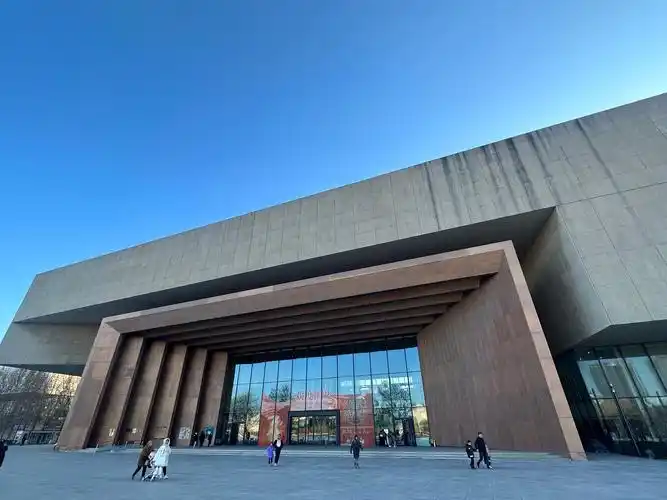
Tianjin Museum
The museum traces its origins to 1918, when it was founded as the Tianjin Natural History Museum during the era when foreign concessions transformed the city into a cosmopolitan trading hub, comparable to Shanghai's Bund or Hong Kong's harbor. After more than nine decades of relocations and renovations, the institution moved into its purpose-built home in 2012. Much like the British Museum's evolution from a private cabinet of curiosities into a national treasure house, Tianjin Museum now safeguards the city's collective memory while showcasing masterpieces spanning five millennia of Chinese civilization. Architecturally, the building evokes a graceful swan with wings outstretched, its curved white facade soaring above Tianjin's Hexi Cultural Center, an ambitious civic district reminiscent of Barcelona's Montjuïc museum quarter or Paris's Trocadéro. Inside, ceilings rise over galleries totaling 14,000 square meters, with carefully calibrated lighting that eliminates reflective glare on glass cases, an unexpected delight for photography enthusiasts. The layout guides visitors intuitively from reception through thematic floors, allowing contemplative pacing through rooms that feel intimate despite the museum's grand scale. The collection's three signature pieces anchor its international standing. The Western Zhou Taibao Ding, dating to roughly the 11th century BCE, is one of the famed "Seven Liangshan Vessels" and the sole example remaining on Chinese soil, banned from leaving the country. The Qianlong porcelain vase, embellished with enameled pheasants among peonies, is the most pristine of only four surviving examples worldwide. Fan Kuan's monumental ink landscape, painted during the Northern Song dynasty (960–1127), exists only as this single authenticated mainland version, a parallel rarity to seeing a Leonardo sketch in its homeland. Beyond these treasures, the museum interprets Tianjin's distinctive trajectory through two permanent exhibitions: one tracing the region's evolution from ancient shell-causeway coastlines into a Grand Canal hub, the other examining Tianjin's pivotal position in nineteenth- and twentieth-century Chinese history, when it hosted nine foreign concessions and pioneered modern industry. Additional floors showcase jade, calligraphy, and ceramics, while the museum hosts more than sixty temporary exhibitions annually, ensuring repeat visitors discover fresh perspectives. Practical planning is straightforward. Located at 62 Pingjiang Road in the Hexi district, the museum lies a short walk from the Cultural Center metro station on Lines 5 and 6. Admission is free, though advance booking through the official WeChat account is required; foreign visitors can register using their passport number and gain entry by scanning the same document. Doors open Tuesday through Sunday, with extended hours until 6:30 p.m. on Fridays and Saturdays; Monday remains reserved for maintenance. Allow two and a half to three hours, starting on the second floor for the masterwork gallery before ascending to the specialized art halls above. A final touch awaits at the museum shop near the exit, where locally designed souvenirs make thoughtful mementos. The neighboring Tianjin Art Gallery shares the same plaza and merits combined visits, echoing the efficient museum clusters of Vienna's MuseumsQuartier or Madrid's Golden Triangle of Art. Visitors should note that food, drink, touching exhibits, flash photography, and tripods are prohibited, preserving the contemplative atmosphere that makes this institution a true highlight of any northern China itinerary.

Traveler reviews

The Crown of Glory: 18th Century Savoy ...
⭐ 5 · Casey Expand
We used a 30-yuan coupon and got in for 88 yuan for two people. The galleries are beautifully laid out — not top-tier artifacts, but every single piece is gorgeous and int...
⭐ 5 · Sage Expand