Longhu Mountain Scenic Area
⭐ 4.50
Longhu Mountain Scenic Area, Wuyuan County, Shangrao City, Jiangxi Province, China
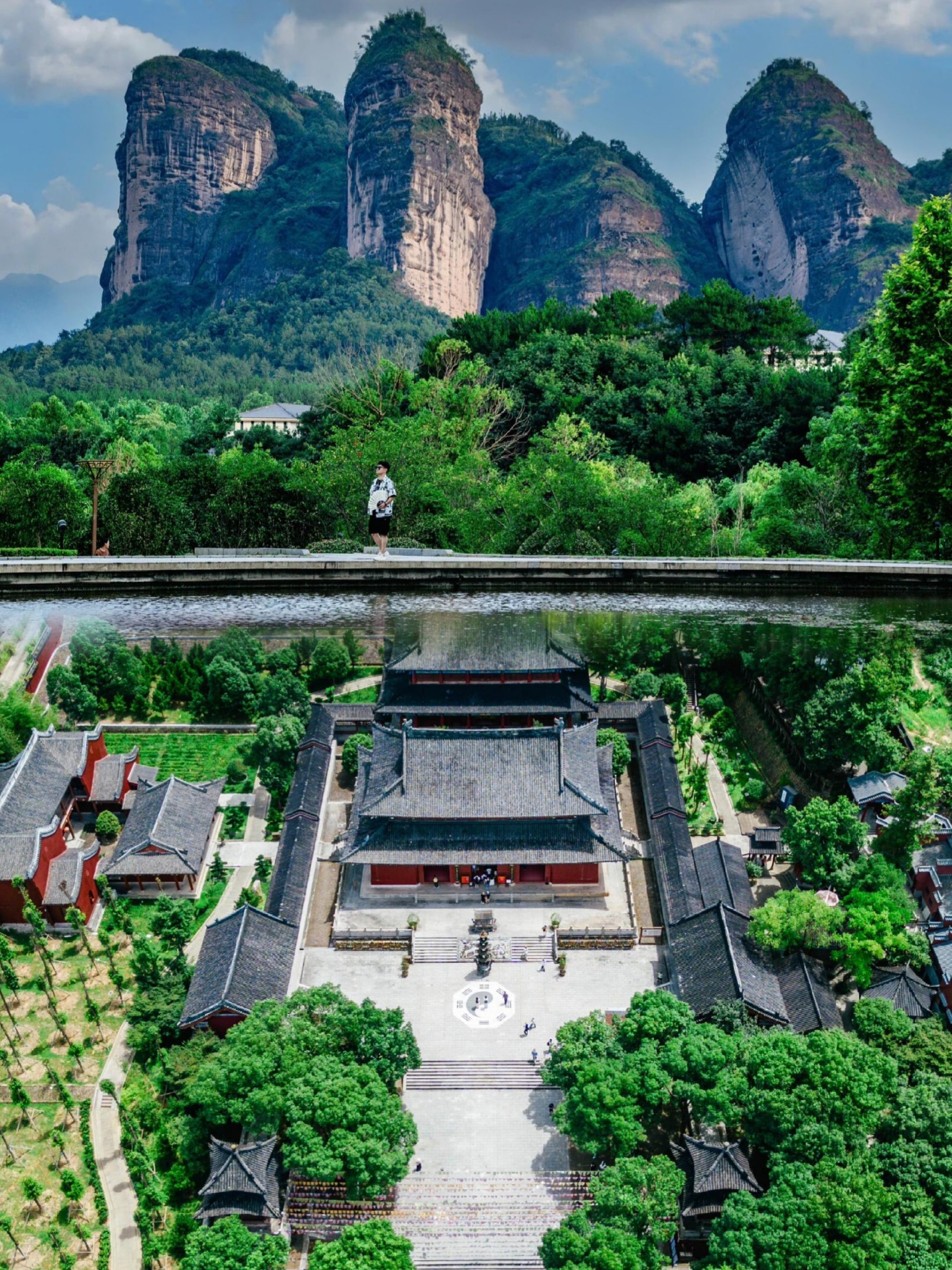 Zhang Daoling established the Celestial Masters school here around 142 AD, roughly the same era as Antoninus Pius debating Christians in Rome and the Antonine Wall rising in Scotland. From this base, Taoism spread across East Asia, with the hereditary Tianshi lineage continuing for nearly two millennia—an unbroken continuity rivaling even the Papal succession. The mountain's spiritual importance parallels monastic centers like Mount Athos or Canterbury, yet remains largely unfamiliar to Western travelers.
The "Danxia" landform—UNESCO-listed in 2010 alongside six other Chinese sites—features vivid red cliffs sculpted by 100 million years of erosion. Picture the glowing ramparts of Bryce Canyon or Petra's rose-colored facades, but mirrored in calm green waters. The Luxi River has carved a 15-kilometer gallery of peak forests, stone columns, and surreal sculptures, including Elephant Trunk Hill and the Monk-and-Nun Peaks.
The Tianshi Mansion, laid out like a minor imperial palace, houses centuries of Taoist scripture, ritual implements, and ancestral tablets of the Zhang lineage. Nearby, Shangqing Temple ruins and the Zhengyi Guan mark the geographic heart of religious Taoism, where architecture fuses imperial symmetry with esoteric symbolism—a tradition scholars compare to Benedictine abbeys for its organizational endurance across centuries.
The cliff-face coffins of Spring-Water Rock date to the Spring and Autumn period, predating the Roman Empire. Placed up to 100 meters high, their installation remains one of archaeology's stubborn mysteries—echoing the puzzle of Etruscan tomb chambers. Daily re-enactments demonstrate the ancient Yue people's clever hoisting techniques, offering visceral spectacle no museum can match.
High-speed rail reaches Yingtan North station; onward shuttles or taxis deliver visitors to the entrance in under an hour. A typical two-day ticket covers unlimited sightseeing buses, essential given the site's sprawl. Begin with the bamboo raft (45 minutes), then the Hanging Coffin show, Tianshi Mansion, and Shangqing Old Town—counterclockwise for easiest flow. Summer brings heat and humidity; bring water, sunscreen, and grip shoes, especially after rain.
For travelers seeking China beyond the Great Wall and Forbidden City, Dragon and Tiger Mountain offers a remarkably layered experience: geology rivaling the American Southwest, a living Taoist tradition that shaped East Asian philosophy for two millennia, and a 2,600-year-old funerary mystery no archaeologist has solved. After sunset, the "Dream of Longhu Mountain" immersive performance turns the river into a living canvas of myth, music, and light—arguably Jiangxi's most unforgettable cultural show and a worthy cap to any itinerary.
Zhang Daoling established the Celestial Masters school here around 142 AD, roughly the same era as Antoninus Pius debating Christians in Rome and the Antonine Wall rising in Scotland. From this base, Taoism spread across East Asia, with the hereditary Tianshi lineage continuing for nearly two millennia—an unbroken continuity rivaling even the Papal succession. The mountain's spiritual importance parallels monastic centers like Mount Athos or Canterbury, yet remains largely unfamiliar to Western travelers.
The "Danxia" landform—UNESCO-listed in 2010 alongside six other Chinese sites—features vivid red cliffs sculpted by 100 million years of erosion. Picture the glowing ramparts of Bryce Canyon or Petra's rose-colored facades, but mirrored in calm green waters. The Luxi River has carved a 15-kilometer gallery of peak forests, stone columns, and surreal sculptures, including Elephant Trunk Hill and the Monk-and-Nun Peaks.
The Tianshi Mansion, laid out like a minor imperial palace, houses centuries of Taoist scripture, ritual implements, and ancestral tablets of the Zhang lineage. Nearby, Shangqing Temple ruins and the Zhengyi Guan mark the geographic heart of religious Taoism, where architecture fuses imperial symmetry with esoteric symbolism—a tradition scholars compare to Benedictine abbeys for its organizational endurance across centuries.
The cliff-face coffins of Spring-Water Rock date to the Spring and Autumn period, predating the Roman Empire. Placed up to 100 meters high, their installation remains one of archaeology's stubborn mysteries—echoing the puzzle of Etruscan tomb chambers. Daily re-enactments demonstrate the ancient Yue people's clever hoisting techniques, offering visceral spectacle no museum can match.
High-speed rail reaches Yingtan North station; onward shuttles or taxis deliver visitors to the entrance in under an hour. A typical two-day ticket covers unlimited sightseeing buses, essential given the site's sprawl. Begin with the bamboo raft (45 minutes), then the Hanging Coffin show, Tianshi Mansion, and Shangqing Old Town—counterclockwise for easiest flow. Summer brings heat and humidity; bring water, sunscreen, and grip shoes, especially after rain.
For travelers seeking China beyond the Great Wall and Forbidden City, Dragon and Tiger Mountain offers a remarkably layered experience: geology rivaling the American Southwest, a living Taoist tradition that shaped East Asian philosophy for two millennia, and a 2,600-year-old funerary mystery no archaeologist has solved. After sunset, the "Dream of Longhu Mountain" immersive performance turns the river into a living canvas of myth, music, and light—arguably Jiangxi's most unforgettable cultural show and a worthy cap to any itinerary.