Tangshan Zoo
⭐ 4.50
No. 1, Xishan Road, Lubei District, Tangshan, Hebei, China
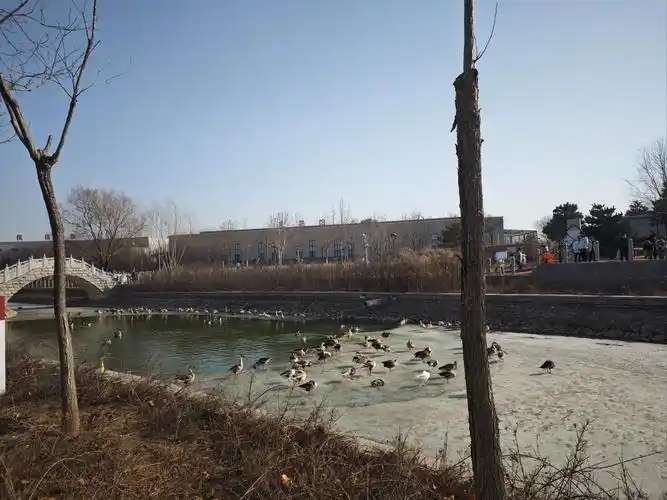 Tangshan carries profound historical significance in modern Chinese history. On July 28, 1976, the city was devastated by a 7.5-magnitude earthquake that killed more than 240,000 people — one of the deadliest quakes of the twentieth century. The city's remarkable reconstruction became a symbol of Chinese resilience, and Tangshan Zoo itself, reopened as a free public park in 2023, represents this phoenix-like rebirth. Comparable in spirit to how Berlin's Tierpark rose from wartime devastation to become a beloved civic institution, the zoo embodies Tangshan's forward-looking character and commitment to public wellbeing.
Spread across roughly 77 hectares along Kaiyue Road, the park is divided into eastern and western zones connected by a circular walking route of about 3 to 4 kilometers. Well-marked paths wind through landscaped gardens, shaded green corridors, and themed animal enclosures, making for comfortable strolling even during warmer months. A sightseeing tram shuttles visitors along the main loop for around 15 yuan round-trip, a thoughtful touch for families with young children or elderly companions who might prefer to conserve their energy for the highlights.
The animal collection spans 110-plus species and over 1,000 individuals, headlined by the resident giant pandas Mei Bang and Shuang Xi — guaranteed crowd-pleasers and the zoo's most photographed residents. Other stars include Siberian and white tigers prowling separate enclosures, reticulated giraffes in an open savanna-style habitat, lively ring-tailed lemurs, and salmon-crested cockatoos in the walk-through aviary. Unlike many older Chinese zoos where animals appear listless, residents here display natural behaviors. Primate areas and big-cat zones in particular reward patient observers with engaging, up-close views.
The park operates Tuesday through Sunday from 9:00 a.m. to 5:00 p.m., with last entry at 4:30 p.m., and closes on Mondays except during Chinese public holidays. Foreign visitors must register in advance through the zoo's official WeChat account using a passport for ID verification, and a translation app is highly recommended since signage is primarily in Chinese. Free parking is available on-site, though spaces fill quickly on weekends; the eastern gate offers the most convenient entry point for the recommended counter-clockwise route.
On-site food options are limited and somewhat pricey, so bringing water and snacks is advisable. Summer visitors should aim for morning or late-afternoon slots to avoid intense midday heat, while sunscreen, umbrellas, and power banks are essential kit. Strict rules prohibit climbing barriers or feeding animals, with violations carrying fines. For a smooth 2.5 to 3-hour visit, follow the suggested loop past the panda house, rhino and hippo pavilion, lion-tiger hill, primate hall, and the colorful bird garden.
While it lacks the international fame of Beijing Zoo or the conservation pedigree of Shanghai Wild Animal Park, Tangshan Zoo offers something those larger parks often cannot: a relaxed, uncrowded, and entirely free experience that feels genuinely local. The combination of active animals, lush landscaping, and accessible facilities — comparable in quality to a mid-sized European zoo like Vienna's Schönbrunn Tiergarten — provides excellent value. For Western travelers seeking an authentic slice of contemporary Chinese urban life beyond the Great Wall and Forbidden City, this well-run regional zoo delivers an unexpectedly rewarding outing.
Tangshan carries profound historical significance in modern Chinese history. On July 28, 1976, the city was devastated by a 7.5-magnitude earthquake that killed more than 240,000 people — one of the deadliest quakes of the twentieth century. The city's remarkable reconstruction became a symbol of Chinese resilience, and Tangshan Zoo itself, reopened as a free public park in 2023, represents this phoenix-like rebirth. Comparable in spirit to how Berlin's Tierpark rose from wartime devastation to become a beloved civic institution, the zoo embodies Tangshan's forward-looking character and commitment to public wellbeing.
Spread across roughly 77 hectares along Kaiyue Road, the park is divided into eastern and western zones connected by a circular walking route of about 3 to 4 kilometers. Well-marked paths wind through landscaped gardens, shaded green corridors, and themed animal enclosures, making for comfortable strolling even during warmer months. A sightseeing tram shuttles visitors along the main loop for around 15 yuan round-trip, a thoughtful touch for families with young children or elderly companions who might prefer to conserve their energy for the highlights.
The animal collection spans 110-plus species and over 1,000 individuals, headlined by the resident giant pandas Mei Bang and Shuang Xi — guaranteed crowd-pleasers and the zoo's most photographed residents. Other stars include Siberian and white tigers prowling separate enclosures, reticulated giraffes in an open savanna-style habitat, lively ring-tailed lemurs, and salmon-crested cockatoos in the walk-through aviary. Unlike many older Chinese zoos where animals appear listless, residents here display natural behaviors. Primate areas and big-cat zones in particular reward patient observers with engaging, up-close views.
The park operates Tuesday through Sunday from 9:00 a.m. to 5:00 p.m., with last entry at 4:30 p.m., and closes on Mondays except during Chinese public holidays. Foreign visitors must register in advance through the zoo's official WeChat account using a passport for ID verification, and a translation app is highly recommended since signage is primarily in Chinese. Free parking is available on-site, though spaces fill quickly on weekends; the eastern gate offers the most convenient entry point for the recommended counter-clockwise route.
On-site food options are limited and somewhat pricey, so bringing water and snacks is advisable. Summer visitors should aim for morning or late-afternoon slots to avoid intense midday heat, while sunscreen, umbrellas, and power banks are essential kit. Strict rules prohibit climbing barriers or feeding animals, with violations carrying fines. For a smooth 2.5 to 3-hour visit, follow the suggested loop past the panda house, rhino and hippo pavilion, lion-tiger hill, primate hall, and the colorful bird garden.
While it lacks the international fame of Beijing Zoo or the conservation pedigree of Shanghai Wild Animal Park, Tangshan Zoo offers something those larger parks often cannot: a relaxed, uncrowded, and entirely free experience that feels genuinely local. The combination of active animals, lush landscaping, and accessible facilities — comparable in quality to a mid-sized European zoo like Vienna's Schönbrunn Tiergarten — provides excellent value. For Western travelers seeking an authentic slice of contemporary Chinese urban life beyond the Great Wall and Forbidden City, this well-run regional zoo delivers an unexpectedly rewarding outing.