Mount Sanqing
⭐ 4.70
Sanqing Mountain Scenic Area, Wuyuan County, Shangrao City, Jiangxi Province, China
 Mount Sanqing takes its name from the three supreme deities of Taoism, making it sacred ground for over a millennium. The mountain entered Daoist lore during the Eastern Jin dynasty (4th century CE), when the legendary alchemist Ge Hong reportedly cultivated elixirs of immortality in its caves—an era contemporary with the late Roman Empire and the rise of monasticism in Egypt's desert mountains. The summit's Sanqing Palace, laid out according to I Ching cosmology, has been rebuilt across dynasties yet remains an active pilgrimage site, much like the great abbeys perched on European peaks from Montserrat to Monte Athos.
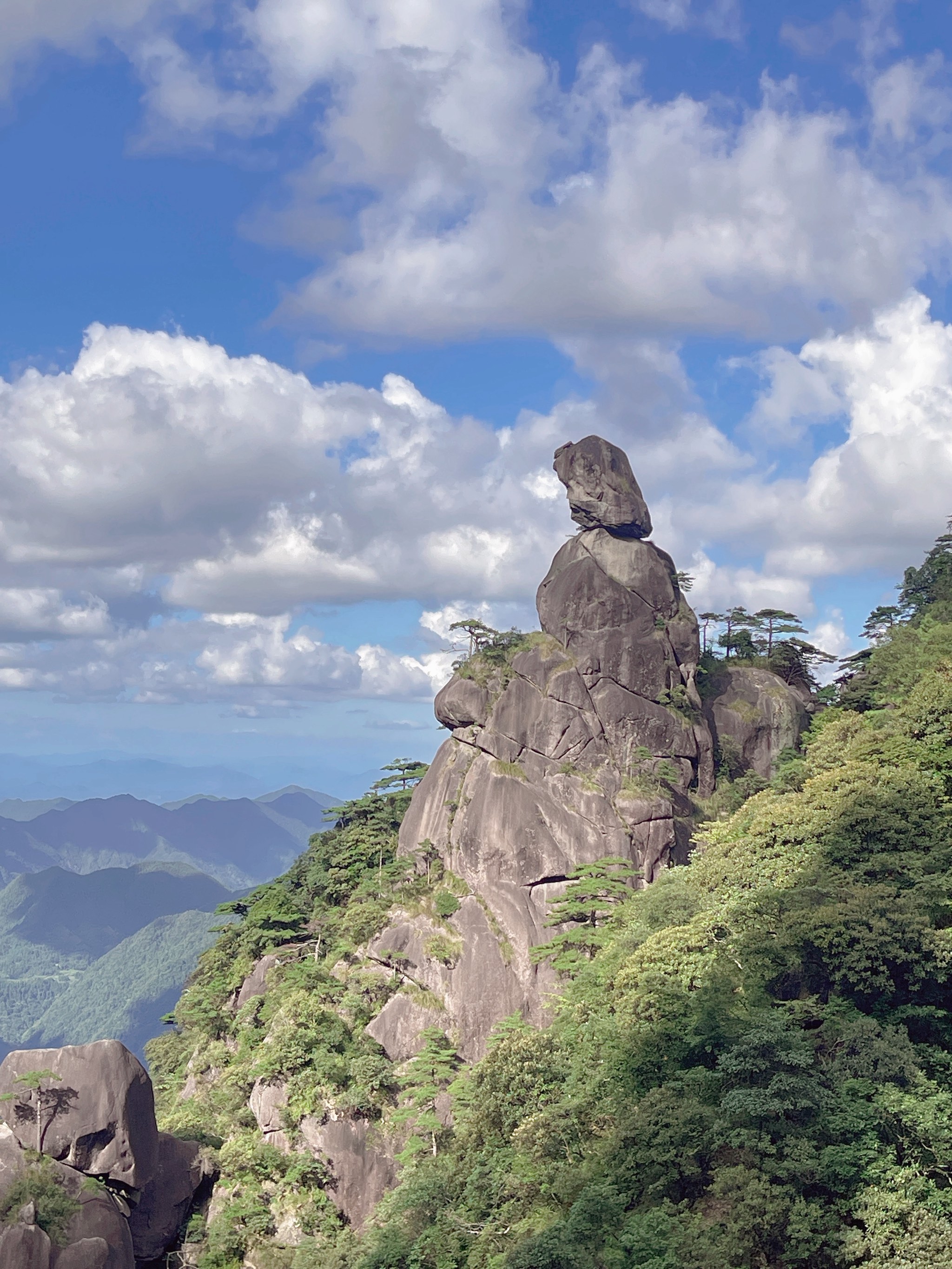
The mountain's defining feature is its extraordinary granite geology—a dense cluster of stone pillars comparable to the sea stacks of Scotland's Hebrides, though on a far grander scale. The 128-meter "Giant Python Emerging from the Mountain" and the graceful "Eastern Goddess" rock formation are celebrated icons of Chinese natural heritage, often mentioned alongside the pinnacles of Zhangjiajie or, globally, the granite spires of Patagonia's Torres del Paine. Equally audacious is the cliff-hugging plank walkway system, an engineering feat reminiscent of Spain's El Caminito del Rey, where steel paths and glass platforms lead visitors above sheer drops with no staircases in sight.
Taoism, China's indigenous spiritual tradition, treats high mountains as conduits between earth and heaven, and Mount Sanqing has been one of its foremost sacred sites since the Tang dynasty. Visitors exploring the summit encounter shrines, stone inscriptions, and meditation platforms woven into the natural landscape—the Chinese philosophical counterpart to the hermitages of Mount Athos or the chapel-crowned peaks of the Bavarian Alps. In spring, rhododendrons transform the slopes into carpets of pink and white, a spectacle celebrated in local poetry for centuries.
Reaching Mount Sanqing requires flying into Shanghai or Hangzhou, then a high-speed train to Shangrao or Yushan South station, followed by a 90-minute tourist shuttle. Two cable cars serve the mountain: the busier Jinsha line on the east side near main attractions, and the quieter Waishuangxi line on the south slope. The classic route loops up Jinsha and down Waishuangxi, avoiding backtracking. Entry costs roughly 150 RMB (about $21 USD), with cable cars 125 RMB each way. Trails divide into short (2.5–3 hours), medium (5–6 hours), and full-day (7–8 hours) circuits.
The best seasons are late spring, when rhododendrons bloom, and early autumn, when crisp air reveals the legendary sea of clouds rolling between the peaks. Summer offers welcome relief from China's lowland heat, with summit temperatures around 20°C (68°F). Travelers hoping to catch sunrise above the clouds should book one of the mountaintop hotels, such as the Rishang Villa, well in advance—much like reserving a rifugio in the Italian Dolomites. The hour after rain often produces the most dramatic vistas. Compared to Huangshan, which draws relentless crowds, Mount Sanqing remains comparatively uncrowded, preserving a contemplative atmosphere that rewards travelers willing to venture beyond Shanghai and Hangzhou.
Mount Sanqing takes its name from the three supreme deities of Taoism, making it sacred ground for over a millennium. The mountain entered Daoist lore during the Eastern Jin dynasty (4th century CE), when the legendary alchemist Ge Hong reportedly cultivated elixirs of immortality in its caves—an era contemporary with the late Roman Empire and the rise of monasticism in Egypt's desert mountains. The summit's Sanqing Palace, laid out according to I Ching cosmology, has been rebuilt across dynasties yet remains an active pilgrimage site, much like the great abbeys perched on European peaks from Montserrat to Monte Athos.
The mountain's defining feature is its extraordinary granite geology—a dense cluster of stone pillars comparable to the sea stacks of Scotland's Hebrides, though on a far grander scale. The 128-meter "Giant Python Emerging from the Mountain" and the graceful "Eastern Goddess" rock formation are celebrated icons of Chinese natural heritage, often mentioned alongside the pinnacles of Zhangjiajie or, globally, the granite spires of Patagonia's Torres del Paine. Equally audacious is the cliff-hugging plank walkway system, an engineering feat reminiscent of Spain's El Caminito del Rey, where steel paths and glass platforms lead visitors above sheer drops with no staircases in sight.
Taoism, China's indigenous spiritual tradition, treats high mountains as conduits between earth and heaven, and Mount Sanqing has been one of its foremost sacred sites since the Tang dynasty. Visitors exploring the summit encounter shrines, stone inscriptions, and meditation platforms woven into the natural landscape—the Chinese philosophical counterpart to the hermitages of Mount Athos or the chapel-crowned peaks of the Bavarian Alps. In spring, rhododendrons transform the slopes into carpets of pink and white, a spectacle celebrated in local poetry for centuries.
Reaching Mount Sanqing requires flying into Shanghai or Hangzhou, then a high-speed train to Shangrao or Yushan South station, followed by a 90-minute tourist shuttle. Two cable cars serve the mountain: the busier Jinsha line on the east side near main attractions, and the quieter Waishuangxi line on the south slope. The classic route loops up Jinsha and down Waishuangxi, avoiding backtracking. Entry costs roughly 150 RMB (about $21 USD), with cable cars 125 RMB each way. Trails divide into short (2.5–3 hours), medium (5–6 hours), and full-day (7–8 hours) circuits.
The best seasons are late spring, when rhododendrons bloom, and early autumn, when crisp air reveals the legendary sea of clouds rolling between the peaks. Summer offers welcome relief from China's lowland heat, with summit temperatures around 20°C (68°F). Travelers hoping to catch sunrise above the clouds should book one of the mountaintop hotels, such as the Rishang Villa, well in advance—much like reserving a rifugio in the Italian Dolomites. The hour after rain often produces the most dramatic vistas. Compared to Huangshan, which draws relentless crowds, Mount Sanqing remains comparatively uncrowded, preserving a contemplative atmosphere that rewards travelers willing to venture beyond Shanghai and Hangzhou.