Tangshan Grand Theatre
⭐ 3.80
Northwest corner of the intersection of Wenhua Road and Chuangye Road, Lubei District, Tangshan City, Hebei Province, China
 Tangshan, a city of roughly seven million in Hebei Province, carries one of the most dramatic stories of urban rebirth in modern history. Devastated by the catastrophic 1976 earthquake that killed more than 240,000 people, the city rebuilt itself into one of China's most important centres for steel, cement, and ceramics. The 2016 World Horticultural Expo marked Tangshan's pivot toward culture and ecology, and the Grand Theatre was conceived as a permanent cultural legacy of that event—much like how Barcelona's 1992 Olympics gave rise to enduring cultural landmarks along its waterfront.
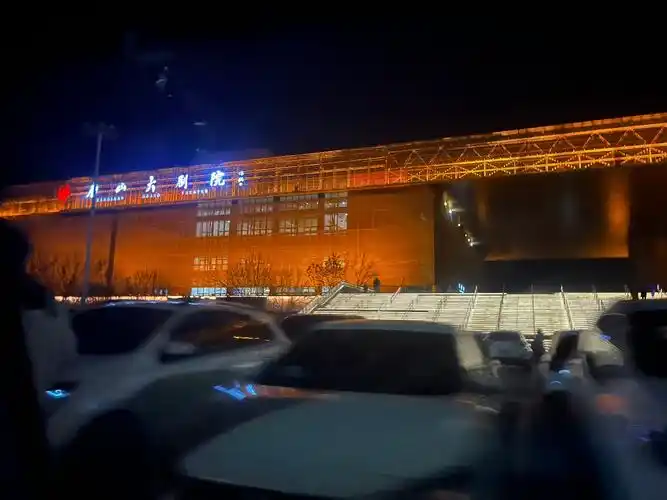
The building's fluid, aerodynamic silhouette draws on contemporary parametric design principles reminiscent of Zaha Hadid's flowing forms or Beijing's National Centre for the Performing Arts. Spanning roughly 67,000 square metres across a 109-mu site, its streamlined facades glow dramatically after sunset, making it a favourite subject for architecture and photography enthusiasts. The triple-venue configuration places it on par with mid-sized European houses such as Barcelona's L'Auditori or Amsterdam's Concertgebouw in programming versatility and acoustic ambition.
The theatre functions as Tangshan's "cultural living room"—a concept familiar to anyone who has visited a European municipal arts centre like the Barbican or the Konzerthaus Berlin. Its stages have hosted symphony orchestras, ballet troupes, comedy acts, and the celebrated local art of Pingju opera, a folk-inflected northern Chinese form dating to the early twentieth century. Past productions include popular troupes like Mahua FunAge and original Pingju works such as "The Tangshan Story," cementing the venue's bridge between heritage and contemporary entertainment.
The theatre sits in the South Lake (Nanhu) urban core, easily reached by city buses 19, 40, or 84, with convenient parking for those driving. Visitors should consult the official schedule in advance to choose performances with suitable subtitles or language options, since the lineup changes frequently. Just steps away, the "Tangshan Banquet" food culture museum offers regional specialties including chess-shaped baked buns and gezha—crispy mung-bean pancakes—both Hebei non-heritage snacks that pair perfectly with a "sightseeing by day, theatre by night" day plan.
Western theatre etiquette applies with some Chinese-specific considerations. Dress neatly—business casual suits most performances—and silence mobile phones before the curtain rises. Photography, audio recording, and outside food or beverages are strictly prohibited inside the auditoriums, with high-end productions sometimes imposing tighter restrictions on devices and flash. Visitors hoping to explore the lobby or halls between performances should call ahead, as public access is limited on dark nights, and check for special events that may also close parts of the building.
Tangshan, a city of roughly seven million in Hebei Province, carries one of the most dramatic stories of urban rebirth in modern history. Devastated by the catastrophic 1976 earthquake that killed more than 240,000 people, the city rebuilt itself into one of China's most important centres for steel, cement, and ceramics. The 2016 World Horticultural Expo marked Tangshan's pivot toward culture and ecology, and the Grand Theatre was conceived as a permanent cultural legacy of that event—much like how Barcelona's 1992 Olympics gave rise to enduring cultural landmarks along its waterfront.
The building's fluid, aerodynamic silhouette draws on contemporary parametric design principles reminiscent of Zaha Hadid's flowing forms or Beijing's National Centre for the Performing Arts. Spanning roughly 67,000 square metres across a 109-mu site, its streamlined facades glow dramatically after sunset, making it a favourite subject for architecture and photography enthusiasts. The triple-venue configuration places it on par with mid-sized European houses such as Barcelona's L'Auditori or Amsterdam's Concertgebouw in programming versatility and acoustic ambition.
The theatre functions as Tangshan's "cultural living room"—a concept familiar to anyone who has visited a European municipal arts centre like the Barbican or the Konzerthaus Berlin. Its stages have hosted symphony orchestras, ballet troupes, comedy acts, and the celebrated local art of Pingju opera, a folk-inflected northern Chinese form dating to the early twentieth century. Past productions include popular troupes like Mahua FunAge and original Pingju works such as "The Tangshan Story," cementing the venue's bridge between heritage and contemporary entertainment.
The theatre sits in the South Lake (Nanhu) urban core, easily reached by city buses 19, 40, or 84, with convenient parking for those driving. Visitors should consult the official schedule in advance to choose performances with suitable subtitles or language options, since the lineup changes frequently. Just steps away, the "Tangshan Banquet" food culture museum offers regional specialties including chess-shaped baked buns and gezha—crispy mung-bean pancakes—both Hebei non-heritage snacks that pair perfectly with a "sightseeing by day, theatre by night" day plan.
Western theatre etiquette applies with some Chinese-specific considerations. Dress neatly—business casual suits most performances—and silence mobile phones before the curtain rises. Photography, audio recording, and outside food or beverages are strictly prohibited inside the auditoriums, with high-end productions sometimes imposing tighter restrictions on devices and flash. Visitors hoping to explore the lobby or halls between performances should call ahead, as public access is limited on dark nights, and check for special events that may also close parts of the building.