Wuyuan Huangling Scenic Area
⭐ 4.70
Huangling Scenic Area, Wuyuan County, Shangrao City, Jiangxi Province, China
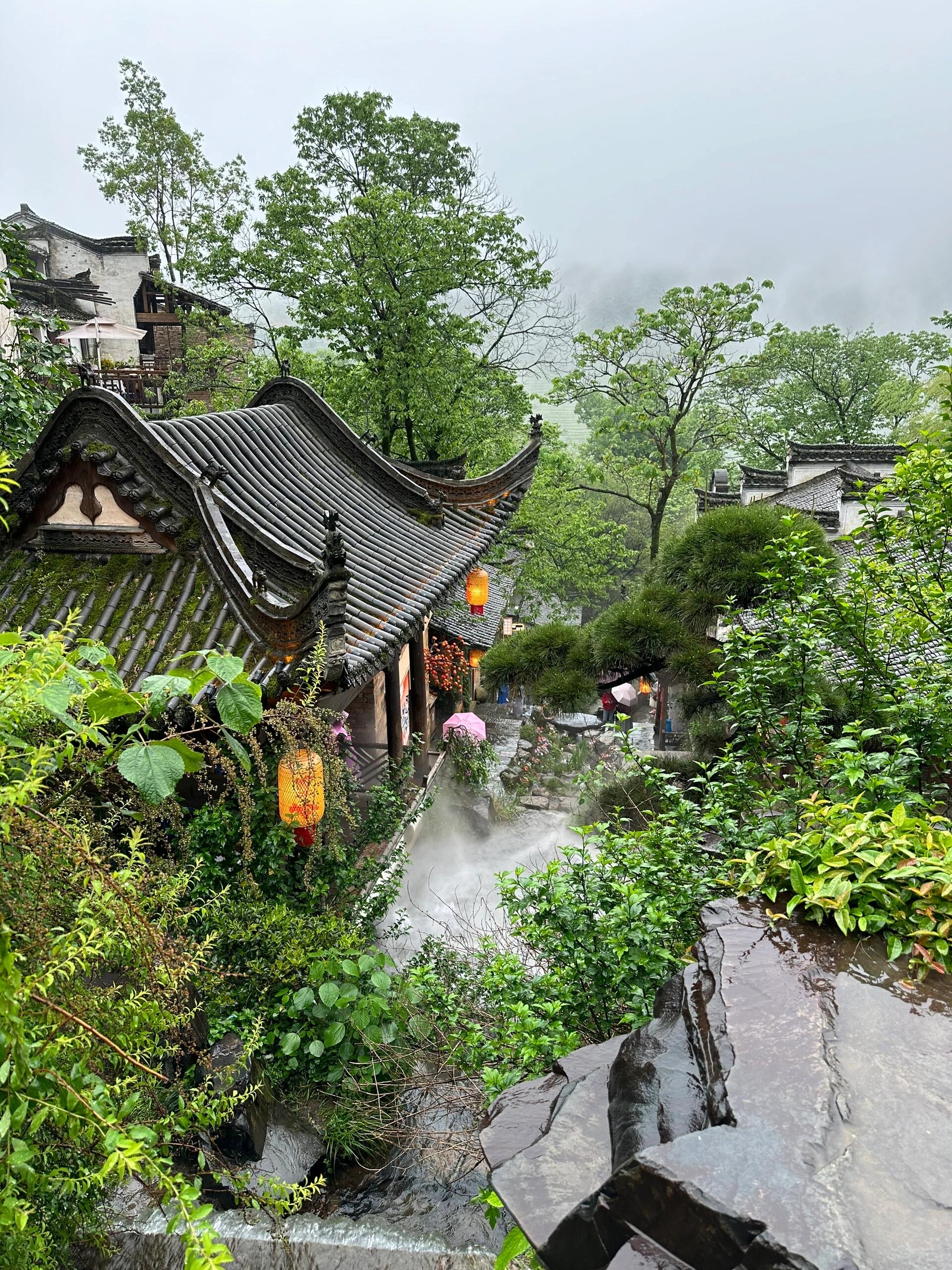 Huangling was founded in the mid-Ming Dynasty around the 1480s, placing its origins in an era when Leonardo da Vinci was painting in Florence and the Medici were bankrolling the Renaissance. The village developed under the Cao clan, members of the famed Huizhou merchant elite whose trade networks stretched across imperial China much as the Fuggers and Medicis dominated European finance. Isolated by its mountainous terrain—reached today by an eight-minute cable car—the settlement preserved its Ming and Qing layout largely intact, making it a rare living museum of pre-industrial mountain life.
The village's hundred-plus Huizhou courtyard houses fan out across the hillside in tiered formation, their whitewashed walls and dark ceramic roof tiles rising like a wave of grey and ivory against forested peaks. Masterpieces of the celebrated "Three Carvings"—wood, brick, and stone—adorn ancestral halls such as the Five Osmanthus Hall, echoing the ornate stonework of European Gothic cathedrals in their devotion to craft. Above the rooftops, the village's signature structure, the Leixin Glass Bridge, stretches across a gorge like a modern update of a medieval alpine crossing.
Huangling's most iconic tradition is "shai qiu"—literally "drying autumn"—a centuries-old practice born of necessity in a place where flat ground is scarce. Farmers spread peppers, corn, millet, and imperial chrysanthemums across rooftop racks, transforming the entire village into a living patchwork quilt of red, gold, and orange. This folk ritual, paired with hands-on experiences like pounding glutinous rice cakes and traditional woodblock printing, makes Huangling a working showcase of agrarian Huizhou culture rather than a static relic.
Reach Huangling via high-speed rail to Wuyuan Station, then a scenic shuttle or short drive into the mountains. Combined tickets including the cable car run roughly 145 RMB (about $20), and the cable car whisks visitors up in eight minutes. Mountain-top guesthouses and Huizhou restaurants serve local specialties like hudu tofu and qigao rice cakes. Spring (mid-March to April) brings the rapeseed flower spectacle across thousands of terraces, while autumn (late September to November) delivers the famous "shai qiu" harvest displays—mid-October is visual peak.
The recommended route—cable car up, no backtracking—winds through Flower Stream Water Street, past the colorful Sun-Drying Workshop and photography platforms, across the dramatic glass-bottomed Leixin Bridge, and down through the cobbled Sky Street lined with Ming-era shops. A single day covers the highlights, but staying overnight unlocks the village's quieter magic: misty dawns over terraced valleys, lantern-lit alleys after dark, and the chance to photograph rooftops without crowds. Pack sturdy non-slip shoes, layers for cool mountain evenings, and rain protection—the dramatic terrain rewards those who come prepared.
Huangling was founded in the mid-Ming Dynasty around the 1480s, placing its origins in an era when Leonardo da Vinci was painting in Florence and the Medici were bankrolling the Renaissance. The village developed under the Cao clan, members of the famed Huizhou merchant elite whose trade networks stretched across imperial China much as the Fuggers and Medicis dominated European finance. Isolated by its mountainous terrain—reached today by an eight-minute cable car—the settlement preserved its Ming and Qing layout largely intact, making it a rare living museum of pre-industrial mountain life.
The village's hundred-plus Huizhou courtyard houses fan out across the hillside in tiered formation, their whitewashed walls and dark ceramic roof tiles rising like a wave of grey and ivory against forested peaks. Masterpieces of the celebrated "Three Carvings"—wood, brick, and stone—adorn ancestral halls such as the Five Osmanthus Hall, echoing the ornate stonework of European Gothic cathedrals in their devotion to craft. Above the rooftops, the village's signature structure, the Leixin Glass Bridge, stretches across a gorge like a modern update of a medieval alpine crossing.
Huangling's most iconic tradition is "shai qiu"—literally "drying autumn"—a centuries-old practice born of necessity in a place where flat ground is scarce. Farmers spread peppers, corn, millet, and imperial chrysanthemums across rooftop racks, transforming the entire village into a living patchwork quilt of red, gold, and orange. This folk ritual, paired with hands-on experiences like pounding glutinous rice cakes and traditional woodblock printing, makes Huangling a working showcase of agrarian Huizhou culture rather than a static relic.
Reach Huangling via high-speed rail to Wuyuan Station, then a scenic shuttle or short drive into the mountains. Combined tickets including the cable car run roughly 145 RMB (about $20), and the cable car whisks visitors up in eight minutes. Mountain-top guesthouses and Huizhou restaurants serve local specialties like hudu tofu and qigao rice cakes. Spring (mid-March to April) brings the rapeseed flower spectacle across thousands of terraces, while autumn (late September to November) delivers the famous "shai qiu" harvest displays—mid-October is visual peak.
The recommended route—cable car up, no backtracking—winds through Flower Stream Water Street, past the colorful Sun-Drying Workshop and photography platforms, across the dramatic glass-bottomed Leixin Bridge, and down through the cobbled Sky Street lined with Ming-era shops. A single day covers the highlights, but staying overnight unlocks the village's quieter magic: misty dawns over terraced valleys, lantern-lit alleys after dark, and the chance to photograph rooftops without crowds. Pack sturdy non-slip shoes, layers for cool mountain evenings, and rain protection—the dramatic terrain rewards those who come prepared.