Songhua River
⭐ 3.20
Fuyu, Songyuan, Jilin Province, China
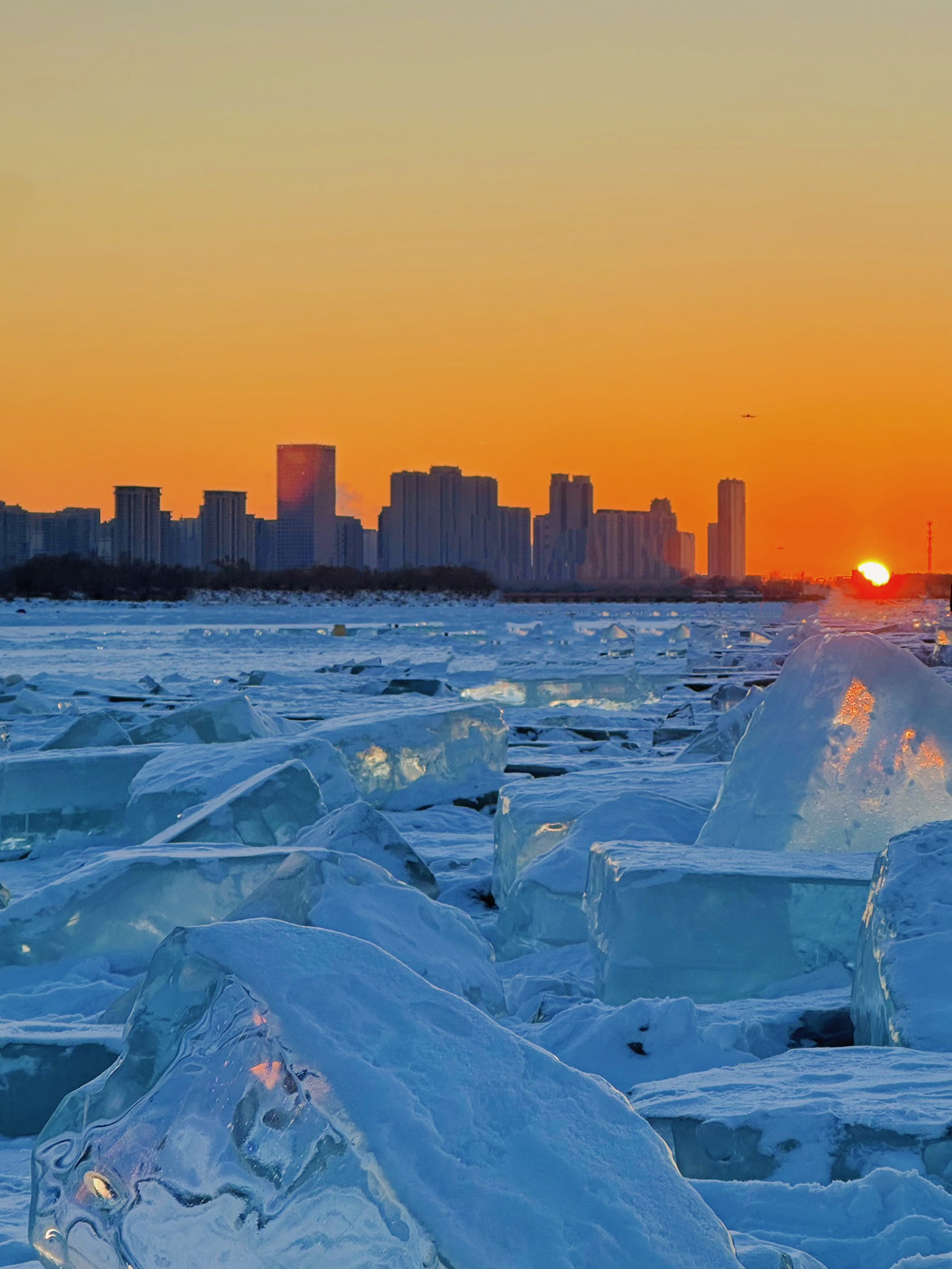 Songyuan's defining feature is its dramatic two-river confluence—the spot where the Nen and Second Songhua rivers finally unite to form the main stem of the Songhua. Below this junction the water spreads wide and slows, mirroring the gentle geometry of river junctions familiar in Europe's lowlands, such as where the Moselle meets the Rhine at Koblenz. The Songnen Plain surrounding this stretch is part of the great Manchurian heartland, a black-earth region comparable to Ukraine's chernozem steppes in fertility and historical importance. For travelers interested in how water shapes continental landscapes, this is one of northeast China's most rewarding vantage points.
The riverfront park belt forms the cultural and recreational spine of the visit. Begin at Narenhan Park, where statues, ovoo cairns, and grassland motifs recall the migrations of the ancient Gorlos Mongols—a tribe whose territory once stretched across these plains during the Yuan era (1271–1368), when Kublai Khan's horsemen ruled from the Pacific to the Caspian. Walking south, the path links into Riverside Park and onward toward the Songhua River Wetland Park, where raised boardwalks curve through reed beds reminiscent of France's Camargue or England's Norfolk Broads, offering family-friendly wildlife watching in summer and autumn.
Birdwatchers and photographers will find the wetland sections particularly rewarding. From late spring through early autumn, wild ducks, herons, and black-headed gulls populate the reed-fringed lagoons, while the broad, flat horizon—unusual in mountainous China—recalls the open vistas of the Spanish meseta or the Hungarian puszta. Early morning and the hour before sunset offer the best light, with cool breezes off the water providing relief from summer heat that often pushes above 30°C.
As dusk falls, the riverbanks transform into Songyuan's proudest showpiece: the "One River, Two Banks" light display accompanied by choreographed musical fountains. The effect—city lights shimmering across a broad, still ribbon of water—echoes the evening illuminations along the Seine in Paris or the Danube in Budapest, though here the scale is more intimate and the crowds refreshingly thin. Arrive an hour before sunset to capture golden-hour river scenes, then stay as the colored lights come on for a full sensory transition from natural beauty to urban spectacle.
If time allows, drive about 40 minutes southeast to Hadashan Water Conservancy Scenic Area, where a hilltop viewpoint reveals the Songhua winding like a silver ribbon through the dark farmland below—a landscape that, in its scale and serenity, recalls vistas along the Volga. Most visitors combine this with a half-day at Chagan Lake, one of China's ten largest freshwater lakes and famous for its winter ice fishing, creating a satisfying one-day itinerary that pairs river scenery, lake panoramas, and regional culture. All riverside parks and walkways are free to enter; facilities are well maintained, and the area is entirely suitable for independent exploration without a guide.
Practical notes: the best visiting windows are sunset hours for photography and summer evenings (June through August) for comfort. If traveling in August, pack mosquito repellent and a light jacket, as temperatures swing 3–5°C between day and night. Importantly, Songyuan's river does not produce the rime-ice phenomena seen at Jilin, and winter ice conditions can be unpredictable—avoid venturing onto frozen surfaces unless local authorities confirm safety.
Songyuan's defining feature is its dramatic two-river confluence—the spot where the Nen and Second Songhua rivers finally unite to form the main stem of the Songhua. Below this junction the water spreads wide and slows, mirroring the gentle geometry of river junctions familiar in Europe's lowlands, such as where the Moselle meets the Rhine at Koblenz. The Songnen Plain surrounding this stretch is part of the great Manchurian heartland, a black-earth region comparable to Ukraine's chernozem steppes in fertility and historical importance. For travelers interested in how water shapes continental landscapes, this is one of northeast China's most rewarding vantage points.
The riverfront park belt forms the cultural and recreational spine of the visit. Begin at Narenhan Park, where statues, ovoo cairns, and grassland motifs recall the migrations of the ancient Gorlos Mongols—a tribe whose territory once stretched across these plains during the Yuan era (1271–1368), when Kublai Khan's horsemen ruled from the Pacific to the Caspian. Walking south, the path links into Riverside Park and onward toward the Songhua River Wetland Park, where raised boardwalks curve through reed beds reminiscent of France's Camargue or England's Norfolk Broads, offering family-friendly wildlife watching in summer and autumn.
Birdwatchers and photographers will find the wetland sections particularly rewarding. From late spring through early autumn, wild ducks, herons, and black-headed gulls populate the reed-fringed lagoons, while the broad, flat horizon—unusual in mountainous China—recalls the open vistas of the Spanish meseta or the Hungarian puszta. Early morning and the hour before sunset offer the best light, with cool breezes off the water providing relief from summer heat that often pushes above 30°C.
As dusk falls, the riverbanks transform into Songyuan's proudest showpiece: the "One River, Two Banks" light display accompanied by choreographed musical fountains. The effect—city lights shimmering across a broad, still ribbon of water—echoes the evening illuminations along the Seine in Paris or the Danube in Budapest, though here the scale is more intimate and the crowds refreshingly thin. Arrive an hour before sunset to capture golden-hour river scenes, then stay as the colored lights come on for a full sensory transition from natural beauty to urban spectacle.
If time allows, drive about 40 minutes southeast to Hadashan Water Conservancy Scenic Area, where a hilltop viewpoint reveals the Songhua winding like a silver ribbon through the dark farmland below—a landscape that, in its scale and serenity, recalls vistas along the Volga. Most visitors combine this with a half-day at Chagan Lake, one of China's ten largest freshwater lakes and famous for its winter ice fishing, creating a satisfying one-day itinerary that pairs river scenery, lake panoramas, and regional culture. All riverside parks and walkways are free to enter; facilities are well maintained, and the area is entirely suitable for independent exploration without a guide.
Practical notes: the best visiting windows are sunset hours for photography and summer evenings (June through August) for comfort. If traveling in August, pack mosquito repellent and a light jacket, as temperatures swing 3–5°C between day and night. Importantly, Songyuan's river does not produce the rime-ice phenomena seen at Jilin, and winter ice conditions can be unpredictable—avoid venturing onto frozen surfaces unless local authorities confirm safety.