Central Avenue
⭐ 4.20
Central Avenue, Daoli District, Harbin, Heilongjiang, China
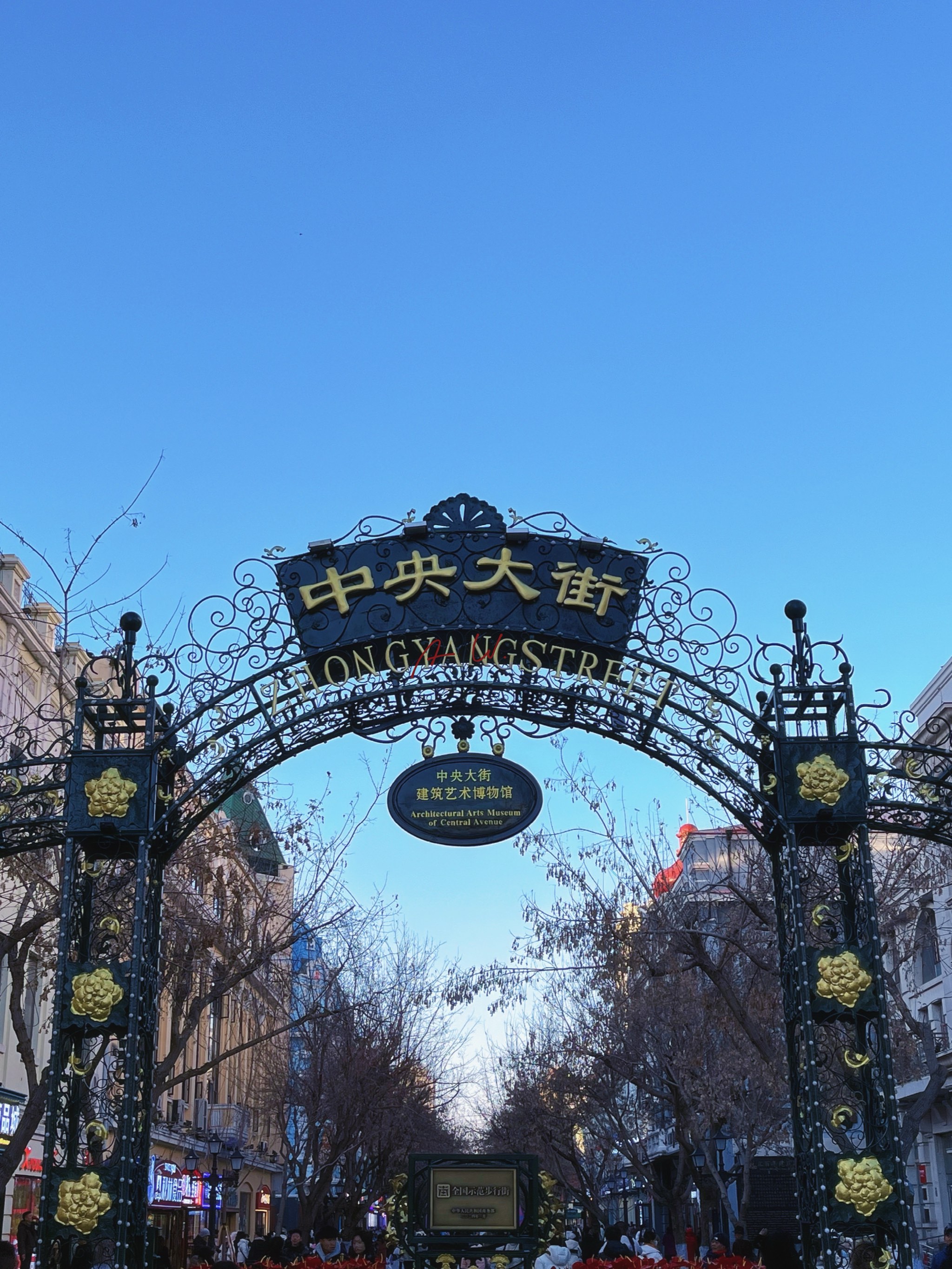 Central Street emerged in 1898 when Russian engineers arrived to construct the Chinese Eastern Railway, transforming a quiet fishing village into one of the Far East's busiest commercial corridors by the early 1900s. Much as the boulevards of Haussmann's Paris shaped that capital's identity, this single avenue became the spine of Harbin's international character—home to more than twenty nationalities, dozens of foreign consulates, and the trading houses of a frontier that stretched toward Siberia and beyond. In 1997, the street became one of China's first purpose-built pedestrian shopping zones, preserving its early-twentieth-century streetscape while reinventing itself for modern visitors.
The architecture is the main event. Of the 71 protected buildings, the Modern Hotel (Màdié'ěr Bīnguǎn) showcases dazzling Art Nouveau curves reminiscent of Budapest or Prague, while the Baroque-flanked Education Bookstore recalls Vienna's grand Ringstrasse façades. Hidden lanes off the main drag reveal quirky passages styled like a Muggle alley from Harry Potter, alongside Russian trading houses now housing cafés and galleries. Walking the street is itself a tactile pleasure: nearly 870,000 hand-cut granite "bread stones" (面包石), so named because each cubic block supposedly cost the equivalent of a gold piece during the original construction.
Culturally, Central Street embodies what locals call "Harbin style"—a fusion of Russian culinary traditions, Eastern European aesthetics, and northern Chinese heartiness. The aroma of kvass (fermented bread drink) drifts from corner stalls, while historic delicatessens serve borscht, braised beef in clay pots, and the legendary Modern ice cream—best eaten standing at the street-side window in subzero winter temperatures. This blend makes the avenue a living archive of cross-cultural exchange, comparable to how Istanbul's Istiklal Avenue or Shanghai's Bund tell stories of empires in collision.
A visit is refreshingly straightforward. The street is entirely free, open around the clock, and best entered from its southern end at Jingwei Street, walking north toward the Flood Control Monument on the Songhua River waterfront. St. Sophia Cathedral, with its green-domed Byzantine silhouette, lies just ten minutes east, and Metro Line 2 stops directly at "Central Street" station. Allow two to three hours for a leisurely stroll, pausing at branch lanes like Tongjiang Street for quieter cafés and old-photo exhibitions.
Timing shapes the experience. From late afternoon into evening, warm streetlights illuminate the building facades for superb photography—few Chinese streets rival this golden-hour spectacle. Summer visitors should carry water and sun protection; winter travelers must bring sturdy anti-slip footwear, as the polished bread stones turn treacherous when frozen. Stick to established restaurants for Russian and Harbin specialties (Modern ice cream, Huamei Western Restaurant, Qiulin red sausage), and avoid unofficial photo-op hustlers near the cathedral—particularly common when visitors pose with hawks or in costume.
Why visit? Central Street is not merely a shopping street but a living case study in how the twentieth century reshaped Asia. It is the rare place where a traveler can stand beneath Hungarian-influenced Art Nouveau ironwork, sip kvass beside a Baroque pediment, and gaze across to Russian Orthodox domes—all within a single, walkable kilometer that cost nothing to enter and rewards every kind of curiosity.
Central Street emerged in 1898 when Russian engineers arrived to construct the Chinese Eastern Railway, transforming a quiet fishing village into one of the Far East's busiest commercial corridors by the early 1900s. Much as the boulevards of Haussmann's Paris shaped that capital's identity, this single avenue became the spine of Harbin's international character—home to more than twenty nationalities, dozens of foreign consulates, and the trading houses of a frontier that stretched toward Siberia and beyond. In 1997, the street became one of China's first purpose-built pedestrian shopping zones, preserving its early-twentieth-century streetscape while reinventing itself for modern visitors.
The architecture is the main event. Of the 71 protected buildings, the Modern Hotel (Màdié'ěr Bīnguǎn) showcases dazzling Art Nouveau curves reminiscent of Budapest or Prague, while the Baroque-flanked Education Bookstore recalls Vienna's grand Ringstrasse façades. Hidden lanes off the main drag reveal quirky passages styled like a Muggle alley from Harry Potter, alongside Russian trading houses now housing cafés and galleries. Walking the street is itself a tactile pleasure: nearly 870,000 hand-cut granite "bread stones" (面包石), so named because each cubic block supposedly cost the equivalent of a gold piece during the original construction.
Culturally, Central Street embodies what locals call "Harbin style"—a fusion of Russian culinary traditions, Eastern European aesthetics, and northern Chinese heartiness. The aroma of kvass (fermented bread drink) drifts from corner stalls, while historic delicatessens serve borscht, braised beef in clay pots, and the legendary Modern ice cream—best eaten standing at the street-side window in subzero winter temperatures. This blend makes the avenue a living archive of cross-cultural exchange, comparable to how Istanbul's Istiklal Avenue or Shanghai's Bund tell stories of empires in collision.
A visit is refreshingly straightforward. The street is entirely free, open around the clock, and best entered from its southern end at Jingwei Street, walking north toward the Flood Control Monument on the Songhua River waterfront. St. Sophia Cathedral, with its green-domed Byzantine silhouette, lies just ten minutes east, and Metro Line 2 stops directly at "Central Street" station. Allow two to three hours for a leisurely stroll, pausing at branch lanes like Tongjiang Street for quieter cafés and old-photo exhibitions.
Timing shapes the experience. From late afternoon into evening, warm streetlights illuminate the building facades for superb photography—few Chinese streets rival this golden-hour spectacle. Summer visitors should carry water and sun protection; winter travelers must bring sturdy anti-slip footwear, as the polished bread stones turn treacherous when frozen. Stick to established restaurants for Russian and Harbin specialties (Modern ice cream, Huamei Western Restaurant, Qiulin red sausage), and avoid unofficial photo-op hustlers near the cathedral—particularly common when visitors pose with hawks or in costume.
Why visit? Central Street is not merely a shopping street but a living case study in how the twentieth century reshaped Asia. It is the rare place where a traveler can stand beneath Hungarian-influenced Art Nouveau ironwork, sip kvass beside a Baroque pediment, and gaze across to Russian Orthodox domes—all within a single, walkable kilometer that cost nothing to enter and rewards every kind of curiosity.