Xianyang Library
⭐ 1.50
No. 1, Weiyang Middle Road, Qindu District, Xianyang City, Shaanxi Province, China
 Xianyang holds a singular place in world history as the imperial capital of Qin Shi Huang, whose unification of China in 221 BCE gave the nation its very name. Beyond the city stand the famed Terracotta Warriors, eternal guardians of the First Emperor's tomb. Against this monumental backdrop, Xianyang Library serves as the modern custodian of the region's written heritage, preserving rare manuscripts that trace through two millennia of scholarship. For visitors familiar with how the Vatican Library safeguards European religious texts or how the Bodleian Library preserves medieval manuscripts, this institution offers an equivalent journey through the textual treasures of imperial China.
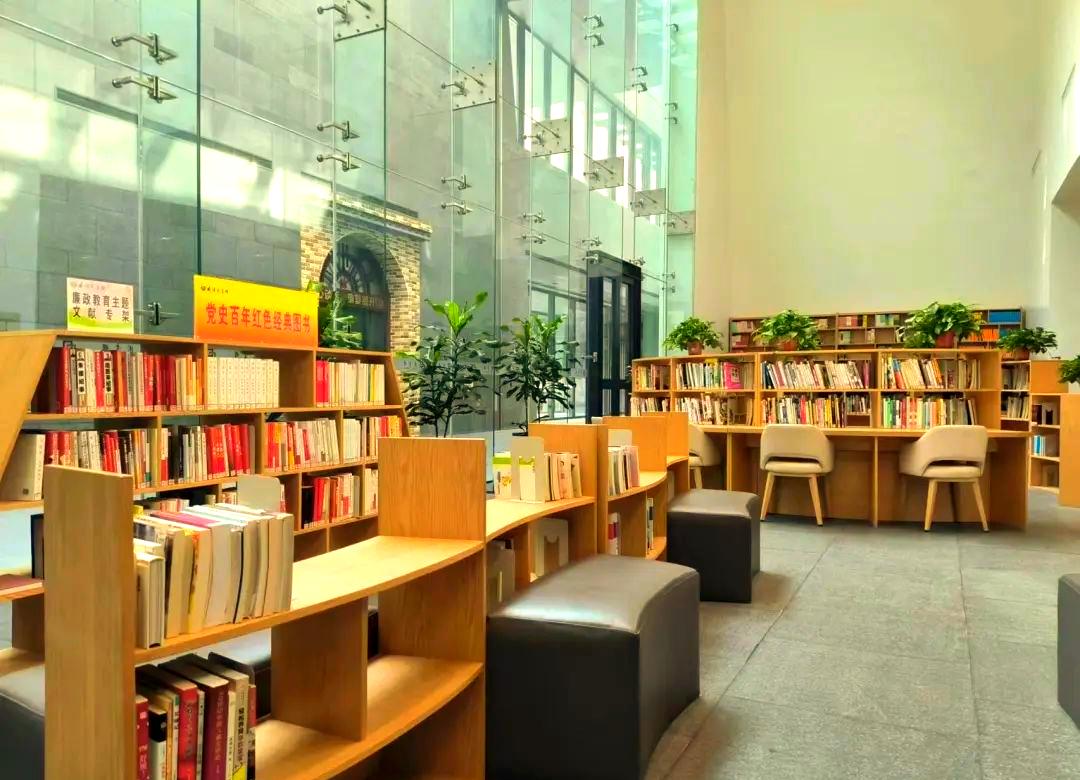
The library operates across three interconnected sites. The original branch, opened in 1996 on Weiyang West Road, spans 8,401 square meters in a dignified late-twentieth-century style. The new branch, inaugurated in 2017 within the Beiyuan New Town cultural district, doubles that footprint at 16,000 square meters and accommodates more than 2,000 reading seats. A glass-walled corridor pavilion links the two, creating a campus-like setting reminiscent of Berlin's distributed museum landscape. Inside the modern wing, dedicated zones for children's literature, digital media, exhibitions, and lectures reflect twenty-first-century approaches to public learning.
Holdings exceed 700,000 printed volumes and one million digital resources, with 13,000 rare ancient books forming the crown jewel of the collection. These manuscripts offer researchers direct access to texts illuminating the philosophical, administrative, and artistic traditions of imperial China—comparable in scholarly weight to the Chester Beatty Library's Chinese scrolls in Dublin. A four-tier service network extends library access into neighborhood reading rooms and twenty-four-hour self-service kiosks, ensuring that knowledge reaches every corner of the community.
Admission is entirely free, with no registration fees or deposits required. Free Wi-Fi, lockers, and drinking water are available throughout. Hours vary by branch: the older building opens Tuesday through Friday from 8:00 AM (closed Monday mornings), while the newer building welcomes visitors Wednesday through Sunday from 9:30 AM (closed Mondays and Tuesdays). Visitors should check the library's WeChat public account for current programming, including classic film screenings, intangible heritage exhibitions, and children's storytime sessions. Quiet behavior, no food or drink, and respectful use of shared seating are strictly enforced.
While libraries seldom appear on standard tourist itineraries, Xianyang Library rewards travelers seeking depth over spectacle. Begin at the modern wing to attend a lecture or browse rotating displays, before continuing to the historic branch for immersion in local gazetteers and ancient editions. Few places allow such immediate, unhurried contact with the intellectual inheritance of a city that once ruled the known Chinese world. For the curious traveler, an afternoon here transforms Xianyang from a transit stop near the Terracotta Warriors into a destination in its own right.
Xianyang holds a singular place in world history as the imperial capital of Qin Shi Huang, whose unification of China in 221 BCE gave the nation its very name. Beyond the city stand the famed Terracotta Warriors, eternal guardians of the First Emperor's tomb. Against this monumental backdrop, Xianyang Library serves as the modern custodian of the region's written heritage, preserving rare manuscripts that trace through two millennia of scholarship. For visitors familiar with how the Vatican Library safeguards European religious texts or how the Bodleian Library preserves medieval manuscripts, this institution offers an equivalent journey through the textual treasures of imperial China.
The library operates across three interconnected sites. The original branch, opened in 1996 on Weiyang West Road, spans 8,401 square meters in a dignified late-twentieth-century style. The new branch, inaugurated in 2017 within the Beiyuan New Town cultural district, doubles that footprint at 16,000 square meters and accommodates more than 2,000 reading seats. A glass-walled corridor pavilion links the two, creating a campus-like setting reminiscent of Berlin's distributed museum landscape. Inside the modern wing, dedicated zones for children's literature, digital media, exhibitions, and lectures reflect twenty-first-century approaches to public learning.
Holdings exceed 700,000 printed volumes and one million digital resources, with 13,000 rare ancient books forming the crown jewel of the collection. These manuscripts offer researchers direct access to texts illuminating the philosophical, administrative, and artistic traditions of imperial China—comparable in scholarly weight to the Chester Beatty Library's Chinese scrolls in Dublin. A four-tier service network extends library access into neighborhood reading rooms and twenty-four-hour self-service kiosks, ensuring that knowledge reaches every corner of the community.
Admission is entirely free, with no registration fees or deposits required. Free Wi-Fi, lockers, and drinking water are available throughout. Hours vary by branch: the older building opens Tuesday through Friday from 8:00 AM (closed Monday mornings), while the newer building welcomes visitors Wednesday through Sunday from 9:30 AM (closed Mondays and Tuesdays). Visitors should check the library's WeChat public account for current programming, including classic film screenings, intangible heritage exhibitions, and children's storytime sessions. Quiet behavior, no food or drink, and respectful use of shared seating are strictly enforced.
While libraries seldom appear on standard tourist itineraries, Xianyang Library rewards travelers seeking depth over spectacle. Begin at the modern wing to attend a lecture or browse rotating displays, before continuing to the historic branch for immersion in local gazetteers and ancient editions. Few places allow such immediate, unhurried contact with the intellectual inheritance of a city that once ruled the known Chinese world. For the curious traveler, an afternoon here transforms Xianyang from a transit stop near the Terracotta Warriors into a destination in its own right.