Qinhan New City Heritage Park
⭐ 4.00
Qinhan New City, Xianyang City, Shaanxi Province, China
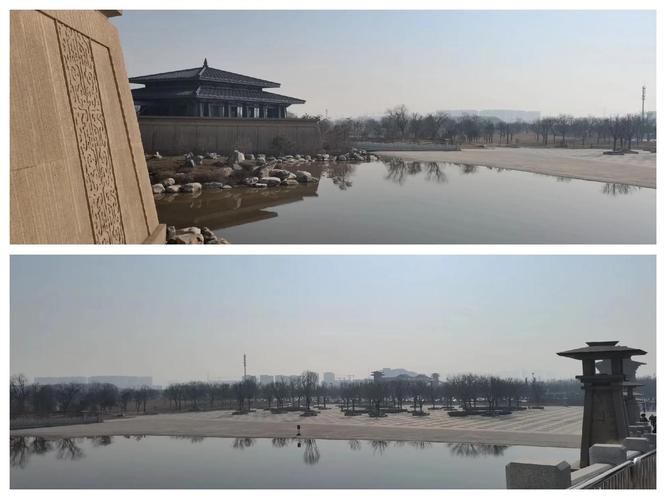 Some three centuries before Rome completed its transition from republic to empire, the state of Qin was unifying China under Emperor Qin Shi Huang in 221 BC. Xianyang, his capital on the north bank of the Wei River, functioned as the nerve centre of an empire stretching from the South China Sea to Mongolia—comparable in scale to Augustan Rome. The newly designated Qin-Han New City Archaeological Site Park protects the core of that vanished capital. While Rome's Palatine Hill still stands in reconstructed glory, Qin's equivalent was largely swept away by Han-era floods and time, making this park a rare chance to walk through the actual foundations of history.
The park's centrepiece is the Qin Xianyang Palace Museum, themed "Great Qin's Hub – Unification of the Six." Its 74 artefacts are displayed around the genuine rammed-earth platform of an imperial hall. Particularly fascinating are the ceramic drainage pipes from the palace's underground water system—an engineering achievement that arguably outpaced contemporary Roman sanitation. Standing on the compacted earth floors where Qin officials once walked, you grasp the sheer scale of the original palace complex, which historical records suggest covered some six square kilometres, dwarfing the imperial forums of Rome.
A short walk away rises the Qin-Han Branch of the Shaanxi History Museum, China's only museum dedicated exclusively to the four centuries of Qin and Han rule. Its seven pavilions, inspired by the seven stars of the Big Dipper—a celestial emblem of imperial authority—house over 1,500 artefacts, nine-tenths on first display. Together with the Palace Museum, the two institutions form a complementary narrative: artefacts upstairs, authentic foundations downstairs. Visitors leave with a coherent picture of how Qin centralised bureaucracy, standardised scripts and weights, and built roads and canals that prefigured the Silk Road.
Beyond the museums, the Da Qin Civilization Garden offers a relaxed counterpoint with its "Steps of the Qin People" sculpture trail and architectural reconstructions rising from landscaped lawns. From here, the 8.7-kilometre Da Han Purple Trail threads northward along the Wei River plateau, passing rest pavilions and viewpoints that frame the distant imperial tombs of the Han dynasty—Qin Shi Huang's famous terracotta guardians lie just a few kilometres east. Cyclists and walkers alike praise the wide-open vistas across the Loess Plateau, a landscape utterly unlike anything in Europe.
Entry is free, but bring your passport for registration at all indoor venues. The museums typically open 9:00–17:00, with Mondays often reserved for maintenance—check ahead before visiting. Allow at least half a day, ideally a full one, following the route "Qin-Han Museum → Palace Ruins → Purple Trail → Civilization Garden" for maximum context. The park sits directly on Xi'an Metro Line 14 at Qin Gong Station, with free shuttle buses and electric sight-seeing carts linking the dispersed sites. Drivers will find ample parking and EV charging stations.
For Western travellers who have marvelled at the Colosseum or walked the Roman Forum, this park offers a thrillingly different chapter of antiquity—one in which the same drive toward empire played out on the opposite end of the Eurasian landmass. Few archaeological parks in the world combine in-situ palace foundations, a purpose-built museum of this calibre, and vast open landscape in a single visit. The 2025 national designation confirms what visitors already sense: that Xianyang, not just Xi'an or Beijing, is where the story of imperial China truly begins.
Some three centuries before Rome completed its transition from republic to empire, the state of Qin was unifying China under Emperor Qin Shi Huang in 221 BC. Xianyang, his capital on the north bank of the Wei River, functioned as the nerve centre of an empire stretching from the South China Sea to Mongolia—comparable in scale to Augustan Rome. The newly designated Qin-Han New City Archaeological Site Park protects the core of that vanished capital. While Rome's Palatine Hill still stands in reconstructed glory, Qin's equivalent was largely swept away by Han-era floods and time, making this park a rare chance to walk through the actual foundations of history.
The park's centrepiece is the Qin Xianyang Palace Museum, themed "Great Qin's Hub – Unification of the Six." Its 74 artefacts are displayed around the genuine rammed-earth platform of an imperial hall. Particularly fascinating are the ceramic drainage pipes from the palace's underground water system—an engineering achievement that arguably outpaced contemporary Roman sanitation. Standing on the compacted earth floors where Qin officials once walked, you grasp the sheer scale of the original palace complex, which historical records suggest covered some six square kilometres, dwarfing the imperial forums of Rome.
A short walk away rises the Qin-Han Branch of the Shaanxi History Museum, China's only museum dedicated exclusively to the four centuries of Qin and Han rule. Its seven pavilions, inspired by the seven stars of the Big Dipper—a celestial emblem of imperial authority—house over 1,500 artefacts, nine-tenths on first display. Together with the Palace Museum, the two institutions form a complementary narrative: artefacts upstairs, authentic foundations downstairs. Visitors leave with a coherent picture of how Qin centralised bureaucracy, standardised scripts and weights, and built roads and canals that prefigured the Silk Road.
Beyond the museums, the Da Qin Civilization Garden offers a relaxed counterpoint with its "Steps of the Qin People" sculpture trail and architectural reconstructions rising from landscaped lawns. From here, the 8.7-kilometre Da Han Purple Trail threads northward along the Wei River plateau, passing rest pavilions and viewpoints that frame the distant imperial tombs of the Han dynasty—Qin Shi Huang's famous terracotta guardians lie just a few kilometres east. Cyclists and walkers alike praise the wide-open vistas across the Loess Plateau, a landscape utterly unlike anything in Europe.
Entry is free, but bring your passport for registration at all indoor venues. The museums typically open 9:00–17:00, with Mondays often reserved for maintenance—check ahead before visiting. Allow at least half a day, ideally a full one, following the route "Qin-Han Museum → Palace Ruins → Purple Trail → Civilization Garden" for maximum context. The park sits directly on Xi'an Metro Line 14 at Qin Gong Station, with free shuttle buses and electric sight-seeing carts linking the dispersed sites. Drivers will find ample parking and EV charging stations.
For Western travellers who have marvelled at the Colosseum or walked the Roman Forum, this park offers a thrillingly different chapter of antiquity—one in which the same drive toward empire played out on the opposite end of the Eurasian landmass. Few archaeological parks in the world combine in-situ palace foundations, a purpose-built museum of this calibre, and vast open landscape in a single visit. The 2025 national designation confirms what visitors already sense: that Xianyang, not just Xi'an or Beijing, is where the story of imperial China truly begins.