Hoh Tala Grassland
⭐ 3.20
Hoh Tala Grassland, Huimin District, Hohhot City, Inner Mongolia Autonomous Region, China
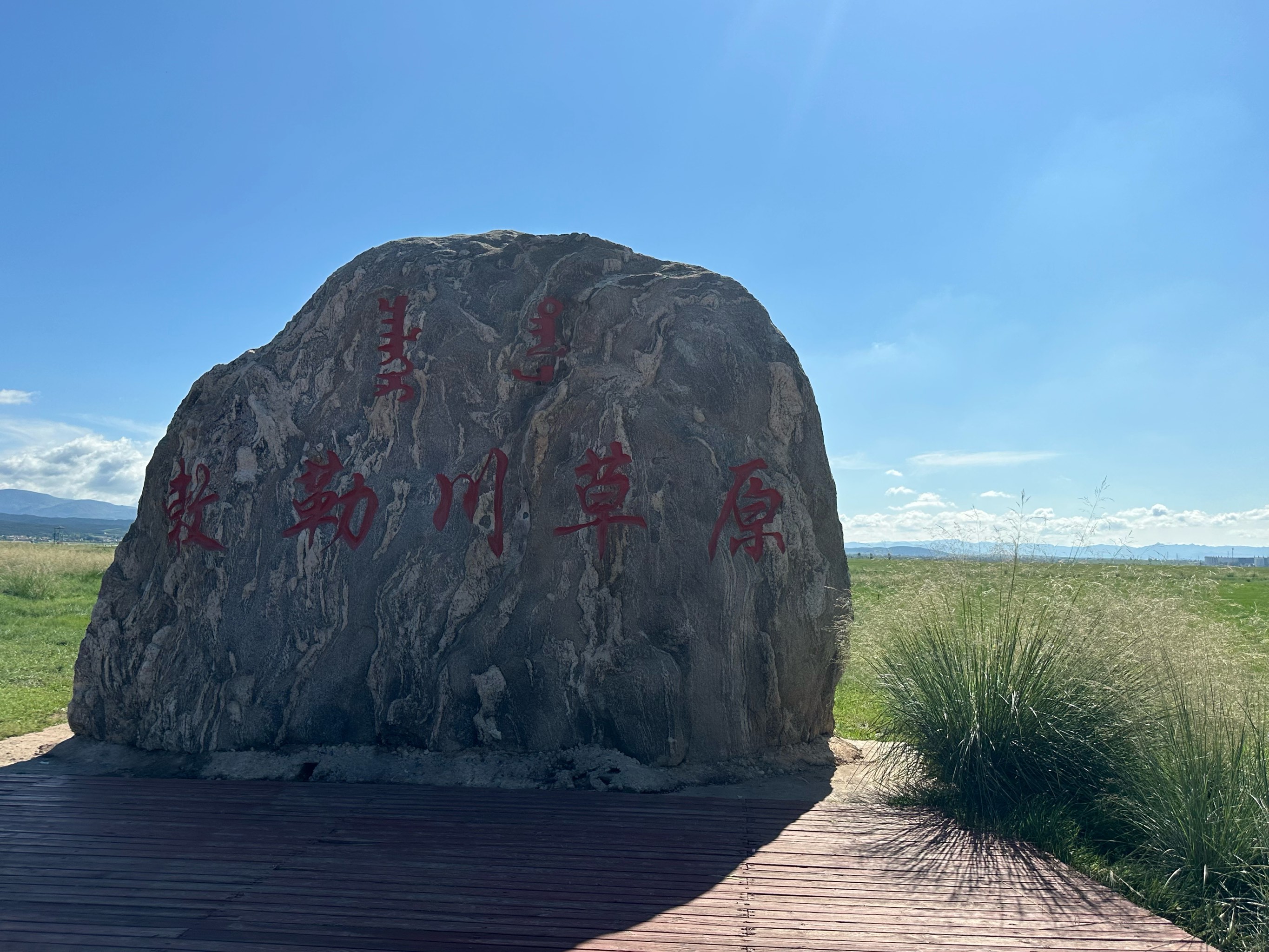 The name "Chilechuan" echoes one of China's oldest folk songs, composed by the Northern Wei dynasty (386–534 AD), when Turkic and Xianbei nomads still roamed these highlands. Centuries later, this same sweeping terrain cradled the rise of the Mongol Empire under Genghis Khan in the 13th century—a campaign that, like Napoleon's march on Moscow or the Viking expansion westward, redrew the map of Eurasia. Walking the grasslands today, you tread ground where Mongol horsemen once launched their conquests stretching from Korea to Hungary, where the Hungarian steppes and the Caspian shores all trace back to riders from this very horizon.
Ecologically, the site is a modern success story. Before 2017, it was little more than scrubby wasteland on Hohhot's fringe; after a major reseeding campaign using drought-resistant native grasses, it was reborn as part of China's national grassland park pilot program. The flat, open expanse—comparable in scale to Spain's Sierra de Grazalema meadows or England's Salisbury Plain—now runs about 10,389 mu (roughly 6.9 sq km) of uninterrupted pasture, where wild hares and foxes dart through the tall grass much as they did a millennium ago.
The architectural showpiece is the Chilechuan Conference Center, claimed as Asia's largest single yurt, its domed silhouette dwarfing everything around it like a modernist cousin to the Circus Maximus. Nearby, Saren Lake glimmers with reflections of passing clouds, while the Sun Plaza and its ranks of white wind turbines have become favored backdrops for travelers' cameras. The aesthetic blends Mongolian tradition with contemporary landscape design—closer in spirit to a Nordic eco-park than to a strictly historical site.
Culturally, the grassland functions as Hohhot's living folklore stage. Throughout summer, Naadam festivals revive the "three manly games" of wrestling, archery, and horse racing that Genghis Khan's army once used to train its warriors. Visitors can don a Mongolian deel robe, sip salted milk tea, feast on hand-grabbed lamb, and join bonfire nights beneath star-filled skies that rival anything in the African savannah. It's an accessible introduction to a nomadic heritage that shaped world history far more than most Western travelers realize.
Practically speaking, the park is free and open daily roughly 8:00–18:00. Driving is easiest—simply navigate to "Chilechuan Grassland" or "Sun Plaza"—though city buses 92, 103, 112, and 115 also serve the area, with ample parking on arrival. The best window is July through August, when the grass reaches its peak; aim for early morning or late afternoon to catch softer light and cooler temperatures, and to photograph the spectacular golden-hour sunsets that bathe the meadows in amber. Pack sunscreen, a windproof layer, and insect repellent, and remember to step over—not on—yurt thresholds, and to flick a drop of offered drink skyward before sipping.
[DETAILED-CONTEXT]
Why visit? Because nowhere else on Earth lets a foreign traveler step from a modern Chinese capital into open Mongol steppe in under half an hour. Where Budapest's Great Plain requires a long train ride and the Kazakh steppes demand a flight into emptiness, Hohhot offers the steppe as a casual afternoon—complete with horseback canters, cultural performances, and a perspective on Inner Mongolia that reframes how the West imagines the Eurasian heartland.
The name "Chilechuan" echoes one of China's oldest folk songs, composed by the Northern Wei dynasty (386–534 AD), when Turkic and Xianbei nomads still roamed these highlands. Centuries later, this same sweeping terrain cradled the rise of the Mongol Empire under Genghis Khan in the 13th century—a campaign that, like Napoleon's march on Moscow or the Viking expansion westward, redrew the map of Eurasia. Walking the grasslands today, you tread ground where Mongol horsemen once launched their conquests stretching from Korea to Hungary, where the Hungarian steppes and the Caspian shores all trace back to riders from this very horizon.
Ecologically, the site is a modern success story. Before 2017, it was little more than scrubby wasteland on Hohhot's fringe; after a major reseeding campaign using drought-resistant native grasses, it was reborn as part of China's national grassland park pilot program. The flat, open expanse—comparable in scale to Spain's Sierra de Grazalema meadows or England's Salisbury Plain—now runs about 10,389 mu (roughly 6.9 sq km) of uninterrupted pasture, where wild hares and foxes dart through the tall grass much as they did a millennium ago.
The architectural showpiece is the Chilechuan Conference Center, claimed as Asia's largest single yurt, its domed silhouette dwarfing everything around it like a modernist cousin to the Circus Maximus. Nearby, Saren Lake glimmers with reflections of passing clouds, while the Sun Plaza and its ranks of white wind turbines have become favored backdrops for travelers' cameras. The aesthetic blends Mongolian tradition with contemporary landscape design—closer in spirit to a Nordic eco-park than to a strictly historical site.
Culturally, the grassland functions as Hohhot's living folklore stage. Throughout summer, Naadam festivals revive the "three manly games" of wrestling, archery, and horse racing that Genghis Khan's army once used to train its warriors. Visitors can don a Mongolian deel robe, sip salted milk tea, feast on hand-grabbed lamb, and join bonfire nights beneath star-filled skies that rival anything in the African savannah. It's an accessible introduction to a nomadic heritage that shaped world history far more than most Western travelers realize.
Practically speaking, the park is free and open daily roughly 8:00–18:00. Driving is easiest—simply navigate to "Chilechuan Grassland" or "Sun Plaza"—though city buses 92, 103, 112, and 115 also serve the area, with ample parking on arrival. The best window is July through August, when the grass reaches its peak; aim for early morning or late afternoon to catch softer light and cooler temperatures, and to photograph the spectacular golden-hour sunsets that bathe the meadows in amber. Pack sunscreen, a windproof layer, and insect repellent, and remember to step over—not on—yurt thresholds, and to flick a drop of offered drink skyward before sipping.
[DETAILED-CONTEXT]
Why visit? Because nowhere else on Earth lets a foreign traveler step from a modern Chinese capital into open Mongol steppe in under half an hour. Where Budapest's Great Plain requires a long train ride and the Kazakh steppes demand a flight into emptiness, Hohhot offers the steppe as a casual afternoon—complete with horseback canters, cultural performances, and a perspective on Inner Mongolia that reframes how the West imagines the Eurasian heartland.