Jing'an Temple
⭐ 4.20
No. 1688, Nanjing West Road, Jing'an District, Shanghai, China
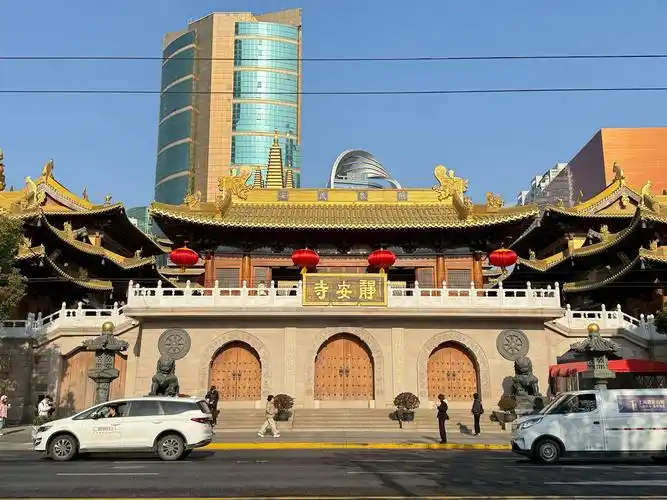 Founded in 247 AD under the Kingdom of Wu, Jing'an Temple is roughly contemporary with the late Roman Empire and significantly older than most medieval European cathedrals—Westminster Abbey was consecrated nearly 800 years later. Originally named Hudu Chongyuan Temple, it was relocated to its present site during the Song Dynasty, making it a living witness to Shanghai's evolution from a quiet fishing village into a global metropolis. Surviving nearly 1,800 years of dynastic upheaval, war, and modernization, the temple stands as Shanghai's oldest and most enduring cultural landmark.
The temple's architecture is a masterful blend of traditional craftsmanship and imperial grandeur. The 26.7-meter-tall Mahavira Hall features a sweeping double-eaved hip-and-gable roof clad in copper alloy and finished with gold plating, echoing the regal style of Song-era palaces. Its interior frame was assembled from Myanmar teak using traditional mortise-and-tenon joinery—a technique reminiscent of Japan's historic timber temples—notably without a single iron nail. The centerpiece is the imposing 6.6-meter seated Buddha, cast from 15 tons of pure silver, while the surrounding walls display intricate murals crafted from turquoise, mother-of-pearl, and other natural materials.
Beyond the main hall, the temple complex offers numerous points of interest. A 10-meter bronze incense burner called the "Fubao Ding" stands in the front square, while the bell tower houses a colossal 7.3-ton bronze Peace Bell. To the northwest, the seven-story Jing'an Pagoda reportedly enshrines a golden Buddha. Beneath the temple grounds, the legendary "Sixth Spring Under Heaven" once bubbled up—so culturally significant that Shanghai's Metro Line 2 was deliberately rerouted to preserve it during construction.
The temple's most photographed feature is its dramatic juxtaposition with modern Shanghai. The glittering gold roofs sit within sight of the Plaza 66 skyscraper and Jiuguang Department Store, creating a visual dialogue similar to that of Notre-Dame rising above modern Paris or the Pantheon surrounded by Rome's traffic. Early mornings and golden hour offer the best lighting for photography, when the gilded eaves seem to glow against the glass towers behind them. Friday and Saturday evenings bring dramatic illuminations, extending the temple's open hours until 10:00 PM.
Practical information for visitors: Admission is 50 RMB and includes three incense sticks. The temple opens daily from 7:30 AM to 5:00 PM, with last entry at 4:30 PM. The easiest access is via Metro Lines 2, 7, or 14 to Jing'an Temple Station, using exits 1 or 14 for a 2–3 minute walk. Admission is free on the 1st and 15th days of the lunar month, though these attract heavy crowds—weekday mornings offer the most peaceful experience. Visitors should dress modestly, photography is prohibited inside the halls, and cash is required for donation boxes.
Why visit Jing'an Temple? Few places in the world so vividly illustrate the layering of ancient spirituality within a hyper-modern cityscape. Comparable to how St. Peter's Basilica anchors Vatican City amid Rome's bustle, Jing'an offers travelers a chance to step from Shanghai's neon-lit commercial heart into nearly two millennia of contemplative heritage—all within a single short walk.
Founded in 247 AD under the Kingdom of Wu, Jing'an Temple is roughly contemporary with the late Roman Empire and significantly older than most medieval European cathedrals—Westminster Abbey was consecrated nearly 800 years later. Originally named Hudu Chongyuan Temple, it was relocated to its present site during the Song Dynasty, making it a living witness to Shanghai's evolution from a quiet fishing village into a global metropolis. Surviving nearly 1,800 years of dynastic upheaval, war, and modernization, the temple stands as Shanghai's oldest and most enduring cultural landmark.
The temple's architecture is a masterful blend of traditional craftsmanship and imperial grandeur. The 26.7-meter-tall Mahavira Hall features a sweeping double-eaved hip-and-gable roof clad in copper alloy and finished with gold plating, echoing the regal style of Song-era palaces. Its interior frame was assembled from Myanmar teak using traditional mortise-and-tenon joinery—a technique reminiscent of Japan's historic timber temples—notably without a single iron nail. The centerpiece is the imposing 6.6-meter seated Buddha, cast from 15 tons of pure silver, while the surrounding walls display intricate murals crafted from turquoise, mother-of-pearl, and other natural materials.
Beyond the main hall, the temple complex offers numerous points of interest. A 10-meter bronze incense burner called the "Fubao Ding" stands in the front square, while the bell tower houses a colossal 7.3-ton bronze Peace Bell. To the northwest, the seven-story Jing'an Pagoda reportedly enshrines a golden Buddha. Beneath the temple grounds, the legendary "Sixth Spring Under Heaven" once bubbled up—so culturally significant that Shanghai's Metro Line 2 was deliberately rerouted to preserve it during construction.
The temple's most photographed feature is its dramatic juxtaposition with modern Shanghai. The glittering gold roofs sit within sight of the Plaza 66 skyscraper and Jiuguang Department Store, creating a visual dialogue similar to that of Notre-Dame rising above modern Paris or the Pantheon surrounded by Rome's traffic. Early mornings and golden hour offer the best lighting for photography, when the gilded eaves seem to glow against the glass towers behind them. Friday and Saturday evenings bring dramatic illuminations, extending the temple's open hours until 10:00 PM.
Practical information for visitors: Admission is 50 RMB and includes three incense sticks. The temple opens daily from 7:30 AM to 5:00 PM, with last entry at 4:30 PM. The easiest access is via Metro Lines 2, 7, or 14 to Jing'an Temple Station, using exits 1 or 14 for a 2–3 minute walk. Admission is free on the 1st and 15th days of the lunar month, though these attract heavy crowds—weekday mornings offer the most peaceful experience. Visitors should dress modestly, photography is prohibited inside the halls, and cash is required for donation boxes.
Why visit Jing'an Temple? Few places in the world so vividly illustrate the layering of ancient spirituality within a hyper-modern cityscape. Comparable to how St. Peter's Basilica anchors Vatican City amid Rome's bustle, Jing'an offers travelers a chance to step from Shanghai's neon-lit commercial heart into nearly two millennia of contemplative heritage—all within a single short walk.