Hohhot Zoo
⭐ 4.20
No. 1, Zoo South Street, Huimin District, Hohhot City, Inner Mongolia Autonomous Region, China
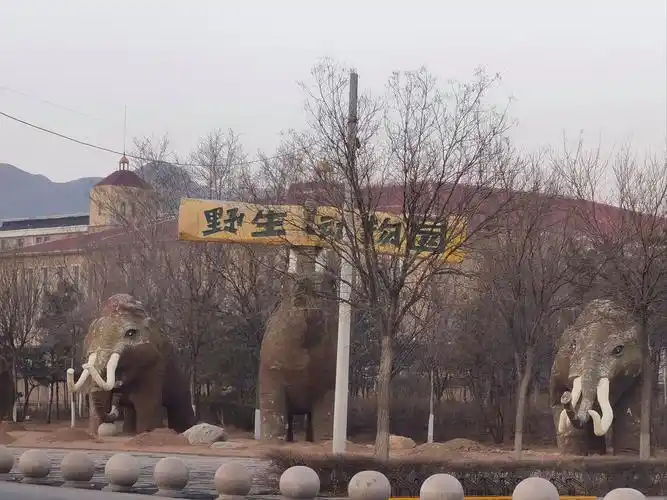 Hohhot, the capital of Inner Mongolia, has for centuries occupied a strategic position on the southern fringe of the Eurasian Steppe. The Daqingshan, or "Great Green Mountain," rises just north of the city and was immortalized in the Tang dynasty poet Meng Jiao's celebrated verses, "Heaven and earth seem aged and decayed, yet the Daqingshan still stands." This same range once sheltered Mongol herders and caravan traders moving between the Gobi and the Yellow River basin, and today the zoo's foothills provide a surprisingly wild backdrop reminiscent of safari parks such as South Africa's Kruger or Germany's Serengeti Park.
The park itself was renamed Hohhot Zoo in 2022 and elevated to a national AAAA scenic area in 2024, marking its transition from a regional attraction to one of northern China's flagship zoological institutions. The site covers roughly 12,300 mu, with forest coverage exceeding 86 percent, blending gentle hills, plains, and densely wooded valleys. Visitors arriving from central Hohhot pass through the Huimin District along the Huwu Highway, and the park's location, just south of the Hohhot-Baotou Expressway, makes it an easy half-day detour comparable in convenience to a visit to Whipsnade from London.
Wildlife is organized into four themed zones: the Entrance Garden, Verdant Morning, Humans and Nature, and the flagship Wild Journey area. Here, Siberian tigers, African lions, brown bears, and wolf packs roam spacious enclosures modeled on natural habitats, observed from elevated timber boardwalks and viewing platforms that echo the canopy walkways at Hamburg's Hagenbeck or the sky trams at San Diego Zoo Safari Park. A separate "Humans and Nature" trail invites quieter exploration, with birdwatching hides and paddocks for giraffes and black swans, while daily performances at the Hundred-Beast Theater and colorful parade floats add family-friendly entertainment.
Cultural touches reflect the region's Mongol and Hui heritage, and the experience pairs naturally with a broader Hohhot itinerary that might include the Zhaojun Tomb, the Five-Pagoda Temple, or the historic Great Mosque near the old Silk Road quarter. The park functions both as a conservation and breeding center for endangered species and as an open-air classroom for school groups, continuing a tradition of public zoology that traces back to the menageries of European royalty and the imperial hunting grounds of the Yuan and Qing dynasties.
Practical details make planning straightforward. The zoo opens from 8:30 to 18:30, with last entry at 16:30, and adult tickets cost 70 yuan, including the flying-bird show. Half-price concessions apply to visitors aged 6 to 18 and 60 to 65, and four to six hours are recommended for a satisfying visit. Comfortable walking shoes are essential because of the hilly terrain, and access is convenient by car or by Bus Route 2 and the Dahei River Express from central Hohhot.
Hohhot, the capital of Inner Mongolia, has for centuries occupied a strategic position on the southern fringe of the Eurasian Steppe. The Daqingshan, or "Great Green Mountain," rises just north of the city and was immortalized in the Tang dynasty poet Meng Jiao's celebrated verses, "Heaven and earth seem aged and decayed, yet the Daqingshan still stands." This same range once sheltered Mongol herders and caravan traders moving between the Gobi and the Yellow River basin, and today the zoo's foothills provide a surprisingly wild backdrop reminiscent of safari parks such as South Africa's Kruger or Germany's Serengeti Park.
The park itself was renamed Hohhot Zoo in 2022 and elevated to a national AAAA scenic area in 2024, marking its transition from a regional attraction to one of northern China's flagship zoological institutions. The site covers roughly 12,300 mu, with forest coverage exceeding 86 percent, blending gentle hills, plains, and densely wooded valleys. Visitors arriving from central Hohhot pass through the Huimin District along the Huwu Highway, and the park's location, just south of the Hohhot-Baotou Expressway, makes it an easy half-day detour comparable in convenience to a visit to Whipsnade from London.
Wildlife is organized into four themed zones: the Entrance Garden, Verdant Morning, Humans and Nature, and the flagship Wild Journey area. Here, Siberian tigers, African lions, brown bears, and wolf packs roam spacious enclosures modeled on natural habitats, observed from elevated timber boardwalks and viewing platforms that echo the canopy walkways at Hamburg's Hagenbeck or the sky trams at San Diego Zoo Safari Park. A separate "Humans and Nature" trail invites quieter exploration, with birdwatching hides and paddocks for giraffes and black swans, while daily performances at the Hundred-Beast Theater and colorful parade floats add family-friendly entertainment.
Cultural touches reflect the region's Mongol and Hui heritage, and the experience pairs naturally with a broader Hohhot itinerary that might include the Zhaojun Tomb, the Five-Pagoda Temple, or the historic Great Mosque near the old Silk Road quarter. The park functions both as a conservation and breeding center for endangered species and as an open-air classroom for school groups, continuing a tradition of public zoology that traces back to the menageries of European royalty and the imperial hunting grounds of the Yuan and Qing dynasties.
Practical details make planning straightforward. The zoo opens from 8:30 to 18:30, with last entry at 16:30, and adult tickets cost 70 yuan, including the flying-bird show. Half-price concessions apply to visitors aged 6 to 18 and 60 to 65, and four to six hours are recommended for a satisfying visit. Comfortable walking shoes are essential because of the hilly terrain, and access is convenient by car or by Bus Route 2 and the Dahei River Express from central Hohhot.