Hohhot Chahan Grassland
⭐ 4.30
Hohhot Chahan Grassland, Huimin District, Hohhot, Inner Mongolia Autonomous Region, China
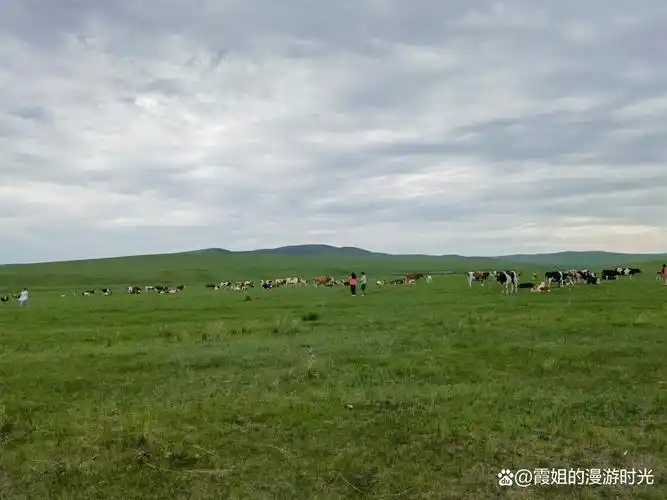 The grassland's fame rests on the Northern Wei dynasty folk ballad "Chile Song" (circa 546 AD), whose opening lines paint a scene that has resonated for fifteen centuries: "The sky is blue, the wild is wide; the wind blows the grass low, and cattle and sheep appear." To stand here is to step into a living poem—one that predates the Vikings, Charlemagne, and the Battle of Hastings. For millennia this valley sheltered successive nomadic confederations, including the Xianbei, Turks, and ultimately the Mongols, whose horseback empire stretched from Korea to Hungary. It remains one of the last intact stretches of native steppe within easy reach of a major Chinese city.
Ecologically, the park occupies a striking transitional zone where the northern slopes of the Yinshan range tumble onto the flat Tumd Plain. Rolling turf extends to every horizon, broken by the mirror-still waters of Sarenhu Lake and clusters of sacred ovoo cairns—stone-heaped shrines that function much like the roadside crosses and holy wells of Catholic Europe. In July and August, the grass surges green beneath a sky so vast it recalls the high plains of Montana or the Russian steppes near Orenburg, yet with the added intimacy of grazing herds and distant yurts.
Culturally, the site pulses with Mongol identity year-round, but comes alive each summer during Naadam—sometimes called the "Mongolian Olympics." Competitors wrestle in tight-fitting leather jackets, race stocky Mongolian ponies bareback, and draw composite recurve bows in the "three manly arts." Visitors are welcomed with traditional khadag silk scarves and bowls of salty milk tea, while the nearby Inner Mongolia Ethnic Cultural and Sports Center hosts equestrian performances and exhibitions on the heritage of the steppe nomads.
For practical visitors, the park sits just 15 km northeast of Hohhot, reachable in roughly half an hour by taxi or ride-share. It opens 24 hours, year-round, though June through August delivers the lushest scenery and full festival programming. A typical day might include a morning horse trek, an afternoon archery session, a sunset hike to one of the viewing platforms, and dinner featuring hand-grabbed lamb, blood sausage, and fresh milk tea at one of the surrounding Mongolian restaurants. Overnight options range from comfortable resort hotels to traditional ger (yurt) camps, where evenings often conclude with bonfires, throat singing, and the haunting strains of the morin khuur horse-head fiddle.
Come prepared: summer days are sun-intense despite cool breezes, so pack sunscreen, a wide-brimmed hat, and sturdy walking shoes. Weekends in July and August draw domestic crowds; arriving on a weekday or at sunrise secures quieter trails and the best light for photography. Whether you have a few hours or a few days, Chalechuan offers the rarest of modern travel experiences—authentic steppe culture within shouting distance of a provincial capital.
The grassland's fame rests on the Northern Wei dynasty folk ballad "Chile Song" (circa 546 AD), whose opening lines paint a scene that has resonated for fifteen centuries: "The sky is blue, the wild is wide; the wind blows the grass low, and cattle and sheep appear." To stand here is to step into a living poem—one that predates the Vikings, Charlemagne, and the Battle of Hastings. For millennia this valley sheltered successive nomadic confederations, including the Xianbei, Turks, and ultimately the Mongols, whose horseback empire stretched from Korea to Hungary. It remains one of the last intact stretches of native steppe within easy reach of a major Chinese city.
Ecologically, the park occupies a striking transitional zone where the northern slopes of the Yinshan range tumble onto the flat Tumd Plain. Rolling turf extends to every horizon, broken by the mirror-still waters of Sarenhu Lake and clusters of sacred ovoo cairns—stone-heaped shrines that function much like the roadside crosses and holy wells of Catholic Europe. In July and August, the grass surges green beneath a sky so vast it recalls the high plains of Montana or the Russian steppes near Orenburg, yet with the added intimacy of grazing herds and distant yurts.
Culturally, the site pulses with Mongol identity year-round, but comes alive each summer during Naadam—sometimes called the "Mongolian Olympics." Competitors wrestle in tight-fitting leather jackets, race stocky Mongolian ponies bareback, and draw composite recurve bows in the "three manly arts." Visitors are welcomed with traditional khadag silk scarves and bowls of salty milk tea, while the nearby Inner Mongolia Ethnic Cultural and Sports Center hosts equestrian performances and exhibitions on the heritage of the steppe nomads.
For practical visitors, the park sits just 15 km northeast of Hohhot, reachable in roughly half an hour by taxi or ride-share. It opens 24 hours, year-round, though June through August delivers the lushest scenery and full festival programming. A typical day might include a morning horse trek, an afternoon archery session, a sunset hike to one of the viewing platforms, and dinner featuring hand-grabbed lamb, blood sausage, and fresh milk tea at one of the surrounding Mongolian restaurants. Overnight options range from comfortable resort hotels to traditional ger (yurt) camps, where evenings often conclude with bonfires, throat singing, and the haunting strains of the morin khuur horse-head fiddle.
Come prepared: summer days are sun-intense despite cool breezes, so pack sunscreen, a wide-brimmed hat, and sturdy walking shoes. Weekends in July and August draw domestic crowds; arriving on a weekday or at sunrise secures quieter trails and the best light for photography. Whether you have a few hours or a few days, Chalechuan offers the rarest of modern travel experiences—authentic steppe culture within shouting distance of a provincial capital.