Zhoukou Grand Theatre
⭐ 3.50
Zhoukou Grand Theatre, Chuanhui District, Zhoukou City, Henan Province, China
 Zhoukou, an ancient trading hub in eastern Henan, has nurtured acrobatics for over a thousand years. The art traces back to Song dynasty marketplace entertainments and matured into a recognized regional craft, much as Italian *commedia dell'arte* evolved from street performance into celebrated stage tradition. Today the city hosts dedicated training schools and state-recognized "acrobatic arts inheritors." The "Grand Theater" name originally referred to a 2018 proposal for a single 480-million-yuan cultural landmark, never built as planned; instead, programming has been distributed across two specialized venues, leaving the original name a useful but slightly misleading umbrella in local tourism literature.
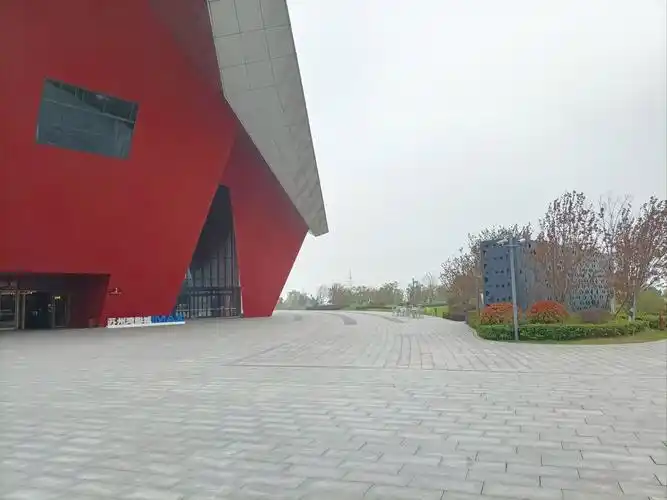
The two venues offer strikingly different aesthetics. The Art Center Grand Theater sits within Zhoukou Wildlife World park, its 3,600-square-meter hall crowned by a regal "diadem" silhouette inspired by theatrical glamour—imagine a smaller cousin to the glittering crown turrets of Moscow's Kremlin palaces, rendered in glass and steel. It features hydraulic stages and glasses-free 3D projection, recalling immersive experiments pioneered by London's National Theatre. The newer Shuangchuang Park Performance Center, opened in late 2025 and managed by the prestigious China Oriental Performing Arts Group, presents a cleaner, restrained facade with about 1,500 seats—closer in spirit to a provincial European opera house.
Zhoukou's identity as China's acrobatic heartland gives the Art Center Grand Theater particular weight. Its resident troupes perform daily spectacles blending tumbling, horse acrobatics, aerial silk, and laser effects—traditions that parallel Europe's equestrian circus heritage, from Philip Astley's 18th-century London ring to Cirque du Soleil's modern incarnation. Across town, the Shuangchuang Park Performance Center addresses a different cultural hunger: bringing Beijing-caliber opera, symphony, and musical theater to a region that previously had to travel to the provincial capital Zhengzhou. The two venues function as complementary cultural organs—one preserving folk performance heritage, the other importing high art—unusual for a city of Zhoukou's modest size.
Confirm your target venue before traveling. The Art Center sits inside the paid Wildlife World park, where a combined zoo-and-show ticket offers best value; the Shuangchuang Performance Center operates as a standalone theater with straightforward online ticketing. Both require real-name registration—foreign visitors must present their original passport at purchase or pickup, even when booking through apps like Damai or Maoyan, where interactive seat maps are usually available. Plan to arrive 30 to 45 minutes early; large bags must be checked at coatroom. The city is served by buses 25 and 26, and ride-hailing apps reliably locate either venue if you search the full Chinese name or "Zhoukou Cultural Arts Center."
Inside either auditorium, strict performance etiquette applies: phones silenced, no photography or filming, no food or beverages, applause reserved for natural pauses—standards familiar to visitors at Vienna's Musikverein or Milan's La Scala. Families seeking high-energy entertainment will prefer the Wildlife World theater, which combines acrobatic dazzle with a zoo outing; classical music and theater lovers should target the Shuangchuang venue's touring productions. Either experience pairs naturally with visits to the nearby Taihao Mausoleum and legendary birthplace of Laozi, anchoring Zhoukou within China's deepest ancestral and philosophical heritage—a thoughtful counterpoint to the city's modern showmanship and a compelling reason to venture beyond the well-trodden tourist trail.
Zhoukou, an ancient trading hub in eastern Henan, has nurtured acrobatics for over a thousand years. The art traces back to Song dynasty marketplace entertainments and matured into a recognized regional craft, much as Italian *commedia dell'arte* evolved from street performance into celebrated stage tradition. Today the city hosts dedicated training schools and state-recognized "acrobatic arts inheritors." The "Grand Theater" name originally referred to a 2018 proposal for a single 480-million-yuan cultural landmark, never built as planned; instead, programming has been distributed across two specialized venues, leaving the original name a useful but slightly misleading umbrella in local tourism literature.
The two venues offer strikingly different aesthetics. The Art Center Grand Theater sits within Zhoukou Wildlife World park, its 3,600-square-meter hall crowned by a regal "diadem" silhouette inspired by theatrical glamour—imagine a smaller cousin to the glittering crown turrets of Moscow's Kremlin palaces, rendered in glass and steel. It features hydraulic stages and glasses-free 3D projection, recalling immersive experiments pioneered by London's National Theatre. The newer Shuangchuang Park Performance Center, opened in late 2025 and managed by the prestigious China Oriental Performing Arts Group, presents a cleaner, restrained facade with about 1,500 seats—closer in spirit to a provincial European opera house.
Zhoukou's identity as China's acrobatic heartland gives the Art Center Grand Theater particular weight. Its resident troupes perform daily spectacles blending tumbling, horse acrobatics, aerial silk, and laser effects—traditions that parallel Europe's equestrian circus heritage, from Philip Astley's 18th-century London ring to Cirque du Soleil's modern incarnation. Across town, the Shuangchuang Park Performance Center addresses a different cultural hunger: bringing Beijing-caliber opera, symphony, and musical theater to a region that previously had to travel to the provincial capital Zhengzhou. The two venues function as complementary cultural organs—one preserving folk performance heritage, the other importing high art—unusual for a city of Zhoukou's modest size.
Confirm your target venue before traveling. The Art Center sits inside the paid Wildlife World park, where a combined zoo-and-show ticket offers best value; the Shuangchuang Performance Center operates as a standalone theater with straightforward online ticketing. Both require real-name registration—foreign visitors must present their original passport at purchase or pickup, even when booking through apps like Damai or Maoyan, where interactive seat maps are usually available. Plan to arrive 30 to 45 minutes early; large bags must be checked at coatroom. The city is served by buses 25 and 26, and ride-hailing apps reliably locate either venue if you search the full Chinese name or "Zhoukou Cultural Arts Center."
Inside either auditorium, strict performance etiquette applies: phones silenced, no photography or filming, no food or beverages, applause reserved for natural pauses—standards familiar to visitors at Vienna's Musikverein or Milan's La Scala. Families seeking high-energy entertainment will prefer the Wildlife World theater, which combines acrobatic dazzle with a zoo outing; classical music and theater lovers should target the Shuangchuang venue's touring productions. Either experience pairs naturally with visits to the nearby Taihao Mausoleum and legendary birthplace of Laozi, anchoring Zhoukou within China's deepest ancestral and philosophical heritage—a thoughtful counterpoint to the city's modern showmanship and a compelling reason to venture beyond the well-trodden tourist trail.