Wenchang Pavilion
⭐ 2.50
Wenchang Pavilion, Chuanhui District, Zhoukou City, Henan Province, China
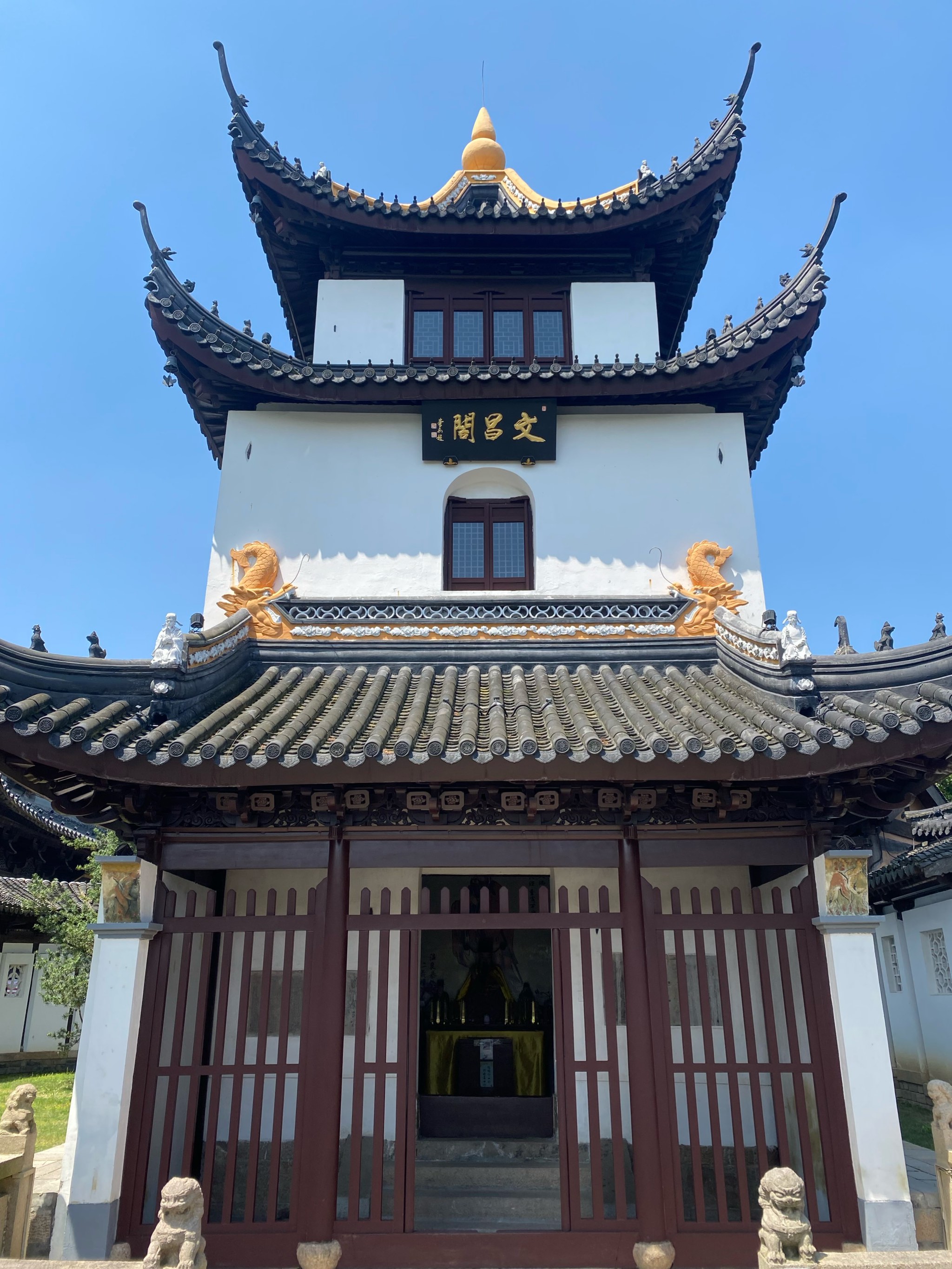 The name Wenchang Pavilion in Zhoukou refers not to a single monument but to two historic buildings shaped by distinct currents of Chinese history. The pavilion in Luyi's Mingdao Palace, a Taoist complex linked to Laozi - the semi-legendary founder of Taoism whose tradition rivals ancient Greek philosophy in age - was rebuilt in 2004 atop foundations of earlier structures lost to centuries of warfare. The pavilion in Zhoukou's Guandi Temple survives from the Qing dynasty (1644-1911), when the Shaying River's bustling canal trade attracted Shanxi-Shaanxi merchant guilds. Like European cathedrals rebuilt on older foundations, both sites embody the layered continuity of Chinese sacred architecture.
The Mingdao Palace Wenchang Pavilion follows classical Taoist temple design, with sweeping upturned eaves, ornate ridge ornaments featuring auspicious motifs, and a dignified symmetrical silhouette. By contrast, the Guandi Temple pavilion showcases Qing-era guild hall craftsmanship: a post-and-beam timber structure where every beam, bracket, and stone base displays intricate wood carving and polychrome painting. The detailing recalls contemporary European guild halls such as those in Bruges or Nuremberg, where merchant associations expressed wealth and piety through elaborate ornament. Though modest in scale, it remains a finely preserved showcase of eastern Henan's traditional building arts.
Both pavilions venerate Wenchang Dijun, the celestial patron of scholars, examinations, and literary fame - a deity whose role echoes Minerva or Athena in the Greco-Roman world. Students preparing for the imperial examinations, China's grueling civil service tests that determined official careers from the 7th to early 20th centuries, would pray here for success. Within Mingdao Palace, the pavilion complements the site's Taoist learning identity. Within the Guandi Temple, it reflects merchant aspirations for scholarly achievement alongside commercial prosperity, embodying the Chinese ideal uniting learning with practical success.
Visiting the two pavilions requires separate trips. The Mingdao Palace pavilion sits about an hour's drive from Zhoukou city in Luyi County, reachable by car or intercity bus, and requires a scenic-area ticket. The Guandi Temple pavilion lies in central Zhoukou's Chuanhui District on Fuqiang Street, part of a national AAAA-rated site open until 5:30 PM in summer and easily reached by taxi. Both function as religious and heritage venues - visitors should observe decorum, avoid flash photography, and refrain from open flames inside the halls.
These pavilions are not worth a long journey on their own, but they enrich broader regional visits. Travelers heading to Luyi for the Mingdao Palace and the nearby Taiqing Terrace, centerpieces of Laozi's philosophical legacy, can add the pavilion as a half-day cultural stop. Those in Zhoukou itself can pair the Guandi Temple pavilion with an evening stroll along the Shaying River waterfront, ideally at dawn or dusk to escape midday heat and catch the atmospheric blend of old-town life and scholarly heritage. Always verify current opening policies before setting out.
The name Wenchang Pavilion in Zhoukou refers not to a single monument but to two historic buildings shaped by distinct currents of Chinese history. The pavilion in Luyi's Mingdao Palace, a Taoist complex linked to Laozi - the semi-legendary founder of Taoism whose tradition rivals ancient Greek philosophy in age - was rebuilt in 2004 atop foundations of earlier structures lost to centuries of warfare. The pavilion in Zhoukou's Guandi Temple survives from the Qing dynasty (1644-1911), when the Shaying River's bustling canal trade attracted Shanxi-Shaanxi merchant guilds. Like European cathedrals rebuilt on older foundations, both sites embody the layered continuity of Chinese sacred architecture.
The Mingdao Palace Wenchang Pavilion follows classical Taoist temple design, with sweeping upturned eaves, ornate ridge ornaments featuring auspicious motifs, and a dignified symmetrical silhouette. By contrast, the Guandi Temple pavilion showcases Qing-era guild hall craftsmanship: a post-and-beam timber structure where every beam, bracket, and stone base displays intricate wood carving and polychrome painting. The detailing recalls contemporary European guild halls such as those in Bruges or Nuremberg, where merchant associations expressed wealth and piety through elaborate ornament. Though modest in scale, it remains a finely preserved showcase of eastern Henan's traditional building arts.
Both pavilions venerate Wenchang Dijun, the celestial patron of scholars, examinations, and literary fame - a deity whose role echoes Minerva or Athena in the Greco-Roman world. Students preparing for the imperial examinations, China's grueling civil service tests that determined official careers from the 7th to early 20th centuries, would pray here for success. Within Mingdao Palace, the pavilion complements the site's Taoist learning identity. Within the Guandi Temple, it reflects merchant aspirations for scholarly achievement alongside commercial prosperity, embodying the Chinese ideal uniting learning with practical success.
Visiting the two pavilions requires separate trips. The Mingdao Palace pavilion sits about an hour's drive from Zhoukou city in Luyi County, reachable by car or intercity bus, and requires a scenic-area ticket. The Guandi Temple pavilion lies in central Zhoukou's Chuanhui District on Fuqiang Street, part of a national AAAA-rated site open until 5:30 PM in summer and easily reached by taxi. Both function as religious and heritage venues - visitors should observe decorum, avoid flash photography, and refrain from open flames inside the halls.
These pavilions are not worth a long journey on their own, but they enrich broader regional visits. Travelers heading to Luyi for the Mingdao Palace and the nearby Taiqing Terrace, centerpieces of Laozi's philosophical legacy, can add the pavilion as a half-day cultural stop. Those in Zhoukou itself can pair the Guandi Temple pavilion with an evening stroll along the Shaying River waterfront, ideally at dawn or dusk to escape midday heat and catch the atmospheric blend of old-town life and scholarly heritage. Always verify current opening policies before setting out.