Zhoukou Guandi Temple
⭐ 3.80
Zhoukou City, Henan Province, China
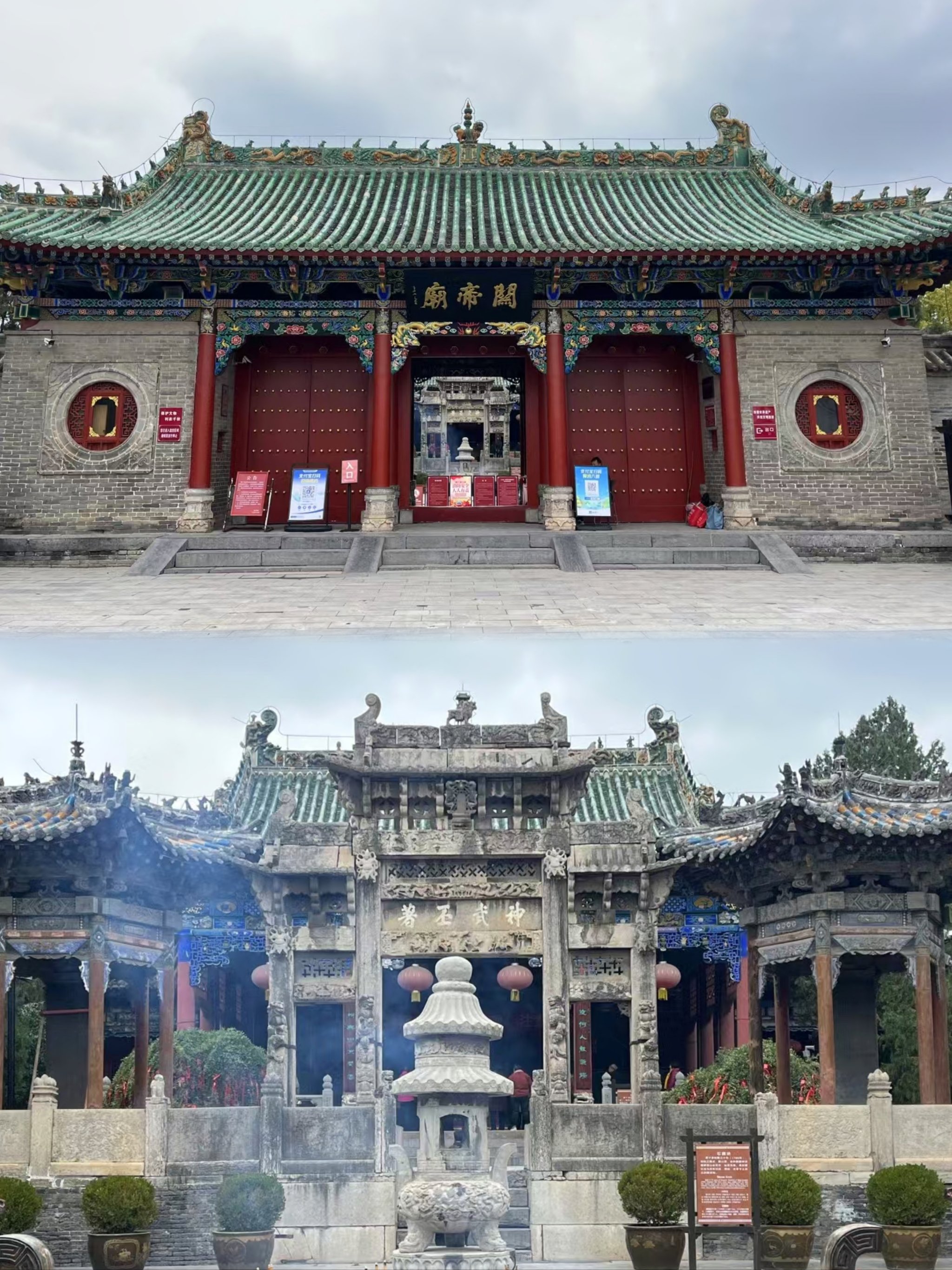 Zhoukou Guandi Temple offers a rare window into Qing dynasty (1644-1911) mercantile culture, when powerful Shanxi and Shaanxi merchant guilds—often called China's medieval Rothschilds—dominated trade across the empire. Functioning simultaneously as a shrine to Guan Yu, the legendary general deified as the god of loyalty and commerce, and as a bustling business headquarters, it parallels Europe's medieval guild halls like those of Bruges or Florence, where merchants worshipped, negotiated, and shaped economies under sacred banners. Completed in 1852 after more than a century and a half of collaborative funding, the complex represents the pinnacle of merchant-funded architecture in late imperial China.
The compound stretches along a rigid north-south axis, covering 21,600 square meters across three sequential courtyards containing over 140 halls, towers, and covered corridors. This axial symmetry and hierarchical progression will feel familiar to visitors who have wandered through Beijing's Forbidden City or the great European abbeys—each step drawing you deeper into a controlled spiritual and social universe. Every facade rewards close inspection with the "three perfections" of Qing decorative arts: intricately carved wooden brackets, stone reliefs depicting mythological scenes, and brick panels woven with auspicious symbols, together exceeding one thousand individual masterpieces.
Among the standout treasures, none impresses quite like the 22-meter iron flagpole weighing over 15 tons, forged during the Qianlong reign and crowned with coiling dragons and the characters "Great Righteousness" and "Piercing Heaven"—an extraordinary feat of Qing metallurgy virtually without parallel. Equally stunning is the Qianlong-era stone memorial archway, a four-pillar, three-tiered structure carved with openwork dragons chasing pearls alongside scenes echoing Zhang Zeduan's legendary Song dynasty scroll "Along the River During the Qingming Festival." Such density of detail invites comparison to the sculptural programs of Chartres or Westminster Abbey, where every surface becomes a stone sermon.
The Daoguang-era theater stage still commands attention with its double-eaved roof, "Voice Shaking the Spirit Heavens" plaque, and surviving painted caisson ceiling, where merchants once staged operas to entertain the gods and themselves. Looming behind it, the Spring and Autumn Pavilion—named for the Confucian classic venerated by Guan Yu—glitters with those remarkable peacock-blue glazed tiles that turn molten copper in late afternoon light, creating one of Zhoukou's celebrated "Eight Scenes." Designated a national key cultural relic in 1996 and upgraded to AAAA status in 2018, the temple now seeks inscription on the UNESCO World Heritage List.
Visiting is straightforward and affordable: admission costs just 30 yuan, with free entry for military personnel, visitors over 70, and medical workers, and half-price for students with valid ID. Summer hours run 8:30 to 17:30; winter closes an hour earlier at 17:00. Reach the site via buses 4 or 9 to the "Guandi Temple" stop, or drive directly to the on-site parking lot. Photography is prohibited within the halls but freely permitted on the exterior architecture. Allow 90 minutes, wear comfortable flat shoes, bring water, and arrive by 11:00 for ideal morning light and cooler temperatures—English signage is limited, so downloading translation apps beforehand is advisable. Afterward, stroll to neighboring Guandi Old Street to sample local specialties like Zhoukou rolled pancakes and lamb broth, completing a full immersion into central China's living heritage.
Zhoukou Guandi Temple offers a rare window into Qing dynasty (1644-1911) mercantile culture, when powerful Shanxi and Shaanxi merchant guilds—often called China's medieval Rothschilds—dominated trade across the empire. Functioning simultaneously as a shrine to Guan Yu, the legendary general deified as the god of loyalty and commerce, and as a bustling business headquarters, it parallels Europe's medieval guild halls like those of Bruges or Florence, where merchants worshipped, negotiated, and shaped economies under sacred banners. Completed in 1852 after more than a century and a half of collaborative funding, the complex represents the pinnacle of merchant-funded architecture in late imperial China.
The compound stretches along a rigid north-south axis, covering 21,600 square meters across three sequential courtyards containing over 140 halls, towers, and covered corridors. This axial symmetry and hierarchical progression will feel familiar to visitors who have wandered through Beijing's Forbidden City or the great European abbeys—each step drawing you deeper into a controlled spiritual and social universe. Every facade rewards close inspection with the "three perfections" of Qing decorative arts: intricately carved wooden brackets, stone reliefs depicting mythological scenes, and brick panels woven with auspicious symbols, together exceeding one thousand individual masterpieces.
Among the standout treasures, none impresses quite like the 22-meter iron flagpole weighing over 15 tons, forged during the Qianlong reign and crowned with coiling dragons and the characters "Great Righteousness" and "Piercing Heaven"—an extraordinary feat of Qing metallurgy virtually without parallel. Equally stunning is the Qianlong-era stone memorial archway, a four-pillar, three-tiered structure carved with openwork dragons chasing pearls alongside scenes echoing Zhang Zeduan's legendary Song dynasty scroll "Along the River During the Qingming Festival." Such density of detail invites comparison to the sculptural programs of Chartres or Westminster Abbey, where every surface becomes a stone sermon.
The Daoguang-era theater stage still commands attention with its double-eaved roof, "Voice Shaking the Spirit Heavens" plaque, and surviving painted caisson ceiling, where merchants once staged operas to entertain the gods and themselves. Looming behind it, the Spring and Autumn Pavilion—named for the Confucian classic venerated by Guan Yu—glitters with those remarkable peacock-blue glazed tiles that turn molten copper in late afternoon light, creating one of Zhoukou's celebrated "Eight Scenes." Designated a national key cultural relic in 1996 and upgraded to AAAA status in 2018, the temple now seeks inscription on the UNESCO World Heritage List.
Visiting is straightforward and affordable: admission costs just 30 yuan, with free entry for military personnel, visitors over 70, and medical workers, and half-price for students with valid ID. Summer hours run 8:30 to 17:30; winter closes an hour earlier at 17:00. Reach the site via buses 4 or 9 to the "Guandi Temple" stop, or drive directly to the on-site parking lot. Photography is prohibited within the halls but freely permitted on the exterior architecture. Allow 90 minutes, wear comfortable flat shoes, bring water, and arrive by 11:00 for ideal morning light and cooler temperatures—English signage is limited, so downloading translation apps beforehand is advisable. Afterward, stroll to neighboring Guandi Old Street to sample local specialties like Zhoukou rolled pancakes and lamb broth, completing a full immersion into central China's living heritage.