Beijing (Tongzhou) Grand Canal Cultural Tourism
⭐ 5.00
400 meters south of North Canal Bridge, Zhangjiawan Town, Tongzhou District, Beijing, Beijing (Tongzhou) Grand Canal Cultural Tourism Scenic Area
 **Historical Background**
Tongzhou, anciently known as "Lu County" (潞县), flourished thanks to the grain transport along the Grand Canal. Since the Jin dynasty, it had served as a vital northern hub for canal-borne grain shipping, earning the famous saying "First Beijing, Second Tianjin, Third Tongzhou." During the Ming and Qing dynasties, Tongzhou at the northern terminus of the canal bustled with countless boats and merchants, becoming the economic lifeline connecting the imperial capital with the Jiangnan region. Centered on the Randeng (Burning Lamp) Pagoda and the surrounding historical complex, the scenic area chronicles this millennia-old epic of canal transport and forms an important component of the Beijing-Hangzhou Grand Canal World Cultural Heritage.
**Architectural Features**
The "Three Temples and One Pagoda" complex in the northern section is the cultural soul of the scenic area. The Randeng Pagoda is an octagonal, thirteen-story, dense-eaved brick pagoda with a history of more than 1,400 years. The bronze bells on its tower ring out crisply and melodiously. Together with the Confucian Temple, the Yousheng Jiao Temple, and the Ziqing Palace, it forms a rare architectural configuration embodying the "unity of three teachings" (Confucianism, Buddhism, and Taoism). The pagoda's reflection on the canal gives rise to the poetic scene: "A single pagoda shadow reveals Tongzhou." The Daguang Tower, once the grain-inspection site, witnessed the bustling prosperity of the canal's golden age.
**Cultural Significance**
The scenic area is more than a historical site; it is a living cultural museum. The Beijing Grand Canal Museum systematically presents the origins and evolution of the canal, while the immersive nighttime performance "Journey on the Canal" (《运上行》) tells the story of the canal through a processional water show. Visitors can also participate in intangible cultural heritage experiences such as Tongcao flower making, shadow puppetry, and silk figurines, gaining an in-depth appreciation of the unique charm of the Beijing-Hangzhou Grand Canal, a World Cultural Heritage, and allowing the millennia-old canal civilization to radiate renewed vitality in the new era.
**Ecology and Leisure**
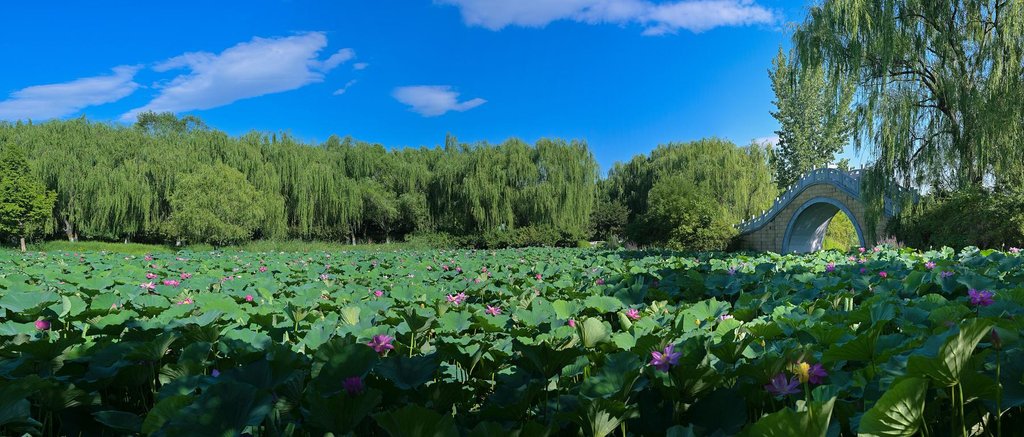
The Grand Canal Forest Park in the southern section covers more than 10,000 mu, laid out in the pattern of "one river, two banks, six gardens, and eighteen scenes." Wetland landscapes such as Yuedao Tingying (Listening to Orioles on Moon Island) and Conglin Huoli (Forest Vitality) create a natural waterside space full of rustic charm. In the central area, the Canal Culture Square and Pier No. 2 offer boat routes, dining streets, and modern performances, making it a hub for nighttime leisure and consumption. The scenic area achieves a perfect integration of historical culture, ecological protection, and urban leisure.
**Visiting Information**
The scenic area is open to the public free of charge throughout the day; boats and certain experience programs are charged separately. Indoor venues such as the museum and temples are generally open from 9:00 to 17:00. Most museums are closed on Mondays, so it is advisable to check official information in advance. Visitors can take Metro Line 6 to Tongzhou Beiguan Station or North Canal West Station, then transfer to the scenic area shuttle bus or cycle into the park.
**Travel Suggestions**
The scenic area spans 12 kilometers and is difficult to cover fully in a single day. Visitors are advised to split the trip into multiple visits or select a half-day itinerary. The best experience comes on summer evenings through nighttime, when visitors can escape the heat while enjoying the light shows and nighttime performances. Boat tours require advance ticket booking and may be suspended in winds of Force 4 or above. Wear comfortable athletic shoes, and cycle or stroll along the riverside greenway to soak in the canal ambiance where the ancient and modern intertwine.
**Historical Background**
Tongzhou, anciently known as "Lu County" (潞县), flourished thanks to the grain transport along the Grand Canal. Since the Jin dynasty, it had served as a vital northern hub for canal-borne grain shipping, earning the famous saying "First Beijing, Second Tianjin, Third Tongzhou." During the Ming and Qing dynasties, Tongzhou at the northern terminus of the canal bustled with countless boats and merchants, becoming the economic lifeline connecting the imperial capital with the Jiangnan region. Centered on the Randeng (Burning Lamp) Pagoda and the surrounding historical complex, the scenic area chronicles this millennia-old epic of canal transport and forms an important component of the Beijing-Hangzhou Grand Canal World Cultural Heritage.
**Architectural Features**
The "Three Temples and One Pagoda" complex in the northern section is the cultural soul of the scenic area. The Randeng Pagoda is an octagonal, thirteen-story, dense-eaved brick pagoda with a history of more than 1,400 years. The bronze bells on its tower ring out crisply and melodiously. Together with the Confucian Temple, the Yousheng Jiao Temple, and the Ziqing Palace, it forms a rare architectural configuration embodying the "unity of three teachings" (Confucianism, Buddhism, and Taoism). The pagoda's reflection on the canal gives rise to the poetic scene: "A single pagoda shadow reveals Tongzhou." The Daguang Tower, once the grain-inspection site, witnessed the bustling prosperity of the canal's golden age.
**Cultural Significance**
The scenic area is more than a historical site; it is a living cultural museum. The Beijing Grand Canal Museum systematically presents the origins and evolution of the canal, while the immersive nighttime performance "Journey on the Canal" (《运上行》) tells the story of the canal through a processional water show. Visitors can also participate in intangible cultural heritage experiences such as Tongcao flower making, shadow puppetry, and silk figurines, gaining an in-depth appreciation of the unique charm of the Beijing-Hangzhou Grand Canal, a World Cultural Heritage, and allowing the millennia-old canal civilization to radiate renewed vitality in the new era.
**Ecology and Leisure**
The Grand Canal Forest Park in the southern section covers more than 10,000 mu, laid out in the pattern of "one river, two banks, six gardens, and eighteen scenes." Wetland landscapes such as Yuedao Tingying (Listening to Orioles on Moon Island) and Conglin Huoli (Forest Vitality) create a natural waterside space full of rustic charm. In the central area, the Canal Culture Square and Pier No. 2 offer boat routes, dining streets, and modern performances, making it a hub for nighttime leisure and consumption. The scenic area achieves a perfect integration of historical culture, ecological protection, and urban leisure.
**Visiting Information**
The scenic area is open to the public free of charge throughout the day; boats and certain experience programs are charged separately. Indoor venues such as the museum and temples are generally open from 9:00 to 17:00. Most museums are closed on Mondays, so it is advisable to check official information in advance. Visitors can take Metro Line 6 to Tongzhou Beiguan Station or North Canal West Station, then transfer to the scenic area shuttle bus or cycle into the park.
**Travel Suggestions**
The scenic area spans 12 kilometers and is difficult to cover fully in a single day. Visitors are advised to split the trip into multiple visits or select a half-day itinerary. The best experience comes on summer evenings through nighttime, when visitors can escape the heat while enjoying the light shows and nighttime performances. Boat tours require advance ticket booking and may be suspended in winds of Force 4 or above. Wear comfortable athletic shoes, and cycle or stroll along the riverside greenway to soak in the canal ambiance where the ancient and modern intertwine.