Nanyang Museum of Han Stone Carvings
⭐ 4.20
Nanyang City, Henan Province, China
 The Han dynasty (206 BCE – 220 CE) overlapped with Rome's imperial age and India's Kushan era, making Nanyang's 2,000-plus stone reliefs contemporaries of Roman sarcophagi and Trajan's Column. Carved as funerary decoration for ancestral halls and tombs, they fuse painting, sculpture, and ornament into a vivid historical archive of daily life. As Pompeii preserves Roman private moments beneath volcanic ash, the Nanyang stones capture banquets, hunts, mythological processions, and even a child's epitaph, offering an intimate window onto a civilization that at its peak governed roughly a quarter of humanity.
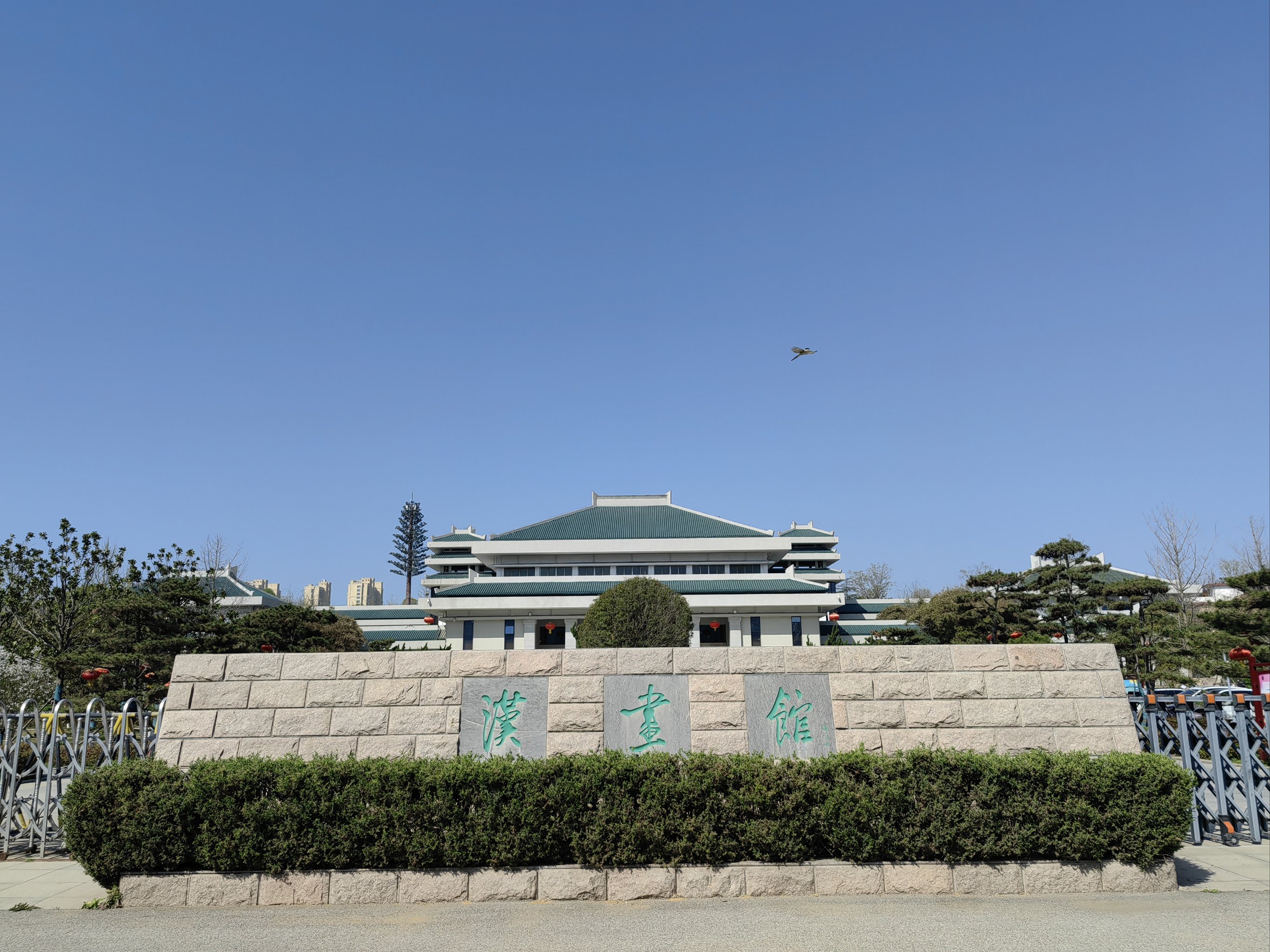
Established in 1935, the Nanyang Han Stone Carving Museum was China's first dedicated stone-relief institution and now holds National First-Class Museum status, awarded in 2008. Set on the southern slopes of Wolong Hill beside the memorial shrine to Zhuge Liang, the legendary Three Kingdoms strategist, the 5.36-hectare complex offers a tranquil counterpoint to busier provincial museums. Inside, more than 200 masterpiece reliefs are arranged across eight thematic galleries covering production, architecture, historical narrative, social life, astronomy and mythology, wrestling, music and acrobatics, and auspicious ascension—a layout echoing the encyclopedic ambition of Renaissance Wunderkammern.
Three works anchor the collection. The "Chang'e Flying to the Moon" stone depicts a snake-tailed goddess soaring above a lunar landscape of toad and jade-rabbit pounding elixirs—a Han romantic masterpiece whose paper rubbing later orbited Earth aboard Shenzhou 9. The "Xu Aqu Tomb Epitaph Stone" is China's earliest known illustrated tomb inscription, commemorating a five-year-old child with both text and image. A pair of East Han round sculptures, "Tianlu" and "Bixie," are mythical guardian beasts often compared to Western griffins or chimeras. Together they reveal how Han artisans transformed grief into enduring art.
Two galleries stand out. The Astronomy and Mythology Hall dazzles with celestial scenes of Chang'e, the Cowherd and Weaver Girl, and the intertwined creator deities Fuxi and Nüwa—imagery as arresting as Raphael's mythological frescoes. The Historical Narrative Hall dramatizes famous episodes including the Feast at Hongmen, the "Two Peaches Kill Three Warriors" parable of political intrigue, and the assassin Jing Ke's failed strike against the Qin emperor, each carved with the bold exaggeration of graphic-novel art. The Music and Acrobatics gallery showcases drumming, seven-plate dances, sword-juggling, and ball-tossing rendered with startling kinetic energy.
Admission is free; visitors register with a passport or ID. The museum opens Tuesday through Sunday—8:30 to 17:30 in summer, 8:30 to 17:00 in winter—and closes Mondays. Free guided tours are available with advance reservation, and a leisurely visit takes 1.5 to 2 hours. Reading the myths of Chang'e and parables like the "Two Peaches" beforehand greatly enriches the experience. Photography without flash is permitted, though the polished stone surfaces reflect strongly; smartphone users should adjust their angles carefully. The site sits near the Wuhou Shrine, allowing an easy combined afternoon visit.
For Western travelers weary of China's headline sights, this museum delivers one of the country's most quietly extraordinary experiences—an uncrowded, contemplative space where 1,800-year-old stones still pulse with humor, pathos, and cosmic wonder. It rewards those curious about the Silk Road world that traded Chinese silk for Roman glass and shaped East Asian civilization for centuries. Visiting here feels less like a routine museum stop and more like uncovering a hidden chapter of global art history, one as essential to world culture as Roman portrait sculpture or Egyptian funerary relief.
The Han dynasty (206 BCE – 220 CE) overlapped with Rome's imperial age and India's Kushan era, making Nanyang's 2,000-plus stone reliefs contemporaries of Roman sarcophagi and Trajan's Column. Carved as funerary decoration for ancestral halls and tombs, they fuse painting, sculpture, and ornament into a vivid historical archive of daily life. As Pompeii preserves Roman private moments beneath volcanic ash, the Nanyang stones capture banquets, hunts, mythological processions, and even a child's epitaph, offering an intimate window onto a civilization that at its peak governed roughly a quarter of humanity.
Established in 1935, the Nanyang Han Stone Carving Museum was China's first dedicated stone-relief institution and now holds National First-Class Museum status, awarded in 2008. Set on the southern slopes of Wolong Hill beside the memorial shrine to Zhuge Liang, the legendary Three Kingdoms strategist, the 5.36-hectare complex offers a tranquil counterpoint to busier provincial museums. Inside, more than 200 masterpiece reliefs are arranged across eight thematic galleries covering production, architecture, historical narrative, social life, astronomy and mythology, wrestling, music and acrobatics, and auspicious ascension—a layout echoing the encyclopedic ambition of Renaissance Wunderkammern.
Three works anchor the collection. The "Chang'e Flying to the Moon" stone depicts a snake-tailed goddess soaring above a lunar landscape of toad and jade-rabbit pounding elixirs—a Han romantic masterpiece whose paper rubbing later orbited Earth aboard Shenzhou 9. The "Xu Aqu Tomb Epitaph Stone" is China's earliest known illustrated tomb inscription, commemorating a five-year-old child with both text and image. A pair of East Han round sculptures, "Tianlu" and "Bixie," are mythical guardian beasts often compared to Western griffins or chimeras. Together they reveal how Han artisans transformed grief into enduring art.
Two galleries stand out. The Astronomy and Mythology Hall dazzles with celestial scenes of Chang'e, the Cowherd and Weaver Girl, and the intertwined creator deities Fuxi and Nüwa—imagery as arresting as Raphael's mythological frescoes. The Historical Narrative Hall dramatizes famous episodes including the Feast at Hongmen, the "Two Peaches Kill Three Warriors" parable of political intrigue, and the assassin Jing Ke's failed strike against the Qin emperor, each carved with the bold exaggeration of graphic-novel art. The Music and Acrobatics gallery showcases drumming, seven-plate dances, sword-juggling, and ball-tossing rendered with startling kinetic energy.
Admission is free; visitors register with a passport or ID. The museum opens Tuesday through Sunday—8:30 to 17:30 in summer, 8:30 to 17:00 in winter—and closes Mondays. Free guided tours are available with advance reservation, and a leisurely visit takes 1.5 to 2 hours. Reading the myths of Chang'e and parables like the "Two Peaches" beforehand greatly enriches the experience. Photography without flash is permitted, though the polished stone surfaces reflect strongly; smartphone users should adjust their angles carefully. The site sits near the Wuhou Shrine, allowing an easy combined afternoon visit.
For Western travelers weary of China's headline sights, this museum delivers one of the country's most quietly extraordinary experiences—an uncrowded, contemplative space where 1,800-year-old stones still pulse with humor, pathos, and cosmic wonder. It rewards those curious about the Silk Road world that traded Chinese silk for Roman glass and shaped East Asian civilization for centuries. Visiting here feels less like a routine museum stop and more like uncovering a hidden chapter of global art history, one as essential to world culture as Roman portrait sculpture or Egyptian funerary relief.