Nanyang Museum
⭐ 4.50
Heshan District, Yiyang City, Hunan Province, China
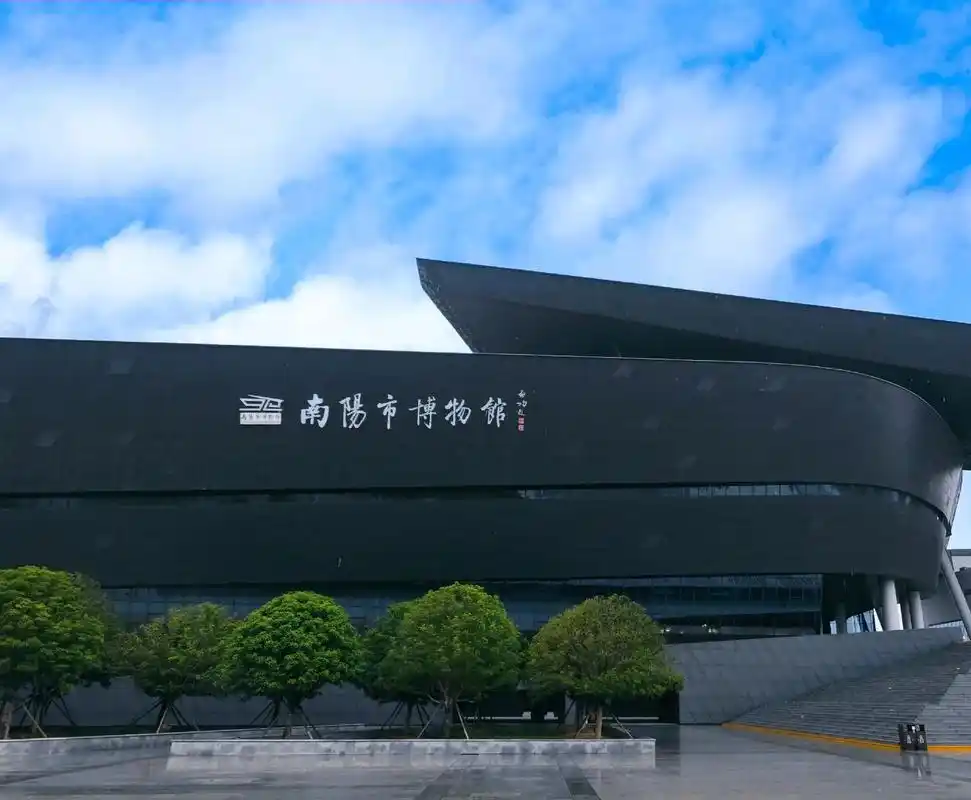 **Nanyang Museum — Gateway to the Central Plains**
Nestled in the Wolong District of Nanyang, Henan Province, Nanyang Museum sprawls across 46,000 square meters as part of a larger cultural complex often called the "Three Museums and One院" grouping. In scope, it rivals regional European institutions like the Salzburg Museum or the National Museum of Bavaria, though its focus is squarely on the Central Plains. The permanent exhibition, "Civilization in Wan," unfolds in five chronological chapters tracing the region from prehistoric settlements through the modern era. Allow at least three to four hours; enthusiasts of early Chinese history will find it as rewarding as a day at the Pergamon in Berlin.
**Nanyang's Crown Treasures**
The museum's standout pieces include the Prince Wu Ding Tripod, a monumental Chu bronze vessel comparable in artistry to the Gundestrup Cauldron in Copenhagen, and an exceptional collection of Han Dynasty pictorial stones—carved funerary slabs depicting banquets, hunts, and mythic scenes that illuminate daily life two millennia ago. Visitors also encounter artifacts linked to Zhang Heng, the second-century astronomer credited with the first seismoscope, and Zhang Zhongjing, the "Hippocrates of China" and author of foundational medical texts. A dedicated dinosaur fossil gallery and an exhibition on archaeological finds from the South-to-North Water Diversion Project round out a remarkably diverse collection.
**Yiyang Museum — Bamboo Slips and the Light of Compassion**
Across the country in Hunan's Yiyang, the municipal museum opened its sleek new building in 2023 within the Heshan District Civic Cultural Center. Its standing exhibition, "Yi Mountains and Yi Waters," introduces local Hunan identity, but the museum's true distinction lies in two singular displays. The first presents bamboo-slip manuscripts recovered from the ancient walled city of Yiyang, offering rare administrative snapshots from the Han Dynasty—think of them as China's equivalent of the Vindolanda tablets from Roman Britain. The second is a deeply affecting exhibition on He Fengshan, a Yiyang-born diplomat who, as Chinese Consul-General in Vienna in 1938, issued thousands of "visas for life" to Jewish refugees fleeing Nazi-occupied Austria.
**Architecture and Visitor Experience**
While Nanyang's museum impresses with sheer scale and traditional gravitas, Yiyang's 15,000-square-meter facility feels modern and interactive, featuring "magical artifact screens" and digital touchpoints that engage younger visitors much like the V&A's contemporary galleries engage families in London. Both museums are free of charge, but timing matters: Nanyang is open Tuesday through Sunday from 9:00 to 17:30 (17:00 in winter), while Yiyang runs shorter hours, closing from 12:00 to 13:30 for lunch. Both shut on Mondays, except during Chinese holidays.
**Practical Tips for International Travelers**
Foreign visitors must bring their original passport—not a photocopy—and book in advance via WeChat (Nanyang) or a mini-program (Yiyang); the name on the reservation must match the passport exactly. English-language interpretation is limited at both venues, so downloading a translation app or calling ahead to request an English guide is wise. Flash photography and touching artifacts are prohibited, and the air conditioning can be vigorous, so a light jacket is advisable. Plan a morning visit for fewer crowds.
**Why Bother with Either?**
For travelers tracing the Silk Road or the cradle of Chinese civilization, Nanyang is indispensable—a counterpart to Xi'an's Terracotta Warriors but with far fewer crowds. For those drawn to stories of moral courage or the everyday texture of imperial bureaucracy, Yiyang offers something rarer and more personal. Pairing both makes for a rich two-city itinerary, but each stands strongly on its own as a window into regions most Western tourists never reach.
**Nanyang Museum — Gateway to the Central Plains**
Nestled in the Wolong District of Nanyang, Henan Province, Nanyang Museum sprawls across 46,000 square meters as part of a larger cultural complex often called the "Three Museums and One院" grouping. In scope, it rivals regional European institutions like the Salzburg Museum or the National Museum of Bavaria, though its focus is squarely on the Central Plains. The permanent exhibition, "Civilization in Wan," unfolds in five chronological chapters tracing the region from prehistoric settlements through the modern era. Allow at least three to four hours; enthusiasts of early Chinese history will find it as rewarding as a day at the Pergamon in Berlin.
**Nanyang's Crown Treasures**
The museum's standout pieces include the Prince Wu Ding Tripod, a monumental Chu bronze vessel comparable in artistry to the Gundestrup Cauldron in Copenhagen, and an exceptional collection of Han Dynasty pictorial stones—carved funerary slabs depicting banquets, hunts, and mythic scenes that illuminate daily life two millennia ago. Visitors also encounter artifacts linked to Zhang Heng, the second-century astronomer credited with the first seismoscope, and Zhang Zhongjing, the "Hippocrates of China" and author of foundational medical texts. A dedicated dinosaur fossil gallery and an exhibition on archaeological finds from the South-to-North Water Diversion Project round out a remarkably diverse collection.
**Yiyang Museum — Bamboo Slips and the Light of Compassion**
Across the country in Hunan's Yiyang, the municipal museum opened its sleek new building in 2023 within the Heshan District Civic Cultural Center. Its standing exhibition, "Yi Mountains and Yi Waters," introduces local Hunan identity, but the museum's true distinction lies in two singular displays. The first presents bamboo-slip manuscripts recovered from the ancient walled city of Yiyang, offering rare administrative snapshots from the Han Dynasty—think of them as China's equivalent of the Vindolanda tablets from Roman Britain. The second is a deeply affecting exhibition on He Fengshan, a Yiyang-born diplomat who, as Chinese Consul-General in Vienna in 1938, issued thousands of "visas for life" to Jewish refugees fleeing Nazi-occupied Austria.
**Architecture and Visitor Experience**
While Nanyang's museum impresses with sheer scale and traditional gravitas, Yiyang's 15,000-square-meter facility feels modern and interactive, featuring "magical artifact screens" and digital touchpoints that engage younger visitors much like the V&A's contemporary galleries engage families in London. Both museums are free of charge, but timing matters: Nanyang is open Tuesday through Sunday from 9:00 to 17:30 (17:00 in winter), while Yiyang runs shorter hours, closing from 12:00 to 13:30 for lunch. Both shut on Mondays, except during Chinese holidays.
**Practical Tips for International Travelers**
Foreign visitors must bring their original passport—not a photocopy—and book in advance via WeChat (Nanyang) or a mini-program (Yiyang); the name on the reservation must match the passport exactly. English-language interpretation is limited at both venues, so downloading a translation app or calling ahead to request an English guide is wise. Flash photography and touching artifacts are prohibited, and the air conditioning can be vigorous, so a light jacket is advisable. Plan a morning visit for fewer crowds.
**Why Bother with Either?**
For travelers tracing the Silk Road or the cradle of Chinese civilization, Nanyang is indispensable—a counterpart to Xi'an's Terracotta Warriors but with far fewer crowds. For those drawn to stories of moral courage or the everyday texture of imperial bureaucracy, Yiyang offers something rarer and more personal. Pairing both makes for a rich two-city itinerary, but each stands strongly on its own as a window into regions most Western tourists never reach.